As an Amazon Associate, we earn from qualifying purchases. Some links on this site are affiliate links at no extra cost to you. Our recommendations are based on thorough research and editorial judgment.

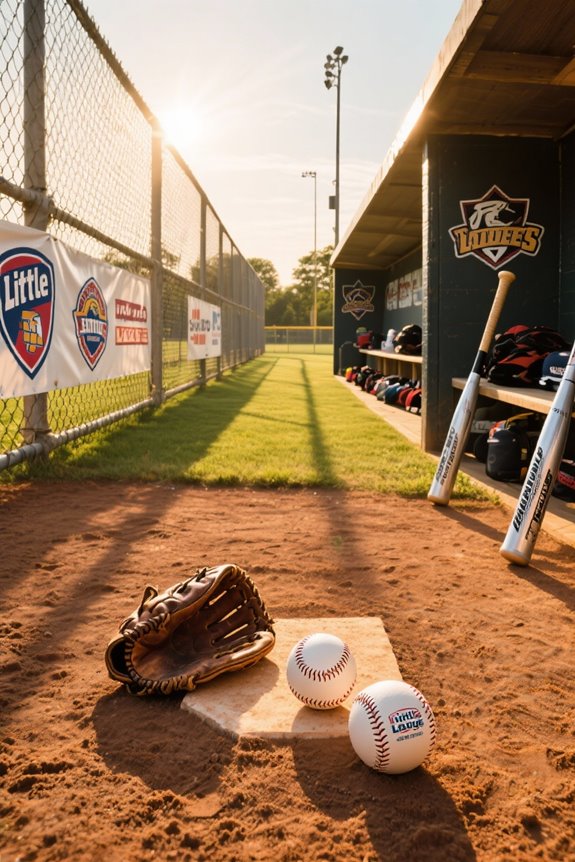
What’s The Difference Between Little League And Travel Ball?

Little League and travel ball are different youth baseball experiences. Little League promotes community involvement and inclusivity for ages 4 to 16, focusing on fun, teamwork, and respect. It features one weekly practice and a game on weekends. In contrast, travel ball emphasizes competitive skill development with 2-3 practices and 3-5 competitions weekly, often costly, ranging from $3,700 to $8,000 annually. Understanding these differences can help families choose the right option for their young athletes.
Key Takeaways
- Little League is a nonprofit organization focused on community and inclusivity, while travel ball is often private and competitive, requiring player tryouts.
- Travel ball demands a greater time commitment with multiple practices and tournaments, whereas Little League typically involves a single weekly practice and local games.
- Travel ball costs range from $3,700 to $8,000 annually, while Little League expenses are generally under $1,000, promoting accessibility for families.
- Little League teams consist of local players, fostering strong community bonds, unlike travel ball teams that may draw from multiple towns.
- While travel ball emphasizes advanced skills and competitiveness, Little League prioritizes participation, teamwork, and enjoyment of the game.
Definition and Purpose
You may be interested


Little League and travel ball represent two distinct paths in youth baseball and softball. Established in 1939, Little League is a nonprofit organization focused on program inclusivity and community engagement. It offers structured play for ages 4 to 16, with divisions tailored to various age groups, including Tee Ball for beginners. The program emphasizes essential life lessons like teamwork, respect, and discipline while fostering a fun and safe environment for all. In contrast, travel ball focuses on competitive play, requiring players to try out and join teams that often travel for games and tournaments. While both pathways promote skill development, Little League prioritizes broad participation, ensuring that every child has the chance to play and grow, regardless of background or ability. Additionally, many players in travel ball often seek to showcase their skills in competitive environments that can lead to further opportunities in the sport.
Competition Level and Skill Focus

While considering the differences in competition level and skill focus, it is essential to recognize that travel ball inherently demands a greater commitment from players. This commitment is fueled by player motivation to pursue advanced skills and opportunities often beyond local play. Travel ball features intense competition, with teams assembled from top players in large regions, and tournaments running year-round. Coaching quality in travel programs typically consists of experienced coaches, focusing on advanced techniques and strategies to prepare players for high school or college baseball. In contrast, Little League fosters community involvement, emphasizing enjoyment and fundamentals through volunteer coaching. Here, the experience is more about participation than competition, making it less demanding regarding both time and intensity. Additionally, players in travel ball often utilize high-quality equipment to enhance their performance and skill development.
Recommended Products

Elite 110 MPH Speed for Professional Training: Delivers pitches up to 112 MPH within a 400ft range, engineered for high school, college, travel teams, youth league intensive outdoors backyard training scenarios

ADJUSTABLE PITCH LOCATION AND SPEED - The Junior Hack Attack baseball pitching machine offers precise control over pitch placement, allowing for tailored training sessions that improve batting accuracy and timing with each session. The Junior Hack Attack is designed to throw left and right handed fastballs, curveballs, sliders, split fingers, and knuckle balls, up to speeds of 70 MPH

ADVANCED PITCHING MACHINE - Designed exclusively for serious softball training, this machine delivers consistent, adjustable pitches tailored to enhance batting skills and timing accuracy.
Organization and Structure
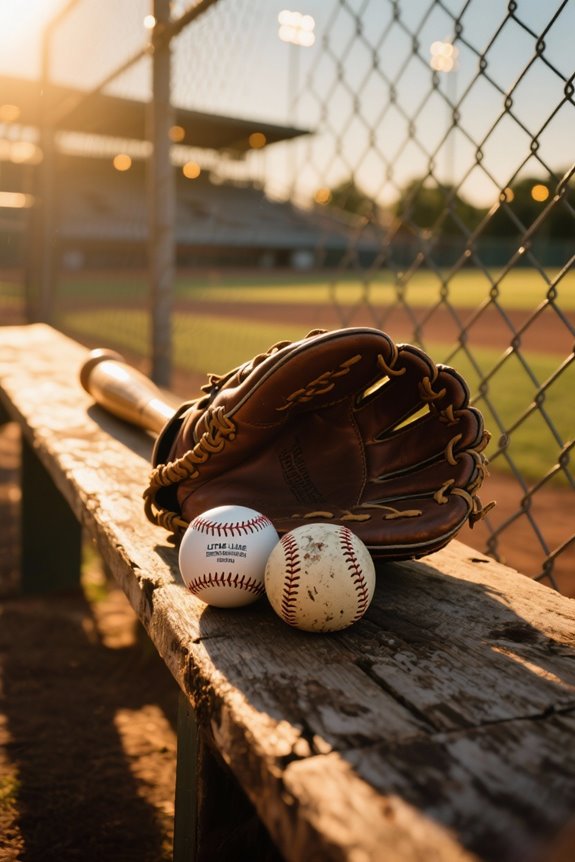
In the domain of youth sports, organization and structure play essential roles in shaping a player’s experience. Little League operates as a non-profit, volunteer-run entity, emphasizing community involvement and local team representation. Teams often consist of players from the same town, enhancing camaraderie and team dynamics. Conversely, travel baseball generally consists of private, for-profit teams that select players through competitive tryouts. These teams often draw from multiple towns or regions, altering the traditional community feel. Little League maintains minimal roster changes, fostering strong bonds among players, while travel teams exhibit more fluid rosters, driven by skill levels. Despite shared goals of developing young athletes, the organizational structures notably impact their experiences and sense of belonging. Additionally, travel teams often utilize training equipment for skill development that may not be as accessible in local leagues, creating disparities in player advancement.
Recommended Products

Full-Length Mound: Enhance your pitching game experience with the full-length mound that gives the pitcher a realistic feel of a regulation game mound.

Full-Length Mound: Enhance your pitching game experience with the full-length mound that gives the pitcher a realistic feel of a regulation game mound.
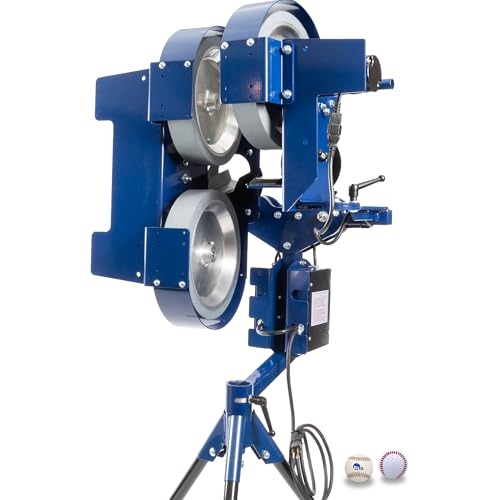
BASEBALL THROWING MACHINE: Our three wheel baseball throwing machine offers automatic pitching, ensuring consistent and accurate throws for effective training sessions for both youth and adult players, and the fastball and curveball heads are both adjustable up to 35 degrees in either direction to mimic right-handed or left-handed pitching styles, making this an excellent sports training accessory for athletes and coaching staff
Time Commitment and Scheduling

Time commitment and scheduling represent a significant dividing line between Little League and travel ball experiences. Travel ball typically involves 2-3 practices per week, each lasting 1.5 to 2 hours, compared to Little League’s single weekly practice. While Little League games are often held once a week, usually on weekends, travel ball players can compete 3-5 days per week. Tournaments in travel ball can extend over multiple days, sometimes even a full week during summer breaks. This demands considerable travel and can disrupt family schedules. In contrast, Little League is mostly seasonal, focused on local games, providing families with more predictable and manageable commitments. The level of time dedication can greatly affect a player’s experience and familial dynamics. Additionally, players in travel ball often benefit from training and performance enhancement features that can improve their skills more rapidly.
Recommended Products

ANYTIME. ANYWHERE. - Launch Pro delivers unmatched precision and reliability both indoors and outdoors. You can now practice any aspect of your game anywhere, anytime you want.

Softball capacity of 75 balls.

16-speed motor turns spindle 200 to 3,630 RPM
Financial and Access Considerations

Financial considerations play an essential role when comparing Little League and travel ball. Travel ball can cost families around $3,700 annually, potentially reaching $8,000 when factoring in fees, specialized equipment expenses, travel, and lodging. Conversely, Little League costs typically remain under $1,000, largely covering registration and basic gear. The higher costs in travel ball create significant cost barriers for lower-income families, affecting participation diversity. Equipment for travel ball players often exceeds $1,500, while Little League gear remains more affordable, usually included in registration fees. Additionally, travel ball requires travel expenses for tournaments, which can add thousands more. Little League’s community-based structure fosters broader accessibility, making it a more inclusive option for many families. The importance of choosing the right youth baseball bat can also impact overall expenses, as specialized bats for travel players often come at a higher price point.
Recommended Products

HEAVY DUTY PITCHING MACHINE: Adjustable speed pitching machine from 10-70 mph. Telescoping tripod throws grounders, fly balls, line drives and strikes for batting practice. Comes with a short tripod, designed to replicate throwing angles for youth players, teenagers, and adults!

Speed: 30-60 mph. Lightweight design lets you move the pitching machine around with ease. Power Source- Electric

NEW DIGITAL READOUT DISPLAY, consistently throw perfect strikes up to 50 mph Throws both regulation size and weight baseballs and softballs
Frequently Asked Questions
How Do Coaching Styles Differ Between Little League and Travel Ball?
Coaching styles in Little League emphasize fun and equal participation, using nurturing techniques, while travel ball focuses on competitive player development through advanced coaching techniques, prioritizing skill improvement and performance with increased intensity and commitment from players.
What Age Groups Are Eligible for Little League and Travel Ball?
Little League welcomes ages 4 to 16, structured into divisions like Tee Ball and Senior League. Conversely, travel ball engages players typically aged 8 to 18, fostering competitive play beyond traditional league boundaries and enhancing camaraderie.
How Do Parents Typically Get Involved in Both Leagues?
Parents typically get involved through volunteer opportunities, supporting teams in both leagues. In Little League, they may coach or organize, while Travel Ball parents often coordinate logistics and assist experienced coaches, fostering community connections.
Are There Any Health Risks Associated With Competitive Play in Travel Ball?
Amidst competitive play’s whirlwind, health risks in travel ball loom large. Increased injury prevention measures and emphasis on physical fitness become essential as overuse injuries and psychological stress threaten young players’ well-being and love for the game.
How Is Player Performance Evaluated in Each League?
Player performance evaluation in Little League prioritizes participation and sportsmanship, while Travel Ball focuses on advanced performance metrics and competitive evaluation criteria. Both leagues aim to support the growth and belonging of young athletes in distinct ways.