As an Amazon Associate, we earn from qualifying purchases. Some links on this site are affiliate links at no extra cost to you. Our recommendations are based on thorough research and editorial judgment.


What Core Exercises Benefit Baseball Players Most?

Core exercises greatly enhance a baseball player’s performance. Key exercises include Pallof Rotations and Medicine Ball Chops for stability and coordination. Rotational movements, like Kneeling Cable Rotations and Half-Kneeling Tosses, boost power for batting and pitching. Carry Variations and Anti-Rotation Presses build essential strength. These workouts support energy transfer, reduce injury risks, and improve overall effectiveness on the field. Players can optimize their training regimens for impressive results, ensuring they stay ahead of the competition. More insights await.
Key Takeaways
- Pallof Rotations enhance torso stability and facilitate effective weight transfer during swings and throws.
- Medicine Ball Chops improve dynamic trunk rotations, crucial for generating power in batting and pitching.
- Carry Variations develop unilateral stability, essential for maintaining balance and control in baseball movements.
- Anti-Rotation Presses challenge core stabilization, fostering trunk stiffness necessary for precise swinging and throwing actions.
- Kneeling Cable Rotations enhance rotational strength, directly benefiting the accuracy and power of swings and throws.
Importance of Core Strength in Baseball
You may be interested


Core strength is foundational for baseball players, as it plays an essential role in stability and power during key movements like hitting and throwing. A well-aligned core enhances posture and balance, allowing for an efficient energy transfer from the lower body to the upper body. This connection boosts the impact of swings and throws, increasing bat speed and throwing velocity. Core flexibility further promotes joint alignment, protecting players during dynamic actions. Strong core muscles stabilize the spine, hips, and pelvis, acting as a central transmission system for athletic movement. Studies reveal that enhanced core stability decreases the risk of injury while improving performance metrics, emphasizing that dedicated training is beneficial for baseball athletes seeking to excel in their game. Additionally, players can enhance their performance with adjustable features that provide a personalized fit in their equipment, ensuring optimal support during gameplay.
Key Core Exercises for Stability and Power
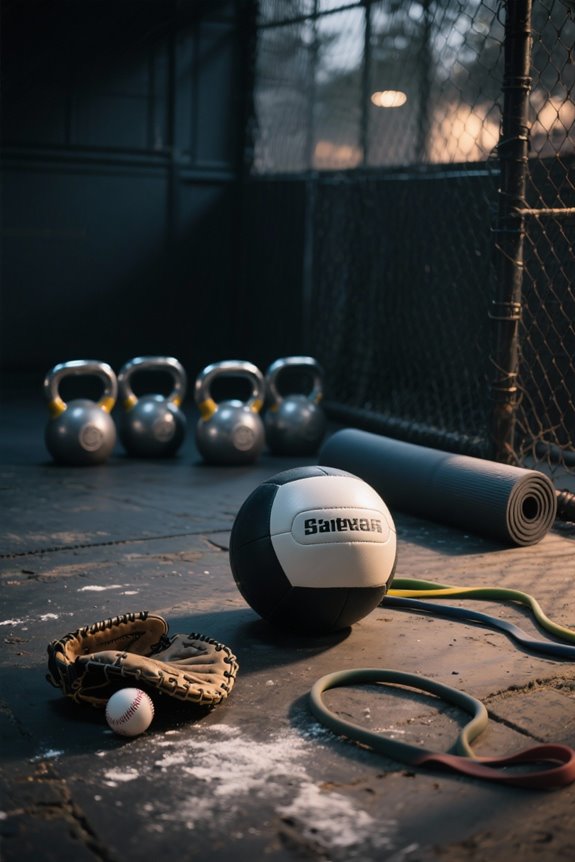
When seeking to enhance athletic performance, baseball players benefit greatly from exercises that promote stability and power. Key exercises include Pallof Rotations, which activate the obliques and improve weight transfer essential for effective swings and throws. Medicine Ball Chops engage the trunk in dynamic rotations, enhancing coordination and power generation. Carry Variations, such as single-arm and overhead carries, build unilateral stability, vital for baseball’s unique demands. Basic Trunk Stability training lays foundational strength, optimizing load distribution and injury prevention. Finally, Anti-Rotation Presses with bands challenge dynamic stabilization, fostering trunk stiffness. Incorporating these targeted exercises can greatly enhance a player’s core strength, supporting their performance on the field while reducing the risk of injuries. Additionally, utilizing a baseball swing trainer can complement these core workouts by improving swing mechanics and technique.
Rotational Core Exercises for Batting and Pitching
Rotational core exercises play an essential role in enhancing the performance of baseball players, particularly for batting and pitching. Medicine ball exercises, such as the Medicine Ball Shot Put and Medicine Ball Stomp, develop vital rotational power by engaging the hips, core, and arms. These movements mimic the torque needed in batting and pitching, emphasizing effective force transfer. Additionally, kneeling cable rotations improve rotational stability, ensuring precision in swings and throws. Exercises like the Half-Kneeling Rotational Toss focus on isolating the trunk for enhanced torque generation, while Extension Crossovers promote flexibility and balance. Altogether, these routines forge stronger connections between body segments, fortifying players against injury while fostering athletic excellence in their game. Implementing NOCSAE standards in training routines ensures that athletes prioritize safety alongside performance.
Incorporating Core Strengthening Into Training Regimens
Incorporating core strengthening into baseball training regimens considerably boosts an athlete’s performance. Core routines enhance energy transfer from the lower to upper body, essential for swing and throw power. Structured programs integrating core work can yield increases in exit velocity by up to 5 mph in just 30 days. To optimize results, training frequency should be tailored to individual abilities, typically involving 3 sets of 10 repetitions. Incorporating lower-intensity core activation exercises during warm-ups and cool-downs prepares the muscles for explosive actions. Significantly, core exercises should complement, not replace, fundamental lower and upper body workouts. This balance guarantees overall development, making athletes stronger and more agile on the field. Consistency remains critical for peak core strength gains. Additionally, high-quality materials used in training aids can enhance the effectiveness of core workouts by providing better stability and support during exercises.
Injury Prevention Through Core Workouts
Core workouts play an essential role in preventing injuries for baseball players. Strengthening the core can reduce lower back and extremity injuries by up to 62%. This significant decrease is due to the improved posture and control that core stability fosters. By engaging key muscles, baseball players can avoid biomechanical stresses and muscle imbalances that often lead to core injuries. Incorporating core recovery exercises not only enhances performance but also mitigates upper extremity overload injuries, particularly in the shoulder and elbow areas. Programs that focus on both static and dynamic core exercises streamline energy transfer during gameplay, ultimately lowering the risk of strains. Healthy cores are vital; they bolster players’ capabilities while shielding them from potential injuries on the field. Additionally, exercises using core training equipment can enhance the effectiveness of workouts, ensuring a comprehensive training approach.
Advanced Techniques for Enhanced Core Performance
To enhance performance on the field, baseball players can employ advanced techniques that strengthen the core effectively. Techniques like Pallof rotations and medicine ball chops boost dynamic stability, important for controlling movements during swings and throws. These exercises engage anti-rotational core stability, enabling better energy transfer from lower to upper body. Adding variable resistance or performing on unstable surfaces increases neuromuscular engagement, critical for generating explosive power. Isometric holds, such as side planks, develop core rigidity for better performance. Incorporating dynamic drills like dead bugs or anti-rotational lunges reinforces core alignment and coordination, fundamental for improved pitch accuracy. By progressively increasing intensity, these strategies equip players with enhanced strength and adaptability on the field. Additionally, utilizing tools like grip strength trainers can complement core training by improving overall hand and wrist strength, which is vital for batting and throwing precision.
Frequently Asked Questions
How Often Should Baseball Players Train Their Core?
Baseball players should engage in core training frequency of 2 to 3 sessions per week, optimizing sports performance enhancement. Consistency and balance in these workouts foster improved strength and stability essential for overall athletic success.
Are There Core Exercises for Youth Baseball Players?
Core exercises like planks, medicine ball throws, and clamshells fortify youth baseball players’ core stability, enhancing performance and contributing to injury prevention. Integrating these exercises fosters a sense of belonging and teamwork within the sport.
What Equipment Is Needed for Core Workouts?
To enhance core workouts, a stability ball and medicine ball are essential. These tools promote strength, stability, and coordination, fostering a sense of community among athletes committed to improving their performance and supporting each other’s growth.
Can Core Exercises Improve Batting Speed?
Core exercises markedly enhance batting speed by improving core stability, directly influencing batting mechanics. Increased strength and rotational power allow players to execute efficient swings, fostering shared growth and success within the baseball community.
How Long Should a Core Workout Last?
A core workout duration typically ranges from 15 to 30 minutes, emphasizing effective core routines. Striking a balance guarantees athletes remain focused and energized, enhancing performance without risking fatigue that may hinder overall training success.