As an Amazon Associate, we earn from qualifying purchases. Some links on this site are affiliate links at no extra cost to you. Our recommendations are based on thorough research and editorial judgment.

How Do I Analyze Pitcher Tendencies To Improve Hitting?

To analyze pitcher tendencies and enhance hitting, players should focus on pitch type clustering and fastball usage. Understanding how pitchers vary fastball types based on batter handedness is essential. Additionally, recognizing sequential pitching strategies helps batters anticipate pitch locations. Evaluating count-specific dynamics, such as the effectiveness of breaking balls and fastballs in different situations, is important. Finally, leveraging data analysis tools can reveal insights about pitcher behavior, setting the stage for even deeper understanding.
Key Takeaways
- Utilize pitch trajectory analysis tools to identify pitch types and their characteristics, enhancing your understanding of pitcher tendencies.
- Analyze sequential pitching strategies to recognize patterns and improve anticipation of pitch selection during various game situations.
- Focus on count-specific pitching dynamics to adjust hitting strategies based on the ball and strike tally against different pitchers.
- Observe high-leverage situations to understand how pitcher performance varies under pressure and adapt your hitting approach accordingly.
- Leverage data visualization tools and statistical models to interpret pitcher tendencies and refine your hitting strategies using comprehensive insights.
Understanding Pitch Type Clustering
You may be interested


How Can I Improve My Pitching Accuracy At Home?
January 1, 2026

How Can I Improve My Throwing Arm Strength?
January 1, 2026
Understanding pitch type clustering is essential for analyzing a pitcher’s performance and strategies. Pitch trajectory analysis focuses on capturing key features such as starting velocity, horizontal and vertical accelerations, and spin characteristics. Clustering algorithms, particularly hierarchical clustering, effectively group pitches sharing similar traits. This method reveals distinct pitch types, including fastballs and breaking balls, but can pose challenges when clusters overlap. To enhance accuracy, combining hierarchical clustering with methods like K-means and density-based clustering (DBSCAN) proves beneficial. These techniques enable better refinement in pitch classifications, allowing for a deeper understanding of subtle pitch variations and effectiveness. Ultimately, effective clustering aids in improving game strategies by identifying reliable pitch patterns and optimizing batter approaches. Additionally, analyzing pitching accuracy improvements helps to further refine hitting strategies based on a pitcher’s tendencies.
Analyzing Fastball Usage Patterns

Analyzing fastball usage patterns reveals how pitchers strategically adjust their approach based on various factors. Pitchers frequently alter their fastball types, like four-seam and sinker, depending on a batter’s handedness. For instance, Logan Webb uses fastballs 77.7% of the time against righties but drops to 54.4% against lefties. This tactical variation is quantified through adaptation scores, where higher scores indicate greater adjustments in fastball effectiveness. Spin efficiency plays a significant role, as effective four-seam fastballs often exceed 2300 rpm, enhancing their movement. Hitters who study these tendencies can anticipate pitch selection based on spin data and usage variations, allowing for smarter at-bats and improved chances for success against any given pitcher. Additionally, understanding NOCSAE safety certifications can help players make informed decisions about their equipment, ensuring optimal protection while focusing on their hitting strategy.
Recommended Products

Training baseball with finger placement markers for four different pitches: 4-seam fastball, 2-seam fastball, curveball and slider

TRAIN INDEPENDENTLY: Practice throwing, pitching, and fielding with or without a coach; The pitchback rebounder can return baseballs & softballs to simulate ground balls and line drives; Great for pitchers & fielders

DUAL COUNTER DESIGN that keeps track of pitches thrown by your pitcher and opposing pitcher simultaneously
Exploring Sequential Pitching Strategies

How do pitchers effectively disrupt a batter’s timing? They employ pitch tunneling strategies and leverage pitcher memory analysis to create deceptive sequences. By throwing two pitches with similar trajectories before diverging, pitchers confuse batters at the decision point. This non-linear relationship allows for fewer physical separations to yield higher swinging strike rates. Furthermore, pitchers adapt their sequences based on game situations, changing their approach from early to late innings. A study of 3.5 million pitches from 2015-2019 reveals patterns and clusters that illustrate how specific pitch types and locations can strategically manipulate a batter’s response. Understanding these sequential strategies can help batters anticipate movement, ultimately improving their hitting performance. Additionally, pitching speed variations can significantly influence a batter’s timing and reaction during at-bats.
Evaluating Count-Specific Pitching

Evaluating Count-Specific Pitching
In count-specific pitching, the dynamics change dramatically based on the ball and strike tally. Pitch effectiveness varies greatly; pitchers show higher quality and effectiveness when leading in the count, particularly with breaking balls. Hitter-friendly counts yield increased batting averages, often rising by 17-18 points per added ball. This preferred scenario leads to harder hits and greater home run rates. Conversely, when pitchers are behind, fastballs dominate their selections as a way to regain control. Count behaviors like these directly influence a batter’s anticipation and swing decisions, showcasing the strategic importance of the count. By understanding these nuances, hitters can better prepare for diverse pitching styles and make informed adjustments for more successful outcomes at the plate. Additionally, the use of high-quality materials in catcher’s gear can also enhance a player’s ability to react swiftly to pitch types and speeds.
High Leverage Situations and Hitters’ Adjustments

High-leverage situations fundamentally alter the dynamics of a game, pressing both pitchers and hitters to elevate their performances under intense pressure. In these moments, typically classified with a Leverage Index (LI) above 2.0, hitters adopt a high leverage mindset, making essential adjustments. They often become more selective, increasing walks while reducing strikeouts. Many hitters take additional pitches late in games, keenly aware of pitcher fatigue. However, clutch hitting can be tricky; most batters regress to their career norms despite the higher stakes. Situational awareness is key. While hard contact may decrease, effective hitters maintain a consistent approach, maneuvering through high-pressure moments. Understanding pitcher tendencies and their performance under pressure is crucial for excelling in these pivotal situations, just as players can enhance their skills with automatic pitching machines designed for various practice needs.
Runner on Base Adjustments for Hitters
When runners occupy the bases, hitters face a unique set of challenges and opportunities that can greatly influence their approach at the plate. Batting averages improve, rising from .245 to .259 with runners. This highlights the importance of situational hitting. Hitters can adjust their swing focus to prioritize ground balls or line drives when a runner is on first, facilitating advancement to second base. With bases loaded, the strategy shifts to solid contact, avoiding double plays while pushing runners home. Moreover, hitters must consider defensive alignments and anticipate pitchers’ tendencies. By maximizing runner advancement through strategic placement and contact, players markedly enhance their effectiveness, transforming the game’s dynamics and boosting their team’s scoring potential. Understanding first base glove sizing can also contribute to the overall effectiveness of players, as proper equipment enhances performance.
The Importance of Count-Specific Strategies
How essential is the hitter’s mindset during different counts? Understanding count-specific strategies considerably enhances a hitter’s advantage. Batting averages rise by 17-18 points for each additional ball in the count, showcasing this advantage. In hitter-friendly counts like 2-0, statistical evidence reveals slugging percentages around .700, reflecting their crucial role in maximizing offensive potential. Strategic swings in these counts focus on hard contact, emphasizing ideal exit velocity and launch angles. Players should embrace “A+ swings,” which reduce reliance on protective swings and prioritize powerful interactions. By committing to these strategies, hitters can enhance their performance and considerably improve both individual and team offensive stats. Ultimately, a solid mindset paired with appropriate strategies becomes essential for achieving success at the plate. Additionally, incorporating premium materials into batting gloves can further improve grip and overall performance at the plate.
Effects of Two-Strike Situations on Hitting
What happens to hitters’ approaches when they find themselves in two-strike situations? With two strikes, nearly half of all at-bats occur, leading to notable changes in strategy. Hitters often adopt a two-strike mentality, expanding their strike zones and focusing on making contact, resulting in decreased swing aggressiveness. Bat speed typically drops by about 1.6 mph, illustrating swing adjustments during these tense moments. Pitchers exploit this by throwing more outside pitches, often affecting contact quality. As a consequence, hitters may employ defensive swings aiming to protect the plate, though this can lead to weaker hits. Therefore, understanding the dynamics of two-strike situations is essential for improving hitting performance under pressure while mitigating strikeouts. Additionally, catchers wearing effective chest protectors for comfort can help mitigate the impact of foul tips during these crucial at-bats.
Examining Swing Tendencies and Metrics
While evaluating swing tendencies and metrics, it becomes clear that understanding these key statistics is essential for improving a hitter’s performance. Key swing metrics include swing rate, chase rate, and zone swing rate, which collectively assess hitter efficiency. High levels of Swing Decision%—averaging 74% in the league—indicate disciplined hitters who favor strikes while avoiding outside pitches. Comparing Z-Swing% to O-Swing% offers insights into a player’s plate discipline and offensive strategy. Additionally, incorporating bat speed into these evaluations enhances the assessment of swing quality. Fast bat speeds on well-placed pitches lead to positive run outcomes. By focusing on these metrics, players can refine their swing practices, ultimately enhancing their hitting effectiveness and contributing to team success. Furthermore, integrating training features like adjustable tees can help players practice specific swing mechanics based on these evaluated metrics.
Impact of Pitcher Accuracy on Hitting
Precision in pitching greatly influences a batter’s success at the plate. Accurate pitches that hit intended spots reduce batter success metrics by over 50%, impacting both batting average and slugging percentage. These pitches require batters to make swing adjustments, often leading to weaker contact. In fact, hitters facing accurate pitches are 3.28 times more likely to achieve poor outcomes. Conversely, poorly located pitches tend to produce high-quality contact with increased exit velocities and favorable launch angles. High spin rates can further enhance perceived pitch location, complicating matters for batters. To summarize, pitcher accuracy not only suppresses a batter’s ability to find the sweet spot but overall raises the likelihood of outs, emphasizing the importance of precise pitch location in game strategy. Using tools like batting stance mats can help players develop better muscle memory and improve their swings against varying pitch types.
Recommended Products

Professional Pitching Mat for Beginners: Designed specifically for young people beginner players, this softball pitching mat helps develop proper throwing mechanics and batting stance. The 54 x 12 inches size is suitable for both baseball and softball training, making it a versatile addition to any training mat routine. Whether used for pitching practice or batting practice, this mat supports consistent improvement.

VISUAL HITTING TRAINING AID FOR KIDS | Clear foot placement and stance markers help young hitters learn proper batting fundamentals through visual learning and repetition

Perfect Stance Every Time: This baseball hitting mat ensures that young players achieve a perfect stance automatically, setting them up for successful swings whether they're hitting off a tee or from a coach's pitch
Leveraging Data Analysis Tools for Insights
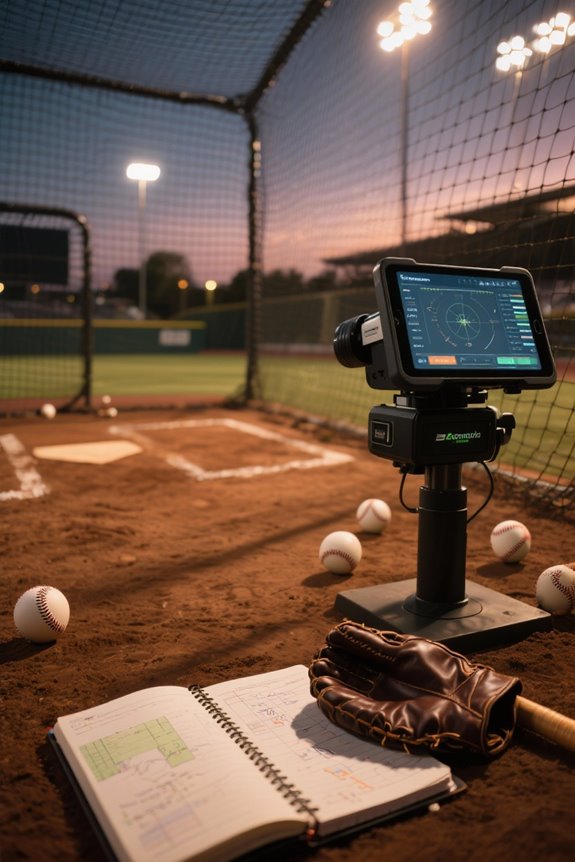
Data analysis tools offer powerful insights into pitcher tendencies, allowing teams to formulate effective strategies. Percentile charts and statistical overlays provide visual comparisons of pitchers’ strengths and weaknesses, making it easier to understand matchup dynamics. For example, weighted heatmaps aggregate pitch effectiveness in various strike zones, while spray charts pinpoint how often pitchers target specific areas. Tools like TrackMan SYNC merge high-resolution tracking data with video, enhancing pitch profile accuracy. Additionally, platforms such as Synergy Sports reveal preferred pitch sequences, fostering informed decision-making. By utilizing data visualization techniques, players can better anticipate pitches, optimizing their game approach. This commitment to leveraging technology cultivates a deeper understanding of opposing pitchers, ultimately leading to improved hitting performance.
Applying Statistical Modeling to Improve Performance
Applying statistical modeling offers teams a vital edge in improving player performance. By employing models like multinomial outcome frameworks, teams can predict batting results with impressive accuracy. Hierarchical Bayesian methods further refine predictions by considering player context, such as their position and the specific ballpark. Data visualization tools aid in interpreting complex data, making insights accessible to players and coaches alike. Machine learning techniques create player embeddings, capturing short-term performance trends effectively. Regression models estimate Expected Runs Produced, enabling targeted adjustments based on specific pitchers. Collectively, these statistical approaches establish clear performance benchmarks, connecting data with actionable strategies. Teams that embrace these methodologies foster a deeper understanding of how to enhance their players’ hitting prowess.
Recommended Products

Pitching trainer baseball for BOTH left-handed, and right-handed pitchers

SAFEGUARD PLAYERS: This Baseball & Softball Pitching Screen is engineered to protect pitchers from comebacks (line drives). It is ambidextrous, accommodating both right- and left-handed pitchers. The net offers durable protection during soft toss, side toss, and front toss drills, enhancing safety and convenience for batting, pitching, and swing practice.

ONE MACHINE TWO SPORTS: PowerNet’s Launch F-lite Baseball and Softball Pitching Machine is designed for both sports. Two sets of tripod base legs are interchangeable to alter the pitch height preference between sports. 12 Launch F-Lite pitching machine baseballs and softballs are included
Frequently Asked Questions
How Can I Improve My Pitch Recognition Skills?
To improve pitch recognition skills, individuals should focus on enhancing visual cues through targeted practice. This approach fosters quicker identification of pitch types, allowing for better timing and ultimately leading to more successful at-bats.
What Drills Help Develop Better Plate Discipline?
Like a seasoned watchmaker, he meticulously crafted timing drills to enhance pitch selection. Drills such as deep count simulators and take-and-reach exercises fostered unwavering plate discipline, creating a community of connected, disciplined hitters enthusiastic to belong.
How Can I Effectively Study Opposing Pitchers?
To effectively study opposing pitchers, one should focus on pitch selection and timing techniques, analyzing pitch types, locations, and sequences. This approach fosters a deeper understanding, enhancing both individual performance and team strategy in competitive settings.
What Are the Best Strategies for Hitting Breaking Balls?
Effective breaking ball strategies combine keen pitch analysis with adaptable swing mechanics. Hitters recognize spin early, adjusting their timing and approach, balancing patience and aggression, ultimately enhancing contact quality against challenging breaking pitches while fostering a supportive team environment.
How Does Mental Approach Affect Hitting Performance?
A hitter’s mental approach greatly influences performance, with confidence fostering consistency and focused attention enhancing pitch recognition. Visualization techniques can help create a positive mindset, reinforcing resilience and improving overall results at the plate.