As an Amazon Associate, we earn from qualifying purchases. Some links on this site are affiliate links at no extra cost to you. Our recommendations are based on thorough research and editorial judgment.


How Can I Improve My Pitching Accuracy At Home?

To improve pitching accuracy at home, practice specific drills like the towel and wall drill to enhance arm speed and balance. Use video analysis tools for self-review, focusing on mechanics and release point. Incorporate mental strategies, such as visualization, to boost confidence. Understanding physical factors, such as body alignment and grip pressure, enhances control. Advanced tools like Rapsodo Pitching 2.0 provide valuable feedback. With dedication and the right techniques, results will improve consistently. More insights await ahead.
Key Takeaways
- Practice towel drills to strengthen arm speed and follow-through without the pressure of using a baseball.
- Use video analysis tools to review your mechanics, identifying areas for improvement in real-time.
- Focus on mental rehearsal and visualization techniques to enhance performance and hit your desired release point.
- Incorporate balance position exercises to improve stability and prevent over-rotation during your pitch.
- Utilize targeted aim practice with a marked spot to increase accuracy and consistency in your throws.
Drills and Training Techniques for Precision
You may be interested

How Can I Improve My Mental Game For High-Pressure Situations?
December 22, 2025
How Can I Improve My Throwing Arm Strength?
December 22, 2025
How Can I Practice Pitching Without A Catcher?
December 22, 2025
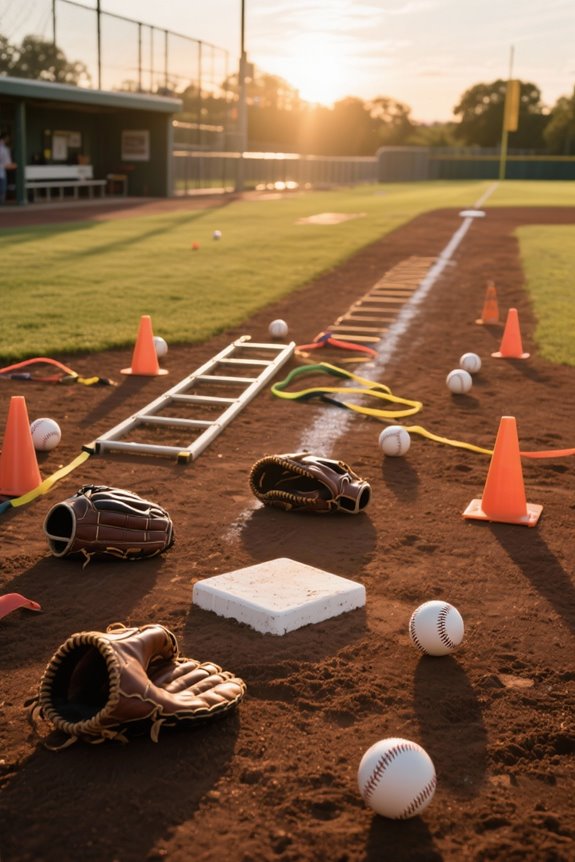
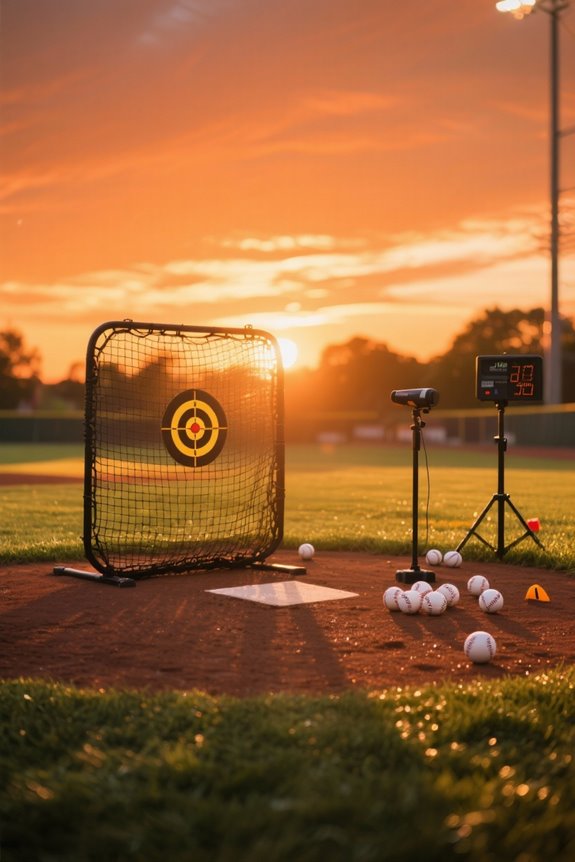
To improve pitching precision, athletes can implement a variety of targeted drills designed to enhance their mechanics and control. The towel drill is a fantastic tool that helps strengthen arm speed and follow-through without adding ball stress. The wall drill focuses on maintaining a balance position, preventing over-rotation while promoting body alignment. As athletes practice targeting aim, they gain vital accuracy with each throw. Engaging in balance position exercises reinforces stability, ensuring a smooth pitching motion. A combination of these drills cultivates muscle memory, making precise pitches feel natural over time. By committing fully to the follow-through and maintaining consistent mechanics, pitchers can effectively boost their overall pitching accuracy while training at home. Additionally, utilizing a baseball pitching net can provide essential feedback on pitch accuracy and help refine skills during practice sessions.
Utilizing Video and Data for Self-Analysis
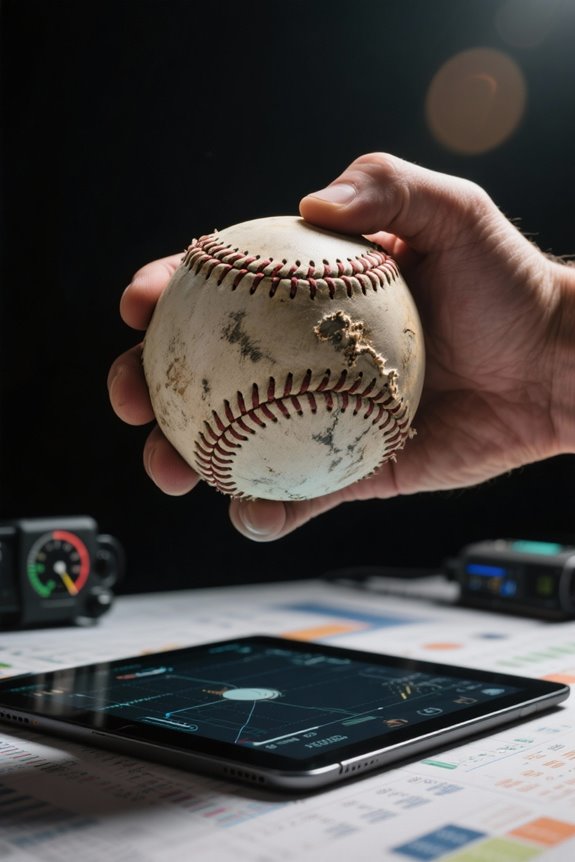
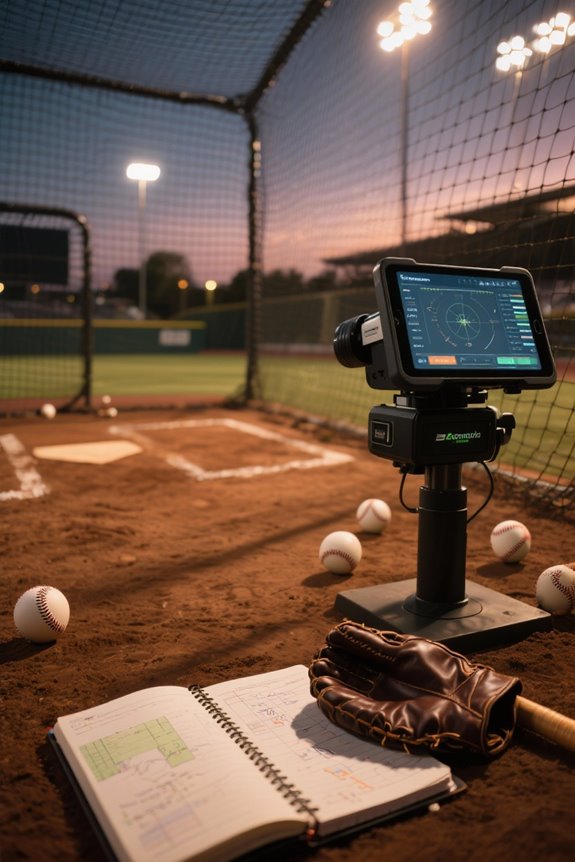
Improving pitching accuracy extends beyond drills; it also involves harnessing technology for self-analysis. Video analysis tools, like PitcherNet, achieve up to 96.82% accuracy in identifying pitcher movements, offering data on velocity and release points. Real-time video analytics allow for ongoing tracking during practice, eliminating traditional data reliance. Techniques such as video delay enhance immediate feedback, fostering athlete independence in correcting errors. This method highlights precise movements, aiding in refining arm angles and release timing. Slow-motion replays help detect mechanical faults that could impact performance, while side-by-side comparisons reveal contrasts with professional models. Together, these tools foster a deeper understanding and provide concrete performance tracking to boost overall pitching effectiveness. Additionally, utilizing pitching machines can further enhance practice by providing consistent pitch delivery, allowing for focused improvement on accuracy.
Mental Strategies and Statistical Focus

How can mental strategies enhance pitching accuracy? Employing mental rehearsal techniques can greatly boost a pitcher’s performance. This visualization of successful throws activates brain areas related to physical execution, fostering stronger motor skills. By concentrating on the release point and target area, pitchers can improve spatial precision and reduce pitch variability, especially under pressure. Incorporating mindfulness and controlled breathing helps lower anxiety, leading to steadier results. Additionally, utilizing statistics like Command Zone Rating Plus (CZR+) provides objective insights into pitch command, allowing for effective goal-setting. Emphasizing cognitive resilience through consistent practice enables pitchers to adapt to challenges. As they refine their mental focus and engage with performance metrics, they strengthen both their mind and skills, creating a supportive community of aspiring athletes. Furthermore, integrating the use of pitching machines can enhance practice sessions and improve accuracy through consistent repetition.
Recommended Products

Throws any type of ball, hard balls, fast pitch softballs, dimple balls, light flight, plastic and even soccer and volleyballs

GREAT FOR TEEBALL: The Pop Rocket helps kids perfect hand-eye coordination by teaching them to hit a moving baseball so they can make the jump from teeball to pitching

MINI FOAM BASEBALLS: Great for precision training and batting practice; Each ball measures 4 cm in diameter to encourage advanced players to improve accuracy
Understanding Physical and Mechanical Factors
Understanding the physical and mechanical factors that contribute to pitching accuracy is essential for any aspiring athlete. Proper body alignment is important, as it maintains a consistent motion path for each pitch. A strong push-off force from the back leg generates momentum, while the lead leg’s braking force stabilizes the body for energy transfer. Ideal lead knee flexion at about 30° during release enhances pitch direction control. Additionally, grip pressure and finger positioning are critical in determining ball spin and overall accuracy. A smooth wrist snap, synchronized with stride and torso rotation, tightens control, allowing pitchers to hit their desired spots with confidence. Practicing these mechanics consistently can lead to improved performance on the mound. Using training aids like GoSports Weighted Training Balls can further enhance strength and accuracy during practice sessions.
Leveraging Technology and Advanced Tools
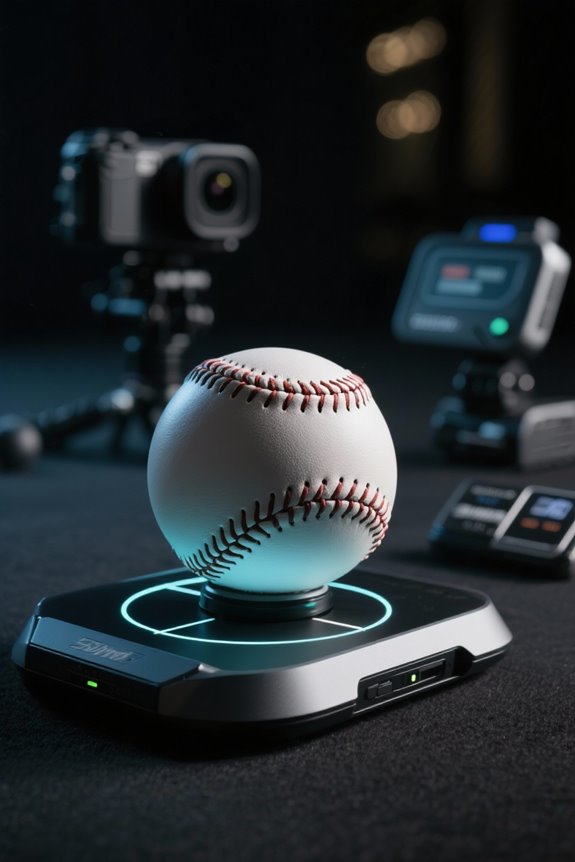
Why settle for outdated training methods when technology can elevate pitching skills to new heights? AI simulators, like the Trajekt Arc pitching machine, replicate MLB-level pitches, helping pitchers refine accuracy at home. With real-time feedback, these devices mimic pitch shapes and velocities, offering control unseen in traditional tools. Likewise, Rapsodo Pitching 2.0 captures critical metrics including spin rate and velocity, allowing for targeted adjustments and mechanical improvements. Video analysis apps, such as V1 Baseball, provide slow-motion reviews of mechanics, aiding players in correcting flaws. To enhance communication, GoRout’s wearable devices deliver instant pitch calls, streamlining practice and decision-making. Integrating these advanced tools fosters a supportive environment for serious pitchers wanting to improve their accuracy effectively. Additionally, utilizing radar guns for baseball helps track pitching velocity and refine techniques, providing essential data for performance assessment.
Recommended Products

Instantaneous Speed Measurements: Provides accurate speed readings from 10 to 200 mph, ideal for a variety of sporting and automotive applications.

⚾ 【Accurate Speed Measurement with 24GHz Radar】This radar gun features upgraded 24GHz radar technology that delivers fast and stable readings with ±1 MPH/KPH accuracy. It measures speeds from 3–150 MPH (5–199 KPH), making it perfect for tracking pitching velocity, swing speed, and ball speed during baseball or softball training.

【Next-Generation Baseball Radar Accuracy】Upgrade your training with the Smart Partner 2.0 baseball radar gun—offering instant and more accurate readings with a precision of ±1 MPH. it is able to shoot and catch as low as 3 mph to as high as 150 mph.Perfect for measuring both pitching and swing speeds with professional-grade reliability.
Frequently Asked Questions
How Often Should I Practice to Improve My Pitching Accuracy?
To improve pitching accuracy, the recommended practice frequency is 5-6 days per week, incorporating daily drills that emphasize technique. Consistent practice enhances skills while fostering a sense of community and belonging among fellow aspiring pitchers.
Can Specific Exercises Target Pitching Accuracy Improvement?
Targeted drills, like the Three-Ball Drill, can dramatically transform a pitcher’s accuracy. Regular accuracy assessments paired with these exercises build confidence, creating a sense of community among aspiring pitchers united in their journey towards precision and mastery.
What Impact Does a Coach Have on My Accuracy?
A coach notably influences accuracy through targeted feedback and technique adjustments. Their guidance fosters confidence and reduces performance anxiety, allowing pitchers to develop a more fluid, consistent motion that enhances overall effectiveness and success on the field.
How Do Weather Conditions Affect Pitching Accuracy?
Weather conditions greatly impact pitching accuracy. High humidity affects grip and pitch dynamics, while wind can alter pitch trajectory, leading to less predictable results. Together, these factors create challenges that pitchers must navigate effectively to maintain accuracy.
What Nutritional Habits Can Support Better Pitching Performance?
Nutritional habits supporting better pitching performance include adequate protein intake to enhance muscle recovery and emphasizing hydration importance for ideal focus and neuromuscular coordination, creating a foundation for improved accuracy and overall performance on the field.