As an Amazon Associate, we earn from qualifying purchases. Some links on this site are affiliate links at no extra cost to you. Our recommendations are based on thorough research and editorial judgment.


How Do I Choose The Right Baseball Program For My Child?

To choose the right baseball program for your child, first explore the different options, like Little League and travel teams. Assess your child’s skill level and commitment ability to avoid burnout. Evaluate coaching qualifications, ensuring safety and effective training. Understand local residency rules for eligibility. Finally, examine the selection process to know how teams are formed. By aligning your child’s goals with program offerings, you can find a solid fit. More insights await.
Key Takeaways
- Assess your child’s age and skill level to match them with the appropriate program, such as Little League or travel teams.
- Evaluate commitment levels required by different programs; recreational options may suit beginners, while travel teams demand more intensive training.
- Research the coaching staff’s qualifications and experience to ensure they provide a safe and productive learning environment.
- Understand local league boundaries and residency guidelines to ensure your child is eligible for participation.
- Consider family involvement opportunities within the program, fostering a sense of community and support for your child.
Understanding Different Types of Baseball Programs
You may be interested



What types of baseball programs are available for young athletes? Several structured programs cater to different age groups and skill levels. Little League offers divisions like Tee Ball for ages 4-7, focusing on fun and basics, while the Majors Division challenges ages 9-12 with competitive play and possibilities for World Series participation. On the travel side, Division 1 teams face strong regional and national opponents, while Division 3 serves beginners with local competition. Each level promotes player development, with program differences highlighting the intensity and commitment expected. Families can enjoy a sense of belonging as they choose a program, ensuring that young athletes find the right fit to grow in skills, teamwork, and sportsmanship. Additionally, selecting the right baseball pants can enhance comfort and performance on the field.
Assessing Skill Levels and Commitment Requirements

How can parents effectively evaluate their child’s skill levels and commitment to a baseball program? Parents should begin with a skill evaluation using standardized criteria. Assess hitting through swing mechanics and contact consistency. Pitching should be evaluated by velocity and control. Fielding skills can be tested for accuracy and quick decision-making, while running speed is measured through timed sprints. Additionally, parents might consider investing in a pitching machine to help their child practice consistently and improve their skills in a controlled environment. Commitment levels vary, with recreational programs requiring less training intensity compared to travel teams that may demand multiple practices per week. Parents must consider their child’s ability to handle rigorous schedules without risk of burnout. Matching the child’s skills with the program’s demands is essential in fostering a supportive environment that encourages participation and growth in the sport.
Evaluating Coaching and Management Structures
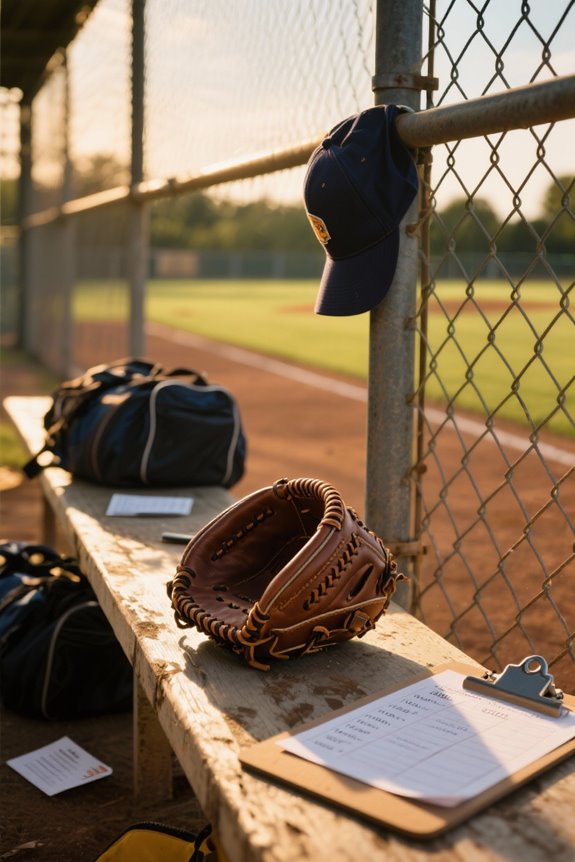
Selecting the right baseball program involves not only evaluating a child’s skills and commitment but also scrutinizing the coaching and management structures in place. Coaches should hold relevant certifications, like those from USA Baseball, ensuring they possess the technical knowledge and skills necessary for youth development. Background checks enhance player safety and build trust. A clear leadership hierarchy, including designated roles for head coaches and assistants, streamlines communication and supports effective team dynamics. Regular updates to parents about schedules and team progress foster transparency. Organized practice sessions, emphasizing skill development and fun, keep players engaged. Finally, incorporating specialty trainers for position-specific skills can elevate overall player performance, creating an enriching environment for all involved. Additionally, programs that invest in adjustable premium baseball gloves can help players develop their skills effectively while ensuring comfort and performance on the field.
Exploring Eligibility and Residency Guidelines

When considering the eligibility of a player for a baseball program, understanding residency guidelines is essential. Each local league has specific boundaries approved by Little League Baseball, requiring players to reside or attend school within these limits. Residency verification involves providing documents such as a driver’s license or utility bill, all clearly showing parent or guardian names and addresses. These documents must be dated within a defined period to confirm legitimacy. Schools within the league’s boundaries can also help establish eligibility through official enrollment records. Significantly, changing residency solely for player eligibility can result in serious penalties, including disqualification. Awareness of these guidelines fosters a sense of community as players pursue their passion for baseball. Additionally, ensuring that players have access to affordable team uniforms can enhance their overall experience in the program.
Navigating Team Selection Processes
Choosing the right baseball team for a child may seem intimidating, but understanding the selection process can provide clarity. Team evaluation criteria focus on a variety of skills, including hitting, pitching, and sportsmanship—using a 1-5 scoring scale across multiple skill stations to guarantee selection fairness. Diverse stakeholders, from coaches to board members, participate in the selection process, allowing for unbiased input through equal voting systems. Draft methods are often employed to maintain balanced team strength, which can also consider last season’s performance. Additionally, player commitment and availability are essential factors, as they contribute to team cohesion. Clear communication informs families about the procedures, promoting transparency and trust in the selection process. Coaches may also utilize magnetic baseball coaching tools to effectively assess and enhance player skills during evaluations.
Aligning Your Child’s Goals With Program Offerings
How can parents verify their child’s ambitions align with available baseball programs? Understanding goal alignment is essential. Parents should first assess their child’s age and skill level, identifying appropriate program expectations based on recreational or competitive focuses. For a young child, a recreational league prioritizes enjoyment and balanced play, whereas a travel team demands higher skill and commitment. Consider whether your child seeks casual fun or aims for serious competition. Programs also differ in coaching styles and atmosphere; some nurture friendships, while others emphasize elite development. By articulating their child’s aspirations and reviewing program structures, parents can guarantee their choice supports not just skill growth but also creates a sense of belonging in the baseball community. Additionally, understanding the importance of position-specific gloves can help parents choose a program that aligns with their child’s playing position and development needs.
Frequently Asked Questions
What Is the Typical Age Range for Participation in Baseball Programs?
Typical youth participation in baseball programs occurs between ages 4 to 12, aligning with age guidelines set by leagues. This range fosters belonging as children develop skills and camaraderie within age-appropriate environments tailored for their growth.
How Can I Identify Program Quality Before Enrolling My Child?
To identify program quality, assess coach qualifications and seek player testimonials. Significantly, CET-trained coaches receive higher evaluations and lead to lower anxiety levels among players, fostering a supportive environment that enhances overall enjoyment and development.
What Are the Financial Costs Associated With Different Baseball Programs?
Financial costs associated with baseball programs include registration fees ranging from $600 to $2,500 and equipment costs for essentials like bats and uniforms, which can total $3,700 annually, fostering a sense of community investment.
Are There Opportunities for Girls in Youth Baseball Programs?
Opportunities for girls in youth baseball programs have expanded considerably, fostering inclusivity through community leagues and initiatives. Increasing participation rates highlight the importance of supportive environments where girls can thrive alongside their peers in sports.
How Do Travel Requirements Differ Between Local and National Baseball Programs?
Travel requirements vary considerably; local programs involve simpler travel logistics with fewer commitments, while national programs demand extensive travel and increased program commitment, often requiring families to manage complex arrangements and substantial time investments.