As an Amazon Associate, we earn from qualifying purchases. Some links on this site are affiliate links at no extra cost to you. Our recommendations are based on thorough research and editorial judgment.


How Do I Train My Reaction Time For Better Fielding?

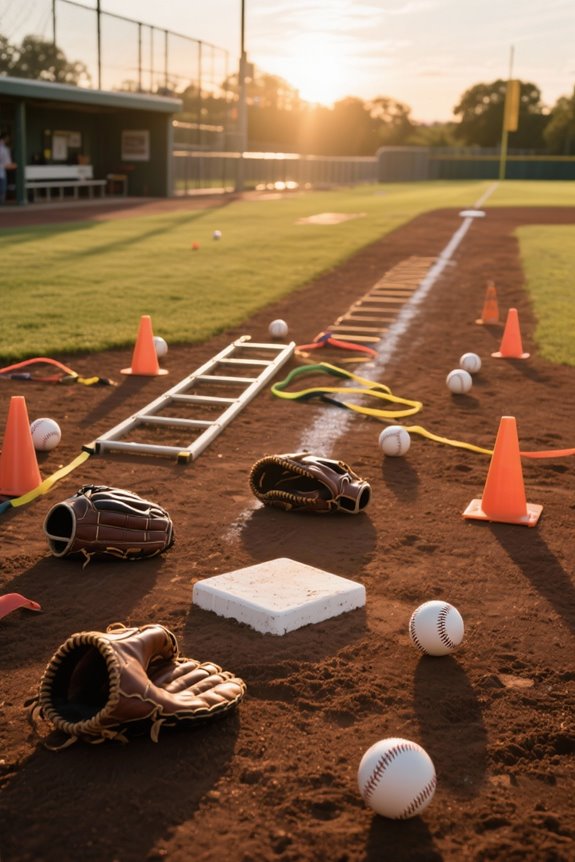
To train reaction time for better fielding, start with rapid fire ground balls drills that emphasize quick responses and proper technique. Incorporate agility drills, like cone exercises, to sharpen directional movement. Improve footwork by maintaining a balanced stance and practicing efficient positioning. Use visual and auditory cues to enhance decision-making. Consistent repetition builds muscle memory, and adjusting drill difficulty keeps the training challenging. With these techniques, players can elevate their game and improve on-field performance. There’s more to explore about maximizing training effectiveness.
Key Takeaways
- Practice the Rapid Fire Ground Balls Drill to enhance quick reactions with varying difficulty levels for effective ball tracking.
- Utilize cognitive conditioning with unpredictable reaction balls and auditory signals to improve decision-making and visual processing.
- Incorporate agility training, such as cone and ladder drills, to enhance lateral movement and quick response times in the field.
- Focus on proper footwork and posture, maintaining a balanced stance for efficient movements when fielding ground balls.
- Use consistent repetition of drills to develop muscle memory, gradually increasing speed and complexity to simulate game conditions.
Importance of Reaction Time in Fielding
You may be interested



Although many factors contribute to successful fielding in baseball, reaction time stands out as a critical component. Players must have quick reaction time metrics to respond effectively to batted balls, combining speed with movement for peak performance. Research shows that improved visual processing abilities correlate positively with superior fielding skills, allowing players to track the ball more accurately. This swift response time enables better defensive positioning, ultimately leading to enhanced plays that save runs. As players age and develop, their reaction times improve, enabling them to handle faster pitches confidently. Training programs that focus on building these skills not only enhance individual performance but also contribute positively to the team’s overall defensive strength—bringing everyone closer to shared success. Additionally, selecting the right youth baseball bat can also influence a player’s ability to react effectively during fielding situations.
Rapid Fire Ground Balls Drill

The Rapid Fire Ground Balls drill is an effective exercise designed to enhance fielding skills by delivering a high volume of ground balls in quick succession. This drill helps infielders react swiftly to ground ball variations while minimizing downtime. Starting with easier, slower grounders, players gradually face faster and more complex balls, incorporating lateral movements to sharpen agility. The practice emphasizes proper footwork and body positioning to guarantee balance and power. Additionally, emphasizing mental visualization aids quick decision-making when fielding. Players can shuffle between grounders to prepare for swift directional changes. By reinforcing smooth glove-to-hand transfers and funneling techniques, participants build muscle memory, enhancing their overall performance during game situations and improving endurance. Incorporating target practice capabilities can further refine a player’s reaction time and precision when fielding.
Incorporating Agility Training
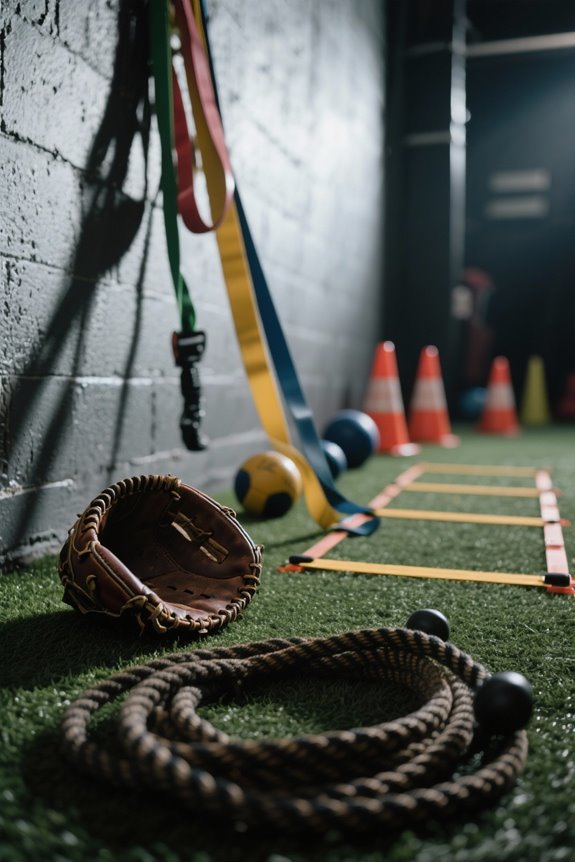
Building on the skills developed in the Rapid Fire Ground Balls drill, incorporating agility training can greatly enhance a player’s fielding capabilities. Agility benefits extend beyond mere speed; they improve lateral movement and reaction times, crucial for reaching difficult ground balls. Coaches increasingly use training variations such as cone drills and ladder drills, which sharpen quick direction changes. Agility hurdles also foster explosive foot placement, mimicking real-game scenarios. Furthermore, combining drills simulates unpredictable fielding situations, while sprint starts develop immediate acceleration. These targeted exercises refine an athlete’s coordination and fast-twitch muscle activation, indispensable for effective fielding. This thoughtful integration of agility training not only boosts performance but fosters a strong connection among teammates, enhancing overall team dynamics on the field. Additionally, utilizing agility ladders can further improve foot control and speed, essential for excelling in fielding scenarios.
Improving Footwork and Posture

Improving footwork and posture is essential for effective fielding in baseball. A balanced stance begins with feet shoulder-width apart and knees slightly bent, ensuring quick lateral movement. Players should focus on efficient foot replacement techniques, like “clicking the heels,” to minimize unnecessary motion. When shifting after fielding, utilizing a side shuffle or the first step forward creates a strong throwing position. Maintaining a low, athletic posture with a straight back helps catch ground balls effectively. The glove should remain open, ready for action. As players throw, their elbows should be shoulder-high, maximizing power and accuracy. Practicing these fundamentals develops an adaptable fielding approach that fosters teamwork and confidence on the field. Incorporating tools like baseball training aids can further enhance reaction time and overall performance.
Reaction Drills With Visual and Auditory Cues
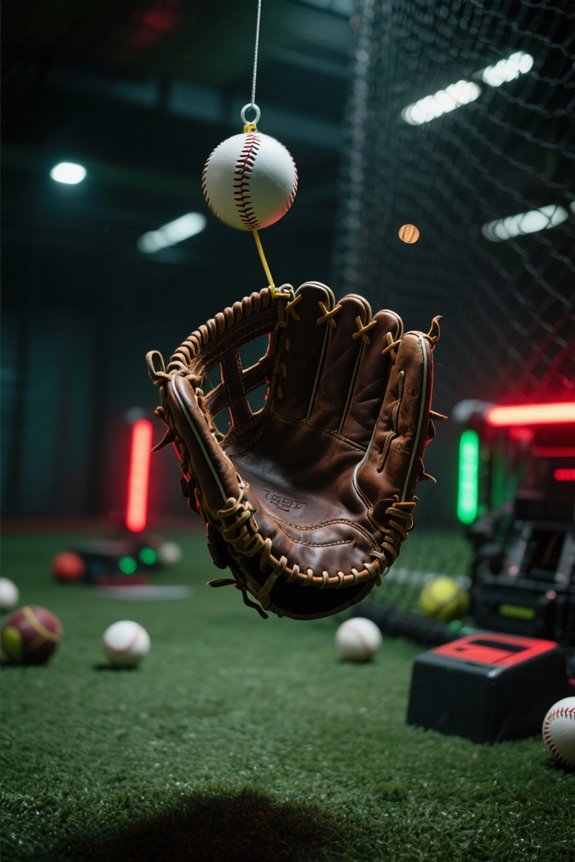
Effective reaction drills utilizing visual and auditory cues can greatly enhance a player’s fielding performance. Visual tracking can be improved with reaction balls that bounce unpredictably, honing reflexive catching abilities. Using colored lights or flashlights as directional signals boosts reaction speed through varied stimuli. Additionally, rapid-fire ground balls help develop anticipatory skills by changing ball placements. Auditory processing also benefits from verbal commands or whistle signals, simulating in-game distractions. Drills that combine both visual and auditory cues create multi-sensory challenges, enhancing decision-making under pressure. Utilizing technology such as reaction light training systems or apps can further track progress and refine skills. These combined drills foster confidence and elevate performance in game-like situations. Furthermore, incorporating automatic pitching machines can simulate various pitch speeds, providing realistic practice scenarios that enhance reaction time.
Enhancing Hand-Eye Coordination
Hand-eye coordination is a critical skill for athletes, particularly in sports that demand quick reflexes and precise movements. Tennis ball drills serve as an effective way to enhance this crucial ability. By utilizing unpredictable bounces against walls or boxes, athletes refine their visual processing speed. Multi ball techniques, such as juggling two tennis balls, challenge cognitive and motor skills, pushing coordination limits. Incorporating varying catching methods—like one-handed grabs or behind-the-back catches—adds complexity. Athletes can further boost their skills by integrating movement patterns like jogging or hopping during these drills. This progressive training guarantees steady improvement, making hand-eye coordination smoother and faster, which is essential for successful fielding. Additionally, using batting stance mats can help reinforce muscle memory, providing a solid foundation for overall athletic performance.
Peripheral Vision Training Techniques
While many athletes focus on refining their skills through direct attention, expanding peripheral vision offers a powerful advantage in sports. Peripheral vision exercises enhance awareness of surrounding objects, essential for tracking teammates and opponents. Using specialized goggles allows athletes to limit central focus, fostering reliance on peripheral cues. Visual cue drills, like catching partner-tossed tennis balls, improve both reaction time and peripheral awareness. Incorporating strobe glasses can sharpen light stimuli processing, while juggling routines train the brain to monitor multiple moving objects. Light boards help maintain central focus while responding to off-center stimuli, clarifying positional awareness. These targeted techniques collectively boost athletes’ decision-making speed, contributing to better overall performance on the field. Additionally, resistance bands can be integrated into training regimens to enhance strength and conditioning, which further supports improved reaction times during gameplay.
Cognitive Conditioning for Reactivity
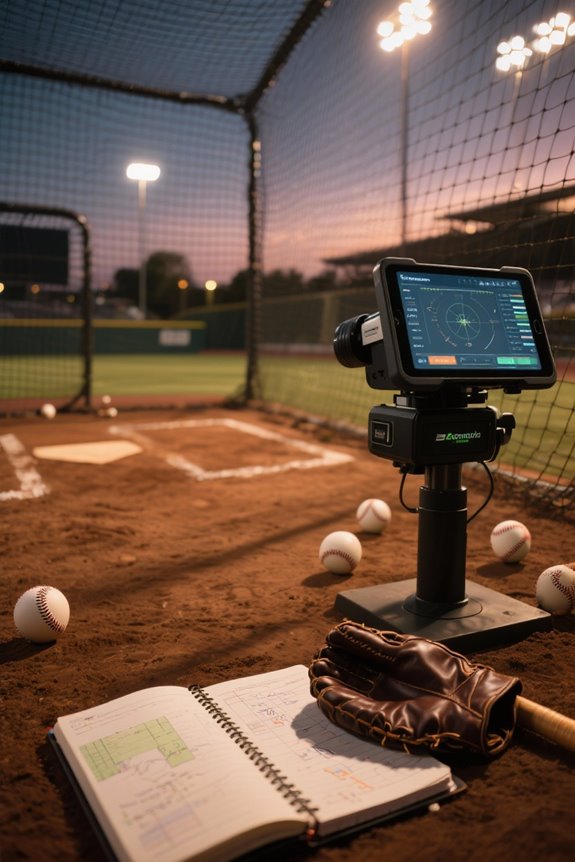
How can athletes boost their reactivity on the field? Cognitive conditioning plays an essential role in this pursuit. Engaging in cognitive exercises, particularly neurofeedback training, has shown a significant effect on enhancing reaction time. Studies reveal a large standardized mean difference (SMD = −1.08) when comparing athletes who undergo neurofeedback to control groups. This training helps athletes manage their brain activity, leading to better decision-making under pressure (SMD = 1.12). Additionally, incorporating attention enhancement strategies is fundamental. These focused exercises sharpen the mind, improving the connection between stimulus perception and movement execution. By embracing cognitive conditioning, athletes not only heighten their reaction time but also foster a stronger connection with their performance, essential for fielding success. Moreover, understanding the importance of impact absorption technology can improve overall safety and confidence during play.
Specificity of Training for Baseball
Fielding in baseball requires a specialized training approach to enhance performance on the diamond. Specific drills, like the T-Drill and double-play exercises, are vital. These training methods focus on improving footwork, agility, and hand-eye coordination. For instance, a well-timed prep step, executed with fluidity, boosts balance and reaction speed. Mental preparation also plays an important role; athletes must learn to anticipate plays and react quickly. Skill transfer becomes evident when players apply these practiced movements in real-game situations. Incorporating varied starting positions and progressive drill complexity further mimics game reality. By honing these techniques, players can achieve better fielding results, demonstrating the incredible impact of focused training on their overall performance. Using tools like GoSports Weighted Training Balls can also enhance reaction time and overall agility during fielding drills.
Consistent Repetition and Muscle Memory
Consistent repetition serves as the cornerstone for developing muscle memory in athletes, particularly in baseball fielding. By engaging in targeted reaction drills, players cultivate neural pathways that enhance their ability to recognize and respond to stimuli swiftly. Prep step drills, including hula hoops, develop automatic, fluid movements essential for quick reactions. Lateral shuffle drills refine glove positioning and shift speed, while short sprints build explosive movements. Additionally, performing identical fielding techniques reinforces correct motor patterns and reduces reaction delays. Repeating double-play footwork and glove transfers fosters automaticity in complex tasks. When initial repetition is deliberate, increasing speed later enhances precision, fundamental for game situations. Consistent practice is essential for athletes aiming for seamless performance on the field. Utilizing training tools like the Champro Reaction Ball can further improve hand-eye coordination and reaction time during drills.
Adjusting Drill Difficulty and Pace
Adjusting the difficulty and pace of drills is integral to maximizing reaction time for young athletes. Drill customization begins with manageable speeds to build confidence. Once athletes master the basics, incrementally increasing the pace or complexity is essential. Timed repetitions can help reduce response time, simulating game pressures. Introducing distractions sharpens cognitive load and reaction processing. To further enhance adaptability, varying drill pace between slow and game-speed mimics real play conditions. Unpredictable timing signals and sudden ball releases promote spontaneous reactions. Tracking performance metrics, like reaction time and accuracy, allows for data-driven adjustments. This adaptive pacing approach serves to progressively challenge athletes, ensuring they develop skills under various conditions, ultimately leading to improved fielding success.
Utilizing Cone Drills for Directional Movement
Cone drills serve as a dynamic training tool for enhancing directional movement in young athletes. Utilizing various cone layouts, such as squares and zigzags, players practice agility patterns key to baseball. Cones spaced about 10 feet apart effectively simulate field distances, allowing athletes to focus on lateral shuffling, sprinting, and backpedaling. By incorporating turns and angles, these drills train players to optimize foot placement when changing direction. Specific drills, like the 4-cone reaction drill, challenge participants to respond quickly to visual cues, further improving spatial awareness. This diverse approach not only develops essential movement skills but also builds muscle memory for common fielding maneuvers, ensuring athletes are prepared for unexpected in-game situations.
Integrating Strength and Conditioning for Peak Performance
Strength and conditioning play an essential role in maximizing athletic performance, especially in fielding. High-intensity training enhances both high-force and high-velocity neuromuscular outputs critical for quick reactions. Programs that target the entire force-velocity relationship boost explosive strength and muscle recruitment efficiency. Combining strength with plyometrics can lead to significant improvements in sprint acceleration and reactive ability, suitable for fielding scenarios.
Training frequencies of 3-4 times per week provide ideal neuromuscular adaptation, leading to faster recovery and improved performance. Tools like force plates and biofeedback analytics customize workouts based on individual profiles, enhancing effectiveness. This strategic integration of methods allows athletes to develop explosive power, translating directly into better reaction times and overall fielding success.
Frequently Asked Questions
How Long Should I Practice Reaction Drills Each Week?
Practicing reaction drills should encompass 2-3 sessions weekly, with varying durations of 15-30 minutes. This training schedule optimizes frequency and recovery, allowing athletes to develop their skills effectively while fostering a supportive training environment.
What Clothing Is Best for Agility Training Sessions?
For ideal agility training, lightweight workout footwear paired with breathable fabrics enhances comfort and performance. Many athletes hesitate about fit, but a loose yet supportive design promotes freedom of movement, fostering a sense of community among active individuals.
Can Youth Players Benefit From These Drills?
Youth players greatly benefit from targeted reaction drills, enhancing their agility and fielding abilities. The effectiveness of these drills fosters skill development, communication, and teamwork, creating an inclusive environment that encourages belonging and participation among young athletes.
How Can I Track My Progress in Reaction Time Training?
Like a hawk eyeing its prey, athletes can track reaction time by using wearables and apps for thorough progress tracking. Regular testing alongside consistent logging fosters a sense of belonging within a community of dedicated peers.
What Common Mistakes Should I Avoid During Training?
Avoiding poor technique and setting unrealistic expectations enhances training effectiveness. Individuals often neglect proper footwork and composure, leading to frustration and errors. Focusing on fundamental skills fosters improvement and cultivates a supportive atmosphere for everyone involved.