As an Amazon Associate, we earn from qualifying purchases. Some links on this site are affiliate links at no extra cost to you. Our recommendations are based on thorough research and editorial judgment.


What Questions Should I Ask Before Joining A Baseball Team?

Before joining a baseball team, it’s essential to ask about costs and fees. Registration fees can range from $85 for T-Ball to $190 for older players. Understanding the practice and game schedule is also key, with teams typically practicing 2–3 times a week. Inquire about coaches’ qualifications, focusing on certifications and safety training. Additionally, ask about team structure and roster dynamics. These questions guarantee a clear understanding of the commitment and culture of the team before deciding. Keep exploring to uncover even more insights!
Key Takeaways
- Inquire about total costs, including registration fees, uniforms, and additional equipment expenses to ensure budget alignment.
- Ask about the team’s practice schedule to confirm the commitment aligns with your availability and expectations.
- Verify the coaching credentials, including certifications and experience, to ensure a quality training environment.
- Understand the team roster size and structure to gauge your role and the competition for positions.
- Clarify logistics regarding registration, background checks, and mandatory meetings for compliance with league regulations.
Costs and Fees
You may be interested


What should families expect when it comes to costs and fees associated with joining a baseball team? Families will typically encounter registration fees that vary by age group. For example, T-Ball may cost around $85, while older players’ fees can rise to $190. Select teams often ask for higher fees, ranging from $1,000 to $5,000 annually, which cover coaching and facilities. Uniform costs are often bundled with registration but can still lead to extra expenses for equipment, as bats and gloves usually need to be purchased separately. Some leagues do provide scholarships to assist families facing financial constraints. Overall, it’s essential for families to evaluate these costs when deciding on baseball involvement, and they may also want to consider windscreen options that could improve the field experience.
Schedule and Commitment

Joining a baseball team involves more than just understanding costs and fees; families must also grasp the schedule and commitment required. Most teams practice 2–3 times per week during the spring and summer, with sessions lasting 1.5 to 3 hours. Game commitments often extend to weekends, involving multiple tournaments that demand physical and mental stamina. Early in the season, high school teams may even practice multiple times daily. Furthermore, adaptability is essential; families should know the differences between mandatory and optional sessions, as well as the importance of rest days to prevent burnout. Understanding the practice frequency and overall game commitment helps families manage their schedules and fosters a supportive environment for players dedicated to growth and teamwork. Proper protective gear is also vital for ensuring player safety during these intense practices and games.
Coaching and Staffing
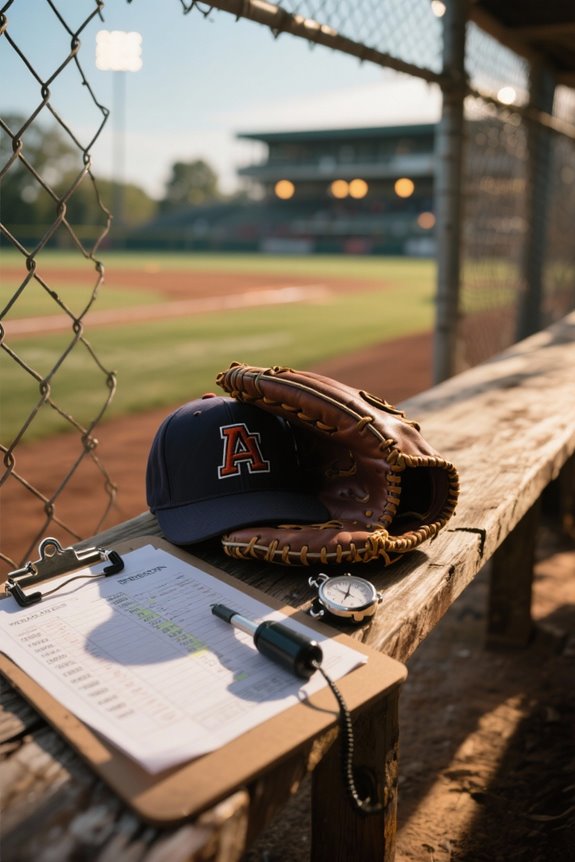
How can a team guarantee that its players develop effectively? A strong focus on coaching qualifications and staffing requirements is essential. Coaches should possess certifications from recognized organizations like USA Baseball or the NFHS, which cover essential skills, safety protocols, and coaching philosophies. Advanced roles often necessitate degrees in sports-related fields. Effective coaches must also demonstrate strategic thinking and the ability to evaluate player talent. Managing team activities, including practices and game strategies, is a key responsibility. In addition, adherence to safety protocols and ethical standards is critical. Background checks and child protection training safeguard young athletes, ensuring a supportive environment. Ultimately, the right coaching staff fosters growth and creates a positive team culture, enhancing player experience. Furthermore, utilizing magnetic coaching tools can facilitate effective strategy development and training session planning.
Team Structure and Roster

When evaluating team structure and roster, it is essential to contemplate the composition and roles of players on and off the field. Standard MLB active rosters consist of 26 players, with September expansions to 28, enhancing roster flexibility for strategic choices and player growth. Each team features nine positions, including pitchers and outfielders, demanding specialized skills and teamwork. Roster construction balances star talent and overall team composition, ensuring depth for a successful season. Minor leagues play a vital role, focusing on player development and skill progression, which impacts call-ups. By understanding these aspects, potential team members can identify how they fit into the larger picture, fostering camaraderie and belonging in the baseball community. Additionally, the performance features of different bats can influence how players are utilized within the team, impacting overall strategy and gameplay.
Logistics and Administration

What factors contribute to effective logistics and administration in a baseball team? Strong logistics planning and clear administrative responsibilities guarantee smooth operations. Teams must complete mandatory background checks for coaches and pay registration fees, typically around $50, to establish compliance. It’s crucial to register players through official league platforms while selecting the appropriate competition divisions based on player age, ranging from 4U to 18U. Teams should maintain dedicated bank accounts to track finances, secure various insurance types, and document agreements and waivers to protect members. Efficient scheduling of tryouts, practices, and tournaments requires effective communication among coaches, players, and parents. Utilizing digital platforms for updates and managing conflicts is imperative for fostering a cohesive team environment. Additionally, ensuring that all equipment, like helmets, meets NOCSAE safety standards is essential for player safety during games.
Frequently Asked Questions
What Is the Team’s Approach to Sportsmanship and Player Conduct?
The team prioritizes sportsmanship and player conduct, emphasizing team values and player accountability. Respect and fairness are foundational, encouraging positive interactions among members, fostering a sense of belonging, and promoting character development both on and off the field.
Are There Opportunities for Parent Involvement Within the Team?
With opportunities blooming like spring flowers, parents can embrace various roles in the team. Volunteer opportunities include coaching, organizing events, and supporting logistics, fostering a sense of community and belonging among families dedicated to youth development.
How Are Conflicts Between Players Resolved?
Conflicts between players are resolved through open communication strategies, fostering healthy team dynamics. Encouraging players to discuss issues directly among themselves promotes maturity and allows for proactive engagement, enhancing a sense of belonging within the team.
What Support Systems Are in Place for Injured Players?
What happens to injured players? They find robust rehabilitation programs, specialized injury protocols, and a devoted medical team. Support systems seamlessly integrate advanced therapies and treatments, ensuring players feel valued and cared for during recovery journeys.
Does the Team Have Any Partnerships With Local Organizations or Sponsors?
The team actively fosters community outreach through partnerships with local organizations, enhancing sponsorship benefits. These collaborations not only provide essential resources but also create a sense of belonging, strengthening connections between players, fans, and the community.