As an Amazon Associate, we earn from qualifying purchases. Some links on this site are affiliate links at no extra cost to you. Our recommendations are based on thorough research and editorial judgment.

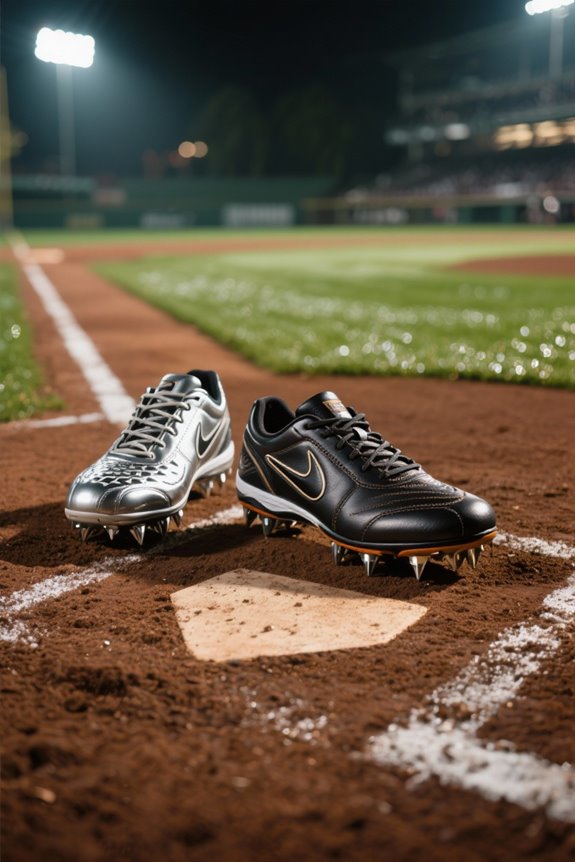
How Do I Choose Between Metal And Molded Cleats?

Choosing between metal and molded cleats is about understanding their distinct features. Metal cleats excel on dry, hard fields, offering superior grip and durability but require upkeep to prevent rust. Molded cleats, ideal for soft, wet conditions, provide comfort and cushioning, making them great for youth leagues, which often prohibit metal. They are also budget-friendly. Knowing these differences helps in selecting the right cleats to enhance performance while ensuring safety and comfort. More insights await those keen to learn!
Key Takeaways
- Consider the playing surface; metal cleats excel on dry fields, while molded cleats perform better on soft or muddy terrain.
- Check league regulations, as youth leagues often prohibit metal cleats for safety, making molded cleats preferable.
- Evaluate durability needs; metal cleats last longer but require more maintenance, while molded cleats resist rust and require less upkeep.
- Think about comfort; molded cleats offer better cushioning and foot adaptation, while metal cleats can be stiffer and less comfortable over time.
- Assess budget; metal cleats are generally pricier, while molded options provide a cost-effective solution for young players.
Traction and Performance Differences
You may be interested


When choosing between metal and molded cleats, understanding traction and performance differences is essential for athletes. Metal cleats deliver superior grip levels on dry, hard fields by digging in sharply, allowing for quick, explosive movements. In contrast, molded cleats are generally less aggressive, offering reduced grip on firm surfaces, which can hinder speed. However, in soft, wet, or muddy conditions, molded options excel, maintaining stability and consistent footing without sinking excessively. Molded TPU cleats provide versatility across both natural grass and artificial turf, while rubber cleats cater to younger players or multi-surface play, balancing performance and overall comfort. Ultimately, selecting the right cleat depends on specific playing conditions and personal comfort needs to enhance athletic performance. Additionally, proper maintenance is crucial for prolonging the lifespan and functionality of both types of cleats.
Recommended Products

Waterproof Protection: Full-length waterproof membrane lining keeps your feet and legs completely dry in any weather

Waterproof: Featuring a full-length waterproof membrane lining, these boots ensure your feet and legs stay completely dry in rain, mud, or shallow water crossings

Mizuno C-Flex Outsole: Mizuno's next innovation in outsole technology using a lightweight, rib construction, as well as a symmetric stud arrangement for enhanced stability, flexibility, and traction, while also providing increased comfort with reduced stud pressure.
Durability and Maintenance

Durability and maintenance play significant roles in the performance of both metal and molded cleats. Metal cleats, crafted from durable materials, often last longer overall but demand consistent upkeep. They can rust, requiring regular cleaning and drying to prevent degradation. Conversely, molded cleats, made from rubber or plastic, withstand softer surfaces longer without the risk of rusting. They generally need less maintenance beyond cleaning off mud. Each type exhibits distinct wear patterns; metal cleats may experience quicker spike erosion on harder fields while molded options maintain their stud shape. TPU cleats strike a balance, suitable for varied surfaces, with a focus on durability and less intense maintenance needs, making them appealing for both serious athletes and casual players alike. Additionally, breathable materials in molded cleats help enhance comfort during extended wear, which is an essential feature for players during games.
Recommended Products

FuelCell foam delivers a propulsive feel to help drive you forward

Dual-cushioned midsole features FuelCell at the forefoot, for a propulsive feel during push-offs, and Fresh Foam at the heel for superior comfort throughout the entire game.

These mens baseball cleats feature Fresh Foam X midsole technology delivering our most cushioned experience for incredible all-game comfort.
Safety and League Regulations

Safety and league regulations greatly influence the choice between metal and molded cleats. In youth leagues, metal cleat regulations often prohibit their use due to safety concerns, with authorities prioritizing player protection. Molded cleats, made from rubber or plastic, are generally recommended for younger athletes. They reduce the risk of ankle injuries and improve stability on various field surfaces. Although many high school and collegiate programs permit metal cleats for performance reasons, states like Maryland and New Jersey still restrict their use in softball. It’s crucial for players and parents to check specific league rules before purchasing, as regulations can differ widely. This guarantees that athletes have the right gear for safe and competitive play in their respective leagues. Additionally, helmets that meet NOCSAE safety standards are essential for ensuring overall player protection during games.
Comfort and Fit

Choosing the right cleats can profoundly impact a player’s comfort and fit on the field. Molded cleats, made from softer thermoplastic or rubber materials, offer superior cushioning that minimizes foot fatigue, especially during lengthy play. They adapt to various foot shapes, reducing pressure points and enhancing comfort. In contrast, metal cleats have stiffer soles, providing excellent stability but less cushioning, which can compromise comfort over time. Mid-cut molded versions add ankle support while allowing flexibility. The lighter weight of molded cleats facilitates quick, agile movements, important for speed-oriented players. On the other hand, metal cleats, while offering stability on natural surfaces, may increase discomfort if poorly fitted, impacting overall performance. Additionally, durability attributes of the cleats can also affect their comfort and performance on the field.
Recommended Products

Synthetic upper is lightweight & durable with perforations in the toe box for added breathability

Closure type: Lace-Up

360-Degree Flyknit Construction: Provides a secure, second-skin fit for superior lockdown and support.
Cost and Accessibility
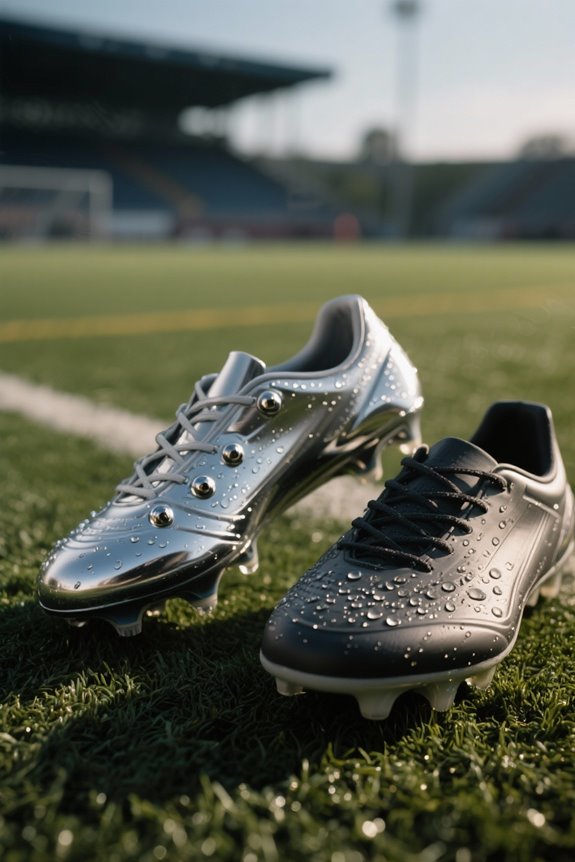
Selecting the right cleats goes beyond comfort and fit; cost and accessibility play significant roles in a player’s decision-making process. Metal cleats generally cost more due to their advanced traction and durability, making them a longer-term investment if maintained properly. However, molded cleats offer budget-friendly options, ideal for youth affordability, as they are typically less expensive and lightweight. Many retailers stock both types, allowing players to explore options that align with their cleat selection strategies. Youth leagues often prohibit metal cleats, further enhancing the appeal of molded options for younger players. Ultimately, the choice between metal and molded cleats should take into account immediate expenses and performance needs while also considering how easily they can be obtained. Additionally, cushioning and durability in turf shoes can further influence a player’s decision based on their playing style and needs.
Recommended Products

CATCHERS GEAR BAG WITH WHEELS - The Bownet Commander Catchers Bag is designed with extra mobility and patented Big Trax rugged, rubber treaded wheels to effortlessly carry equipment for baseball, softball, tee-ball, wiffle ball, and even sports like hockey, football, soccer, and lacrosse.

SQAIRZ GFP Baseball Molded Cleat, Baseball Cleats Youth Boys, Mens Softball Cleats, Black, M11/W12.5
The Official Footwear Partner of Perfect Game and the Official Footwear Partner of the High School Baseball National Championship Series. Trusted by the Pros, Backed by the Game’s Top Organizations: Official On-Field Footwear Partner of Minor League Players and Officially Licensed Footwear Partner of Major League Baseball Players, Inc. (MLBPI). SQAIRZ is the go-to choice—engineered for performance, built for every level.

Roomier Toe Box and Smart Traction Outsole: The SQAIRZ Velo Molded Cleat has a roomier toe box that allows for natural toe splay. The patented Smart Traction cleats are positioned for traction on grass and turf, with primary and secondary cleats at varying heights providing underfoot support and ground connection. Our rubber cleats provide superior grip, reduce slippage, and deliver the stability you need for peak performance without compromising safety or durability.
Frequently Asked Questions
Can I Wear Metal Cleats on Artificial Turf?
Metal cleats, while regarded for their durability, are unsuitable for artificial turf; their lack of surface compatibility leads to potential injuries and damage. Players should embrace turf-specific options for a safer, more community-oriented experience.
How Do Cleat Sizes Differ Between Metal and Molded Options?
Cleat sizing varies considerably between metal and molded options, primarily due to differences in cleat materials. Metal cleats require a tighter fit for traction, while molded cleats offer flexibility, allowing for a more comfortable and forgiving size choice.
What Are the Best Brands for Metal and Molded Cleats?
In the domain of baseball cleats, Nike stands tall among top metal brands; meanwhile, Adidas reigns supreme with popular molded options. Each brand weaves a unique narrative of performance, comfort, and style that resonates with players.
Are There Age Restrictions for Wearing Metal Cleats?
Age restrictions for wearing metal cleats exist due to youth regulations prioritizing safety concerns. Many youth leagues prohibit metal spikes to protect younger players, favoring molded cleats to guarantee a safer playing environment and promote skill development.
How Often Should I Replace My Cleats for Optimal Performance?
Regularly replacing cleats every 3000-5000 miles greatly impacts performance and safety. As wear affects cleat lifespan, timely replacements guarantee peak performance, fostering confidence and belonging in athletic communities aiming for excellence and injury prevention.