As an Amazon Associate, we earn from qualifying purchases. Some links on this site are affiliate links at no extra cost to you. Our recommendations are based on thorough research and editorial judgment.


What Are The Equipment Requirements For Different Age Divisions?

Youth sports require specific equipment tailored to age divisions for safety and performance. In baseball, helmets must meet NOCSAE standards, and bats should comply with USABat or BBCOR guidelines. For softball, players need gloves and age-appropriate bats, with sizes varying from 10” to 12.” Football mandates helmets, pads, and mouthguards, while soccer requires shin guards and correctly sized balls. Proper fit and quality are essential. Interested parties can find more details about specific requirements and recommendations.
Key Takeaways
- Youth baseball bats must meet USABat or BBCOR standards, with specific size guidelines for each age division.
- In softball, the size of the softball increases with age: 10″ for 6U/8U, 11″ for 10U, and 12″ for older divisions.
- For youth football, helmets must meet NOCSAE standards and include additional protective gear like shoulder pads and mouthguards.
- Soccer uniforms should fit properly, with size-specific soccer balls and mandatory shin guards for all age divisions.
- Properly fitted gear is crucial; consult coaches for age-specific requirements and safety protocols.
Equipment Requirements for Youth Baseball Divisions
You may be interested



When it comes to equipment requirements for youth baseball divisions, clarity and compliance are key for guaranteeing a safe and enjoyable experience. Players must wear helmets during batting, with mandatory fittings for safety. Cleats, while not essential in Tee Ball, are highly recommended in other divisions for peak traction. Gloves must be youth-sized and suitable for each player. Protective cups are a must for all players, safeguarding youth safety during games and practices. Bats must meet the USABat Standard or BBCOR regulations, depending on the division, and leagues often provide specific sizes. Equipment maintenance is vital; regularly checking equipment guarantees it remains safe and effective. Together, these requirements foster a sense of belonging and teamwork in youth baseball. Additionally, it is crucial to select helmets that meet NOCSAE safety standards to ensure maximum protection for young players.
Equipment Requirements for Youth Softball Divisions

Youth softball divisions have clear and specific equipment requirements to guarantee players can perform safely and effectively. Players aged 6U and 8U use a 10” softball, while 10U players utilize an 11” ball. The 12U and 14U divisions change to a 12” yellow softball. Gloves must fit appropriately, starting at 10”, and adapting to 11” for 8U and 12”+ for older players. All bats must be USA Softball-approved and appropriate for the player’s age. Vital gear includes fitted helmets with faceguards and recommended sliding shorts to promote safety. Having proper footwear and maintaining equipment is essential, as leagues often provide key items, ensuring all players enjoy the game within safety regulations. Gear maintenance fosters a supportive playing environment, and players should consider using bat materials and construction that enhance performance and comfort on the field.
Equipment Requirements for Youth Football Divisions

Equipment requirements for youth football divisions focus on maintaining player safety and enhancing performance on the field. Helmets must meet NOCSAE standards, featuring high-quality materials and cushioning. Each helmet requires a double-bar face mask, chin strap, and clear visors only. Shoulder pads must fit well, with knee, thigh, and tailbone pads required in tackle divisions. Players need practice jerseys, pants, and football cleats for safety. Mouthguards are provided during registration, though extra ones are recommended for comfort. Age divisions dictate equipment size; verification of birth certificates guarantees eligibility. Weekly helmet inspections are mandatory to uphold equipment safety, and any worn gear must be replaced. Adhering to these standards fosters a secure environment in youth football. To further ensure safety, it is important to consider safety baseballs that minimize injury risks during practice sessions.
Equipment Requirements for Youth Soccer Divisions
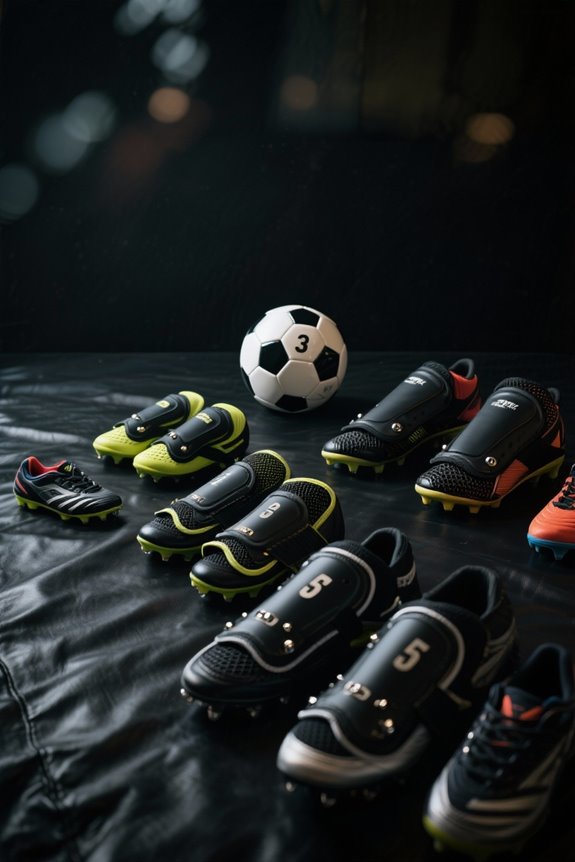
In order to thrive on the soccer field, youth players must adhere to specific equipment requirements tailored to their age divisions. For youth player safety, Size 3 soccer balls are ideal for ages 4-8, promoting easier control. As players advance to ages 8-11, they shift to Size 4 balls, while those 12 and older use the standard Size 5. Cleats are recommended for all divisions, offering traction on grass or turf, though younger players may opt for athletic shoes if needed. Mandatory shin guards must fully cover the shinbone and be worn under long socks for safety. Uniforms, including jerseys and shorts, should fit properly to enhance comfort and performance, helping foster a sense of belonging among teammates. Additionally, incorporating moisture-wicking fabric into uniforms can further improve players’ comfort during games.
Equipment Specifications by Age and Division to Ensure Safety and Fairness
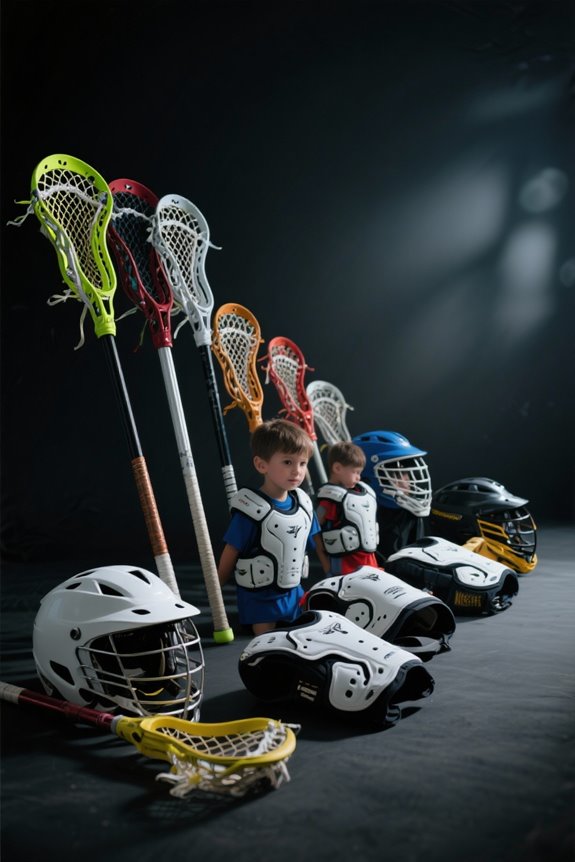
When selecting sports equipment, age and division play an essential role in guaranteeing safety and fairness for all players. Equipment safety standards demand that bats used in youth divisions comply with either the USABat or BBCOR standards, depending on age. Gloves must fit snugly to allow for better control, while helmets are required across all age groups, with teams typically providing 6-7 shared helmets. Catcher’s gear varies by division, incorporating specialized masks and protective equipment. Additionally, baseballs and softballs must meet stringent size standards to guarantee safe play. Field dimensions, such as base path lengths and pitching distances, also adjust with age, highlighting the significance of age appropriateness in sports equipment choices to foster safe competition among players. Moreover, the moisture retention properties of pitching mound clay are crucial in maintaining a safe and reliable pitching surface for various age divisions.
General Guidelines for Equipment Purchase and Use Across Youth Sports
Selecting the right gear for youth sports is fundamental for both safety and performance. Each sport demands specific equipment, like cleats for soccer and helmets for football. Proper fit is essential; helmets should fit snugly to maximize safety, and cleats must provide support appropriate for the sport. Investing in high-quality gear guarantees durability, reducing frequent replacements. Equipment maintenance is critical, as regular checks can prevent accidents. Parents should consult coaches to understand safety protocols and age-specific requirements. Additionally, considering adaptable equipment can help accommodate various abilities. By prioritizing safety and comfort, families foster a sense of belonging and teamwork, supporting their children’s enjoyment and success in sports. Selecting the right gear can also include equipment like batting donuts to improve swing mechanics for young baseball players.
Frequently Asked Questions
How Do I Determine the Correct Glove Size for My Child?
To determine the correct glove size for a child, measure from the longest finger to the palm base. Youth sports often recommend gloves of 9-10 inches for younger players, ensuring proper glove sizing enhances performance and enjoyment.
Are Used Sports Equipment Purchases Recommended for Youth Sports?
Used sports equipment purchases can be beneficial for youth sports, offering affordability and sustainability. However, evaluating used equipment for safety and proper fit is essential to guarantee an enjoyable and safe experience for young athletes.
What Should I Do if the Provided Equipment Doesn’T Fit?
When equipment fails to fit, one must promptly seek fitting solutions. Notify coaches about necessary equipment adjustments, explore alternative sizes, and document ongoing issues for league resolution, ensuring every player feels comfortable and confident on the field.
How Often Should I Replace My Child’s Sports Equipment?
Children’s sports equipment should typically be replaced every 1-3 years, depending on usage, condition, and growth. Monitoring the sports equipment lifespan contributes to effective youth sports maintenance, ensuring safety and enhancing the overall sporting experience.
Where Can I Find Local Equipment Rental Options for Youth Sports?
In the vibrant arena of local rental options for youth sports, families can explore platforms like Cloud of Goods and South Bay Sports Training, ensuring access to essential gear that fosters young athletes’ growth and community belonging.