As an Amazon Associate, we earn from qualifying purchases. Some links on this site are affiliate links at no extra cost to you. Our recommendations are based on thorough research and editorial judgment.

How Do I Choose The Right Baseball Bat For My Skill Level?

To choose the right baseball bat for skill level, start by understanding league regulations like length and barrel size. Use youth bats not exceeding 33 inches and 2⅝ inches in diameter, while senior bats can be up to 36 inches. Consider materials; aluminum offers power, while composite provides a larger sweet spot. Match bat weight to strength; lighter bats allow quick swings, heavier ones generate more power. Check durability and comfort matters. Exploring various options can enhance performance on the field.
Key Takeaways
- Assess your skill level: beginners should opt for lightweight bats, while advanced players might prefer heavier options for increased power.
- Consider the bat length and weight: choose a bat that matches your height and strength to maximize swing efficiency.
- Understand drop weight: typically, younger players use bats with drop weights around -10 to -12 for better control and comfort.
- Test different materials: aluminum, composite, and hybrid bats each have unique advantages, so find one that suits your hitting style.
- Align bat specifications with your swing style: experimenting with different bat types will help you discover what enhances your performance.
Understanding League Regulations and Standards
You may be interested


Understanding league regulations and standards is essential for players and parents navigating the world of baseball. Each league has its own variations, and rule compliance is vital to guarantee fair play and safety. For youth leagues, bats must not exceed 33 inches in length or 2⅝ inches in barrel diameter, and they must display the USA Baseball logo for conformity since 2018. Shifting to Senior Leagues, bats can be up to 36 inches long and adhere to the BBCOR standard, assuring wood-like performance. Awareness of these significant specifications helps players choose the right equipment tailored for their league, promoting enjoyment and participation while avoiding disqualification due to incorrect bat choices or standards. Additionally, selecting a bat with barrel diameter importance can significantly impact hitting performance and overall player success.
Choosing the Right Material Type

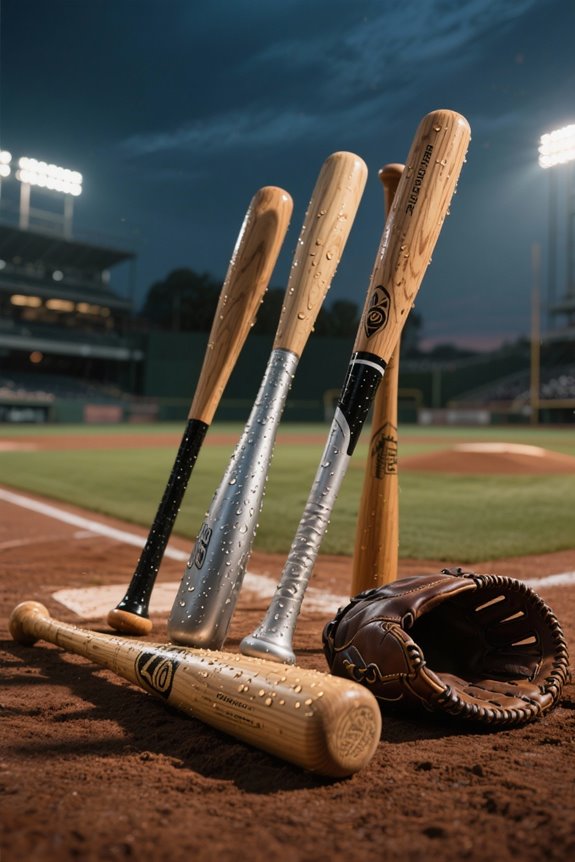
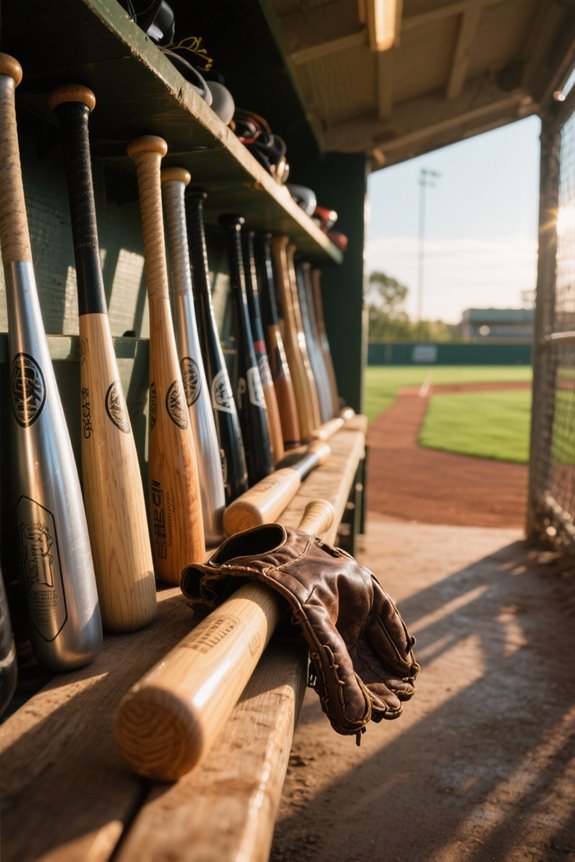
Choosing the right material for a baseball bat considerably impacts a player’s performance on the field. Aluminum bats are lightweight and provide good power, but they can vibrate more in the hands and may dent over time. Composite bats, while usually more expensive, offer a larger sweet spot and reduce hand shock, requiring a break-in period for best use. Hybrid bats merge the benefits of both aluminum and composite, delivering improved feel. Wood bats, made from maple, ash, or birch, enhance skill but have a smaller sweet spot and may crack more easily. Each material has its advantages and disadvantages, making it essential for players to select one that suits their level and goals, maximizing both comfort and performance. For example, the Easton Hype FIRE is designed with reduced vibration, making it a popular choice among youth players.
Importance of Bat Weight and Drop Weight

Selecting the correct bat weight and drop weight plays a critical role in a player’s overall performance. Bat drop is calculated by subtracting the weight (in ounces) from the length (in inches), creating a negative value—like a -10 drop for a 30-inch, 20-ounce bat. Heavier bats, with lower drop weights, generate more power but require greater strength to swing effectively. Conversely, lighter bats allow for quicker swings, making them ideal for contact hitters or beginners. Players under 12 often use bats with drop weights around -10 to -12, while older players typically shift to -5 or -3 for increased power. Balancing bat weight with individual player strength greatly enhances bat performance and overall hitting effectiveness. Additionally, material quality significantly influences the bat’s performance and durability, making it a critical consideration when selecting the right bat.
Considerations for Bat Length and Barrel Size
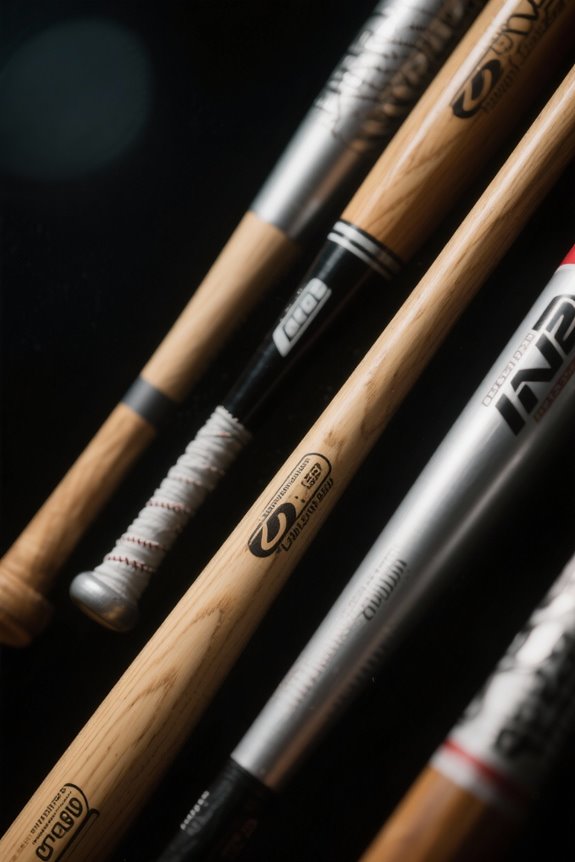
When players consider bat length and barrel size, these factors substantially influence their ability to hit effectively. Selecting the right bat length begins with measurements; ideally, the bat’s end should reach the fingertips when held at the chest. For young players, bat lengths typically range from 24 inches to 28 inches, while high school athletes use bats measuring between 29 inches and 34 inches. Barrel size also plays an essential role; youth bats generally max out at 2 5/8 inches, while travel ball options allow up to 2 3/4 inches for enhanced hitting surface. A larger barrel increases the “sweet spot,” making it easier to connect consistently, which is significant for developing players keen to improve their skills. Understanding the drop ratio helps players select a bat that balances weight and length for optimal performance.
Matching Swing Style to Bat Selection

Matching swing style to bat selection is a crucial step for any player aiming to improve their performance at the plate. Power hitters benefit from bats with a larger barrel and an end-loaded design, which enhance momentum and contact. A stiff handle maximizes energy transfer, while composite options can boost ball exit velocity. Conversely, contact hitters often prefer two-piece bats for improved flex and comfort. Balanced bats support better swing control, particularly for those with average swing speeds. For successful bat customization options, players should conduct a swing mechanics analysis to determine their ideal weight and material. This approach guarantees that whether aiming for power or contact, the player can find a bat that complements their unique style effectively. Additionally, considering heavy-duty materials used in windscreens can provide insights into the durability and performance of various sports equipment.
Evaluating Durability and Comfort
Evaluating durability and comfort is crucial for any player focused on improving their game. Selecting a bat made from sturdy materials such as maple or ash enhances durability, thanks to their impact resistance. Composite and alloy bats often provide better longevity due to engineered properties. Players should look for bats with effective vibration dampening features, which considerably reduce sting during impacts, thereby enhancing grip comfort. A comfortable grip can be achieved through softer materials and proper handle diameter, minimizing hand fatigue. The bat’s weight distribution also plays an important role; balanced bats can improve swing speed and overall comfort. Frequent inspections for wear can help maintain a bat’s lifespan, ensuring both durability and performance remain ideal over time. Additionally, the material choice significantly influences performance and should be carefully considered when selecting a bat.
Setting a Budget for Your Bat Purchase
Budgeting for a baseball bat purchase requires careful consideration of personal needs and skill levels. Players should establish their budget range, with entry-level bats priced from $20 to $80, ideal for beginners. Mid-tier options, ranging from $80 to $200, provide enhanced materials and performance for developing players. Advanced players, participating in competitive leagues, may need bats costing $200 and above, ensuring cost justification for their investment. Budget flexibility is crucial; it allows for adjustments based on frequency of play. Remember, certified bats, necessary for official play, often command higher prices. Ultimately, players must weigh their skill levels and usage frequency to make informed decisions that maximize value while keeping performance in mind. Additionally, understanding league certification standards can help ensure that the bat purchased meets the requirements for competitive play.
Customizing Your Bat Choice for Player Profile
How does one determine the best baseball bat for their unique playing style? Customizing bat choice begins with bat fitting tailored to a player’s age and skill level. Youth players thrive with lightweight aluminum or composite bats, typically between -10 and -12 drop weight, encouraging proper swing mechanics. As players mature, high school and college athletes require BBCOR-certified bats, with standardized drop weights of -3 and 2 5/8” barrel diameters. Adult players benefit from custom wood bats that allow for personalized weight distribution and handle thickness. Regardless of the choice, optimizing performance demands alignment with swing style and comfort. Ensuring compliance with league standards is vital, ensuring every player not only plays well but belongs. Additionally, selecting a bat with advanced technology can significantly enhance player performance and comfort during gameplay.
Frequently Asked Questions
How Do Weather Conditions Affect Bat Performance?
Weather conditions dramatically impact bat performance; cold temperatures heighten brittleness in wooden bats and diminish their trampoline effect, while aluminum remains stable. Players must adapt, choosing materials wisely to guarantee durability amid shifting temperature effects.
Can I Use a Bat From a Previous Season?
A bat from a previous season may not be used if it lacks current certification. Performance differences and bat longevity are essential; inspecting for damage and compliance guarantees players feel safe and included during gameplay.
What Is the Average Lifespan of a Baseball Bat?
The average lifespan of a baseball bat varies by material type: wood lasts a few games to a season, aluminum several seasons, while composite typically endures about one year, influenced by bat durability factors and usage patterns.
Should I Choose a Heavier Bat for More Power?
Choosing a heavier bat can indeed enhance power, akin to wielding a mighty sword. However, maintaining bat balance and swing mechanics is essential, as an imbalance can undermine speed and effectiveness, regardless of increased mass.
How Do I Determine the Right Grip Size for My Bat?
To determine the right grip size for a bat, one must measure hand length and consider grip pressure preferences, as proper sizing enhances bat control, comfort, and performance, fostering a sense of belonging within the sport.