As an Amazon Associate, we earn from qualifying purchases. Some links on this site are affiliate links at no extra cost to you. Our recommendations are based on thorough research and editorial judgment.

What Safety Equipment Is Essential For Youth Catchers?

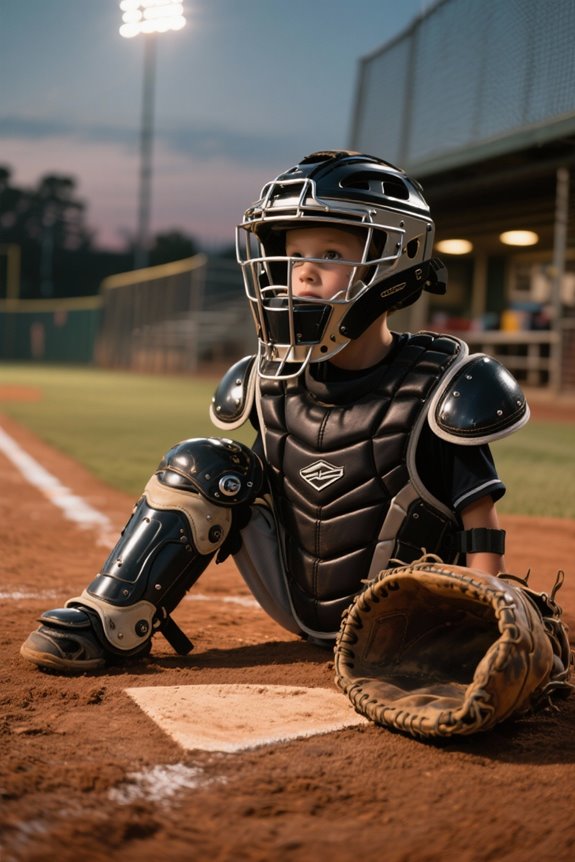
Youth catchers need important safety equipment for protection during play. They require helmets and masks that meet NOCSAE standards, providing shock absorption during impacts. Chest protectors shield the upper body, while leg guards defend knees and shins, enhancing agility. A protective cup is essential for male catchers. Proper fitting gear guarantees movement and comfort, and regular inspections maintain safety. This equipment is critical for a successful season and can greatly reduce injury risks. More insights await!
Key Takeaways
- Chest protectors shield the upper body from foul balls and collisions, essential for preventing impact injuries.
- Leg guards protect knees, shins, and ankles while allowing for agile movement during play.
- Certified helmets with masks absorb shock and significantly lower injury rates among youth catchers.
- A proper protective cup is crucial for male catchers to protect vital areas from impact.
- Regular inspections and maintenance of all gear ensure ongoing safety and performance compliance.
Importance of Safety Gear for Youth Catchers
You may be interested


When it comes to youth catchers, the importance of safety gear cannot be overstated. Effective safety equipment is essential for youth safety and injury prevention on the field. Chest protectors, crafted with high-impact foam padding, shield the upper body from foul balls and collisions. Leg guards protect the knees and shins, while remaining agile during play thanks to hinged designs. A proper protective cup is mandatory for male catchers, ensuring crucial protection in critical areas. Throat protectors add an extra layer of safety, safeguarding against unexpected impacts. These fundamental pieces of gear should be NOCSAE certified, ensuring compliance with safety standards. By prioritizing this equipment, young catchers can play with confidence and minimize the risk of injury. Additionally, investing in gear made from high-strength materials can enhance durability and provide better protection during rigorous play.
Helmet and Mask: Protection Against Impacts
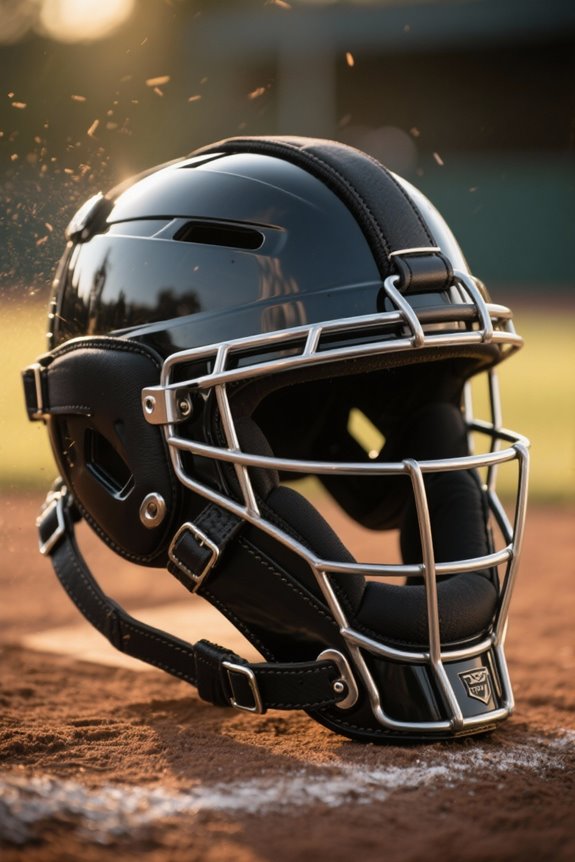
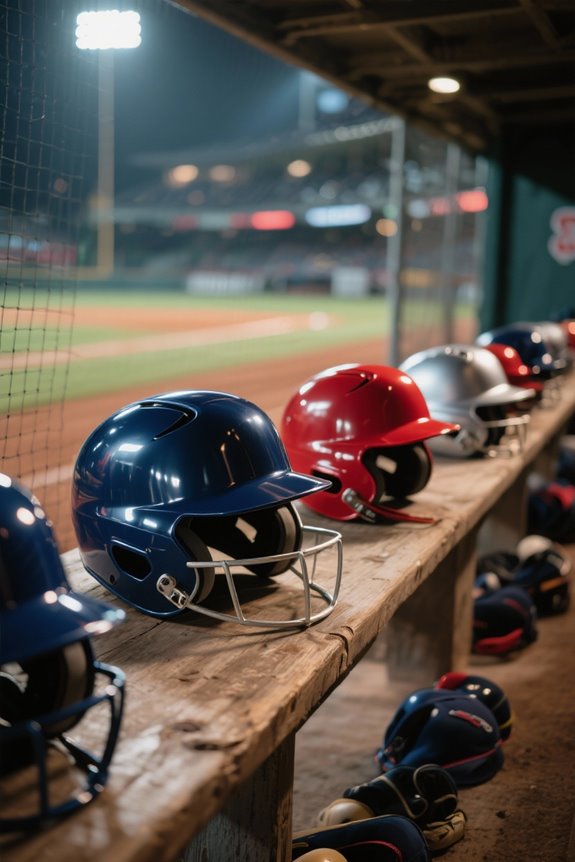
Catcher’s helmets and masks play an essential role in protecting young athletes from impacts during play. Constructed from durable helmet materials, these helmets are designed to absorb shock from balls and bats effectively. The NOCSAE certification guarantees that these helmets meet rigorous impact testing standards. A well-fitted helmet must sit snugly without large gaps, ensuring maximum protection. Regular inspections are crucial; any signs of cracks or damage warrant immediate replacement. The attached face masks shield the facial area and eyes, while throat guards protect against stray pitches. The helmets must limit peak severity impact to under 1200 SI units to help reduce concussion risks. Consistent use of certified helmets with masks greatly lowers injury rates among youth catchers. Moreover, selecting helmets made from ABS thermoplastic shells enhances safety and durability during games.
Essential Features of Chest Protectors

Essential features of chest protectors are vital for guaranteeing the safety and performance of youth catchers. Key chest protector features include protective coverage for the chest, rib cage, and abdominal areas, minimizing impact injuries. High-quality padding materials, such as softer foam, enhance mobility while absorbing shock from pitched balls. Many designs offer additional shoulder padding and removable components to suit individual needs. Proper fit is essential; the protector should cover from the shoulder line to the waist, secured with adjustable straps to accommodate growth. Ventilated materials and inner mesh fabrics improve breathability, while attached groin protectors guarantee compliance with safety standards. Ultimately, the right chest protector balances comfort, protection, and performance for young athletes on the field. The best models utilize energy-absorbing materials to ensure maximum safety during play.
Functionality of Leg Guards
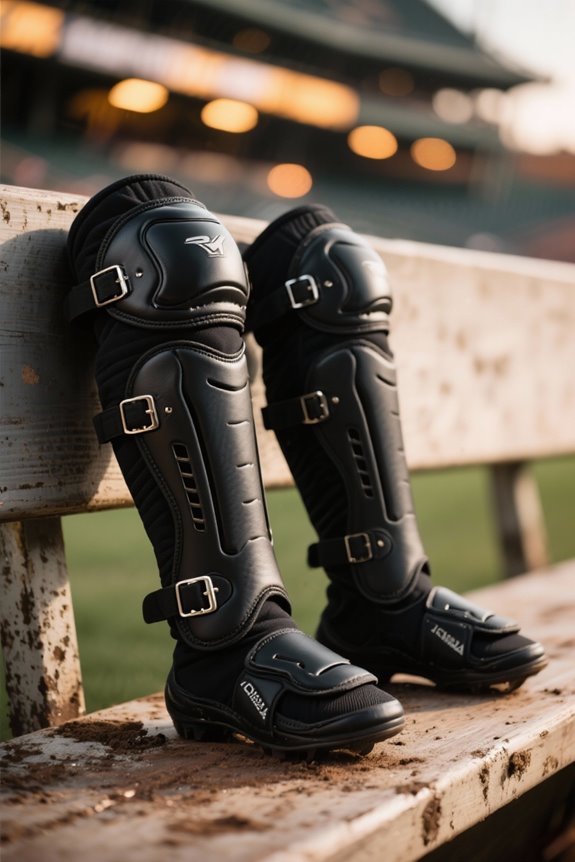
Leg guards serve a critical role in safeguarding the knees, shins, and ankles of youth catchers during games. Properly fitting leg guards enhance leg guard mobility, allowing for freedom of movement essential for effective catching. Key features include adjustable straps that secure the guards, preventing sliding and guaranteeing consistent protection. The advanced hinge systems enable natural knee bending for improved agility. Impact protection is provided by hard outer shells made from durable ABS plastic that withstands collisions and foul balls. With toe protectors and reinforced knee designs, these guards guarantee robust coverage in critical impact zones. Youth models, available in small and medium sizes, cater to growing players while prioritizing comfort and safety on the field. Additionally, many leg guards are designed to meet NOCSAE safety standards, ensuring reliable protection for young athletes.
The Benefits of Using a Throat Protector

When considering protective gear for youth catchers, the throat protector stands out as an essential component. Designed to provide effective throat protection, this gear reduces risks of serious injuries caused by foul balls and deflected pitches. Historical developments show throat protectors have evolved notably since their introduction in the late 1800s. Modern protectors are lightweight and made from impact-absorbing materials, ensuring minimal interference with visibility and comfort. This integration allows catchers to maintain freedom of movement during play. Catchers consistently report fewer throat injuries when utilizing these essential tools, further highlighting their importance in injury prevention. Overall, throat protectors enhance safety, align with league regulations, and foster a culture of precaution among young athletes. Additionally, safety features such as adjustable harnesses ensure that throat protectors remain secure during play.
Additional Safety Equipment for Catchers
A variety of safety equipment exists to enhance protection for youth catchers during games and practices. Additional protective gear, such as leg guards, is crucial for safeguarding ankles, shins, and knees from impacts while allowing mobility with hinges at ankle and knee joints. A well-fitted catcher’s mitt, made from durable leather with extra padding, is necessary for handling high-speed pitches comfortably. Male catchers must wear protective cups to shield sensitive areas, fitting snugly but not restricting movement. Knee savers provide support during prolonged crouching, reducing knee fatigue. Communication devices and modern gear with moisture-wicking materials can further enhance safety and comfort. Adhering to catcher safety guidelines can prevent injuries and promote a better experience on the field. Moreover, selecting gear that meets NOCSAE certification standards ensures reliable protection and safety for young players.
Understanding the NOCSAE Standards
The NOCSAE standards play a critical role in ensuring the safety of youth catchers in baseball and softball. These standards set rigorous requirements for equipment, including catcher’s helmets and chest protectors, emphasizing NOCSAE certifications to signify adherence to safety protocols. Youth catchers’ helmets must feature full ear flaps and attached throat protectors to enhance injury prevention. Equipment labeled with a visible certification sticker confirms compliance, assuring players and parents of its protective capabilities. Importantly, alterations to helmets can void these certifications, compromising safety. Regular inspections are essential, as non-compliant gear can disqualify a player from participation. By prioritizing NOCSAE standards, leagues promote a safer environment for young athletes, helping to minimize the risk of concussions and serious injuries. Additionally, choosing masks like the Rawlings Players Series ensures optimal protection and comfort for young catchers.
Importance of Proper Fit for Protective Gear
Ensuring proper fit for protective gear is critical for youth catchers, as it directly affects both performance and safety on the field. Accurate measurements—like head circumference for helmets or chest dimensions for protectors—should be aligned with sizing charts from manufacturers. Fit adjustments are essential; straps on masks must be secure yet comfortable to avoid pressure points. Similarly, leg guards should extend just above the knee, ensuring mobility without restriction. For mitts, an ergonomic fit allows for better ball control. Ill-fitting gear can impede movement and reduce confidence, leading to distractions. With well-fitted equipment, youth catchers are better equipped to engage fully, enhancing both their experience and skill development. Additionally, using gear that meets NOCSAE standards ensures that the equipment provides the necessary level of safety during play.
Regular Inspection and Maintenance of Equipment
Regular inspection and maintenance of equipment play an essential role in safeguarding young catchers during play. To enhance equipment longevity, establishing a rigorous inspection schedule is important. This includes checking the catcher’s helmet and mask for cracks or padding wear, verifying that all fasteners are intact. The chest protector requires meticulous examination for any signs of damage and maintaining a clean surface is crucial. Leg guards should be scrutinized for structural integrity and proper alignment. Catcher’s mitts need regular conditioning to preserve flexibility. Documenting inspection findings helps track equipment condition and safeguards compliance with league regulations. Keeping young athletes secure relies heavily on diligent checks and timely replacements, fostering a safer, enjoyable experience for everyone involved.
Frequently Asked Questions
How Can I Properly Maintain My Catcher’s Gear?
Proper maintenance of catcher’s gear involves consistent cleaning techniques, including mild soap and warm water, alongside repair tips like inspecting for damage and replacing worn components. This guarantees ideal safety and longevity for all players involved.
What Should I Do if My Gear Doesn’T Fit Correctly?
When a glove feels like a tight shoe, gear adjustment tips become essential. Fitting solutions, including consulting a coach or specialist, guarantee safety and comfort, allowing youth catchers to thrive without the burden of improper fit.
Are There Any Specific Brands Recommended for Youth Catchers?
Mizuno helmets offer excellent protection and comfort, while Easton chest protectors are praised for their lightweight design and advanced padding. Together, they guarantee youth catchers feel secure and confident on the field, fostering a sense of belonging.
How Often Should Equipment Be Replaced?
Like a seasoned warrior, catchers must regularly assess their gear. Experts recommend replacing equipment every season or sooner when wear compromises safety standards, ensuring that the catcher’s gear lifespan aligns with protective measures for youthful athletes.
What Accessories Should a Youth Catcher Consider Beyond Basic Gear?
Youth catchers should consider accessories like throat protectors, heart guards, and reinforced collarbone pads for safety enhancements. These catcher accessories foster confidence and belonging, ensuring players feel secure while engaging with teammates and the sport.