As an Amazon Associate, we earn from qualifying purchases. Some links on this site are affiliate links at no extra cost to you. Our recommendations are based on thorough research and editorial judgment.


What Should I Consider When Buying A Pitching Net?

When buying a pitching net, consider durability and material quality. Look for nets made from HDPE or polyester for moisture and UV resistance. Pay attention to portability features, like lightweight fiberglass poles and quick assembly designs. Net size matters; strike zone targets should be about 20 by 30 inches. Regular maintenance extends lifespan, so inspect for fraying often. Finally, evaluate costs to find a balance between quality and budget. Discover more essential tips to make the best choice.
Key Takeaways
- Choose nets made from HDPE or polyester for superior moisture and UV resistance, ensuring durability in outdoor conditions.
- Consider the twine thickness; #42 for durability or #60 for professional-grade performance and longevity.
- Assess the net size and configuration to ensure it fits your specific pitching practice needs, including adjustable height options.
- Evaluate portability features like lightweight materials and collapsible frames for easy transport and quick assembly.
- Factor in cost and warranty duration, balancing your budget against quality and features for long-term value.
Durability and Material Quality
You may be interested


Durability and material quality are essential factors when selecting a pitching net. Investors, both novices and seasoned players alike, should prioritize material longevity and twine strength. Nylon netting provides strong breaking strength, ideal for heavy indoor use, but isn’t suitable for outdoor settings where moisture leads to deterioration. HDPE and polyester nets resist moisture and UV damage, outperforming nylon in these conditions. Twine thickness plays a crucial role too; nets made with #42 twine offer robust durability and impact resistance, perfect for fast pitches in outdoor environments. For those seeking long-lasting performance, professional-grade #60 twine nets stand out as an elite choice. In understanding these materials, buyers guarantee they make informed decisions that support their passion for the game. Additionally, investing in a net with a heavy-duty frame ensures stability during intense practice sessions.
Portability Features
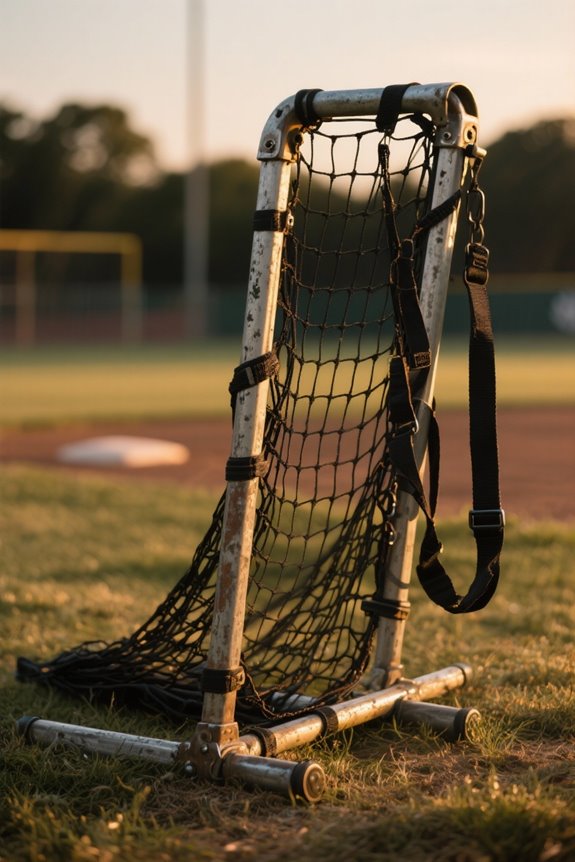
Selecting a pitching net involves considering not just durability but also portability features that cater to the active lifestyles of both amateurs and experienced players. Lightweight nets enhance transport ease, using materials like fiberglass poles to reduce weight while retaining strength. Integrated handles facilitate maneuverability, making travel convenience a priority. Quick assembly improves setup time, allowing for more practice without hassle. Nets featuring collapsible frames pack compactly, fitting easily in vehicles. Removable stakes allow effortless relocation. Stability during use can be managed through weighted sandbags or anchor points. These features guarantee that the net remains functional across various locations, whether in parks, backyards, or gyms, effectively supporting weight management needs and making it adaptable for training everywhere. Additionally, many models include quick assembly options that require no tools, further enhancing their user-friendly appeal.
Net Size and Configuration
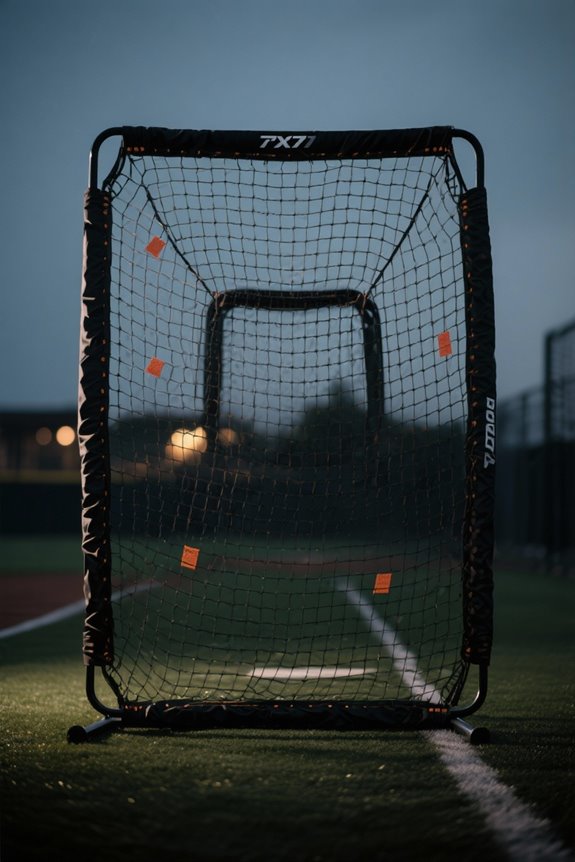
Pitching nets come in various sizes and configurations, tailored to meet the needs of players at different skill levels and ages. Typically, strike zone target nets measure around 20 inches by 30 inches, while 9-hole nets can be larger, about 46 inches by 30 inches. It is essential to choose a net size that corresponds to the pitcher age and skill level, with adjustable heights from 31 to 48 inches. Nets with nine pockets enhance targeting precision, breaking down the strike zone into specific areas measuring at 16cm wide by 24cm high. Larger cages, spanning 35 to 70 feet, provide ample space for developing full pitching motion. Each configuration focuses on improving players’ accuracy and confidence. Additionally, many nets offer integrated sock nets that help streamline ball collection, further enhancing practice efficiency.
Maintenance and Lifespan

Maintaining a pitching net is essential for ensuring its longevity and performance. Regular inspection practices should occur at least once a month, focusing on areas like net borders and support cables for fraying or corrosion. Maintaining a detailed inspection log will help track the net’s condition over time. Cleaning techniques are equally important; debris should be removed regularly with a soft brush, and mild soap with water can be used for washing. Avoid high-pressure washers, as they can damage fibers. Proper storage also extends lifespan; nets should be dried completely and stored in well-ventilated areas. Prompt repairs for minor tears can prevent further damage, ultimately maximizing the net’s usefulness for years to come. Additionally, investing in high-quality materials like heavy-duty polyester can significantly enhance durability and resistance to wear over time.
Cost and Value Considerations
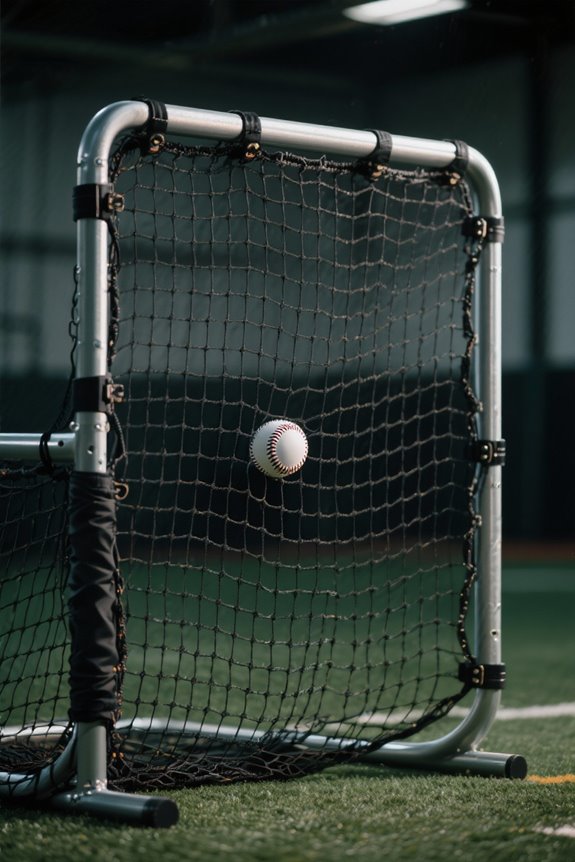
Cost and value considerations play an essential role in the decision-making process for buyers of pitching nets. Budget options range from about $20 to $40 for basic models, making them ideal for casual users or beginners. For those seeking a balance of quality and affordability, mid-range nets priced between $80 and $150 offer enhanced durability. However, for elite athletes or teams, investing in high-end nets costing $300 and above proves worthwhile due to superior materials and features like professional-grade frames. Warranty duration can also impact perceived investment value, as longer coverage often justifies a higher initial cost. Ultimately, buyers should assess their needs and usage frequency to guarantee they choose a net that aligns with their budget while maximizing long-term benefits. Additionally, considering durable construction materials can enhance the longevity and overall value of the net over time.
Safety and Protective Features
Investing in a pitching net involves more than just cost considerations; safety is a paramount factor that assures users can practice without the threat of injury. High-strength materials, such as #15 Dyneema® netting, guarantee impact prevention with a break strength of up to 104 mph. Features like double-knotted nylon and 1 ¾” square mesh enhance injury reduction by stopping fast-moving balls effectively. Protective screens, including L screens, create essential barriers during practice, safeguarding pitchers from batted balls. Additional weatherproofing treatments keep nets durable against sun and moisture, while robust steel frames with padding stabilize support and cushion impacts. With these features, a quality pitching net not only promotes safety but also fosters a secure environment for players of all skill levels. Furthermore, considering the importance of durable materials ensures that the net withstands wear and tear over time.
Frequently Asked Questions
What Types of Pitching Nets Are Best for Indoor Use?
The best pitching nets for indoor use feature durable nylon or polyethylene materials, accommodating indoor space considerations with compact designs. These nets enhance training efficiency, offering flexibility and targeting features while ensuring easy assembly and storage for seamless practice integration.
How Do I Choose the Right Net for Different Skill Levels?
Choosing the right net hinges on recognizing beginner considerations and advanced features. Beginners benefit from simple designs, while advanced pitchers seek precise specifications and enhanced feedback, ensuring everyone feels supported in their skill development journey.
Are There Specific Brands Known for Quality Pitching Nets?
When seeking quality, balance brand reputation with net materials; PowerNet and Bownet shine for durability, while GoSports offers affordability. It’s about finding the perfect fit for every aspiring player’s journey toward excellence and belonging.
Can I Use a Pitching Net for Sports Other Than Baseball?
Yes, a pitching net can be effectively used for sports beyond baseball, including softball practice and multi-sport training. Its versatility enhances skills across various activities, promoting a sense of belonging in diverse athletic communities.
How Can I Properly Store My Pitching Net When Not in Use?
Proper net storage is essential, as studies show that 70% of equipment damage occurs from improper handling. To guarantee longevity, use weather protection, like tarps, and store in dry, ventilated areas, free from pests and moisture.