As an Amazon Associate, we earn from qualifying purchases. Some links on this site are affiliate links at no extra cost to you. Our recommendations are based on thorough research and editorial judgment.

What’s The Proper Way To Store Baseball Equipment In Winter?

Properly storing baseball equipment in winter involves thorough cleaning and careful upkeep. Start by washing gear with mild soap and a soft cloth, ensuring everything is completely dry. Store items in a climate-controlled area between 50°F and 70°F, with humidity around 40-50%. Use breathable bags or open shelving, keeping items elevated to protect against moisture. Regularly inspect for damage and maintain glove suppleness with leather conditioner. There’s much more to explore about ideal equipment care.
Key Takeaways
- Thoroughly clean and dry all equipment to prevent mold and mildew growth before winter storage.
- Inspect gloves, bats, and protective gear for damage; repair minor issues promptly to avoid worsening.
- Store items in a climate-controlled environment, maintaining temperatures between 50°F and 70°F to preserve materials.
- Use sturdy containers elevated off the floor to protect equipment from pests and moisture while ensuring proper ventilation.
- Keep gloves shaped by storing a cloth-wrapped baseball inside the pocket, maintaining their form during winter.
Equipment Cleaning and Preparation
You may be interested


Cleaning and preparing baseball equipment for winter storage is essential to guarantee its longevity and performance. Effective cleaning techniques begin with using a soft cloth or sponge to remove dirt from gloves, bats, and protective gear. A leather-safe cleaner effectively handles grime without harming the material. Conditioning baseball gloves with a suitable leather conditioner helps maintain suppleness, while avoiding saliva safeguards leather integrity. Equipment inspection is vital; check for tears and cracks before repairing or setting aside damaged items. For uniforms, wash thoroughly with mild detergents and allow them to air dry completely. Finally, verify all items are dry before storage to prevent moisture damage. Adopting these maintenance tips will keep baseball gear ready for action each season. Additionally, ensuring that gloves are made from high-quality materials can significantly enhance their durability and performance throughout the winter months.
Ideal Storage Environment
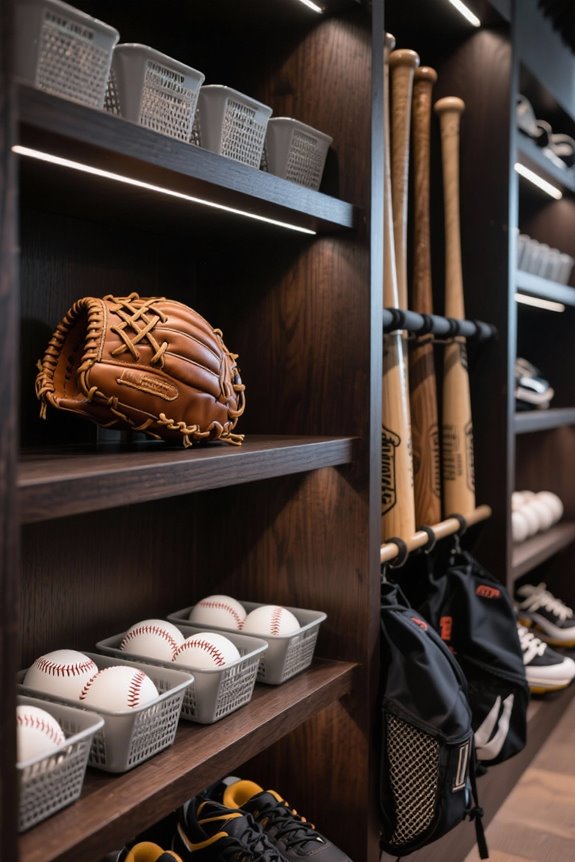
Creating an ideal storage environment for baseball equipment is crucial to prolong its lifespan and guarantee optimum performance. Maintaining a temperature between 50°F and 70°F prevents leather from drying or becoming stiff. This temperature regulation stops material cracks and warping from extreme fluctuations. Indoor climate-controlled spaces outperform garages or sheds for safe storage. Additionally, humidity control is essential; aim for levels around 40-50% to avoid mold and material degradation. Well-ventilated areas allow moisture to evaporate—using breathable cotton bags for gloves and fabrics helps. Avoid airtight containers to prevent mildew. Incorporating desiccant packs can absorb excess moisture, guaranteeing equipment remains in excellent condition. By following these guidelines, athletes can guarantee their gear stays ready for the next season. Furthermore, using heavy-duty frames for equipment storage can provide additional protection against wear and tear.
Glove Maintenance During Storage

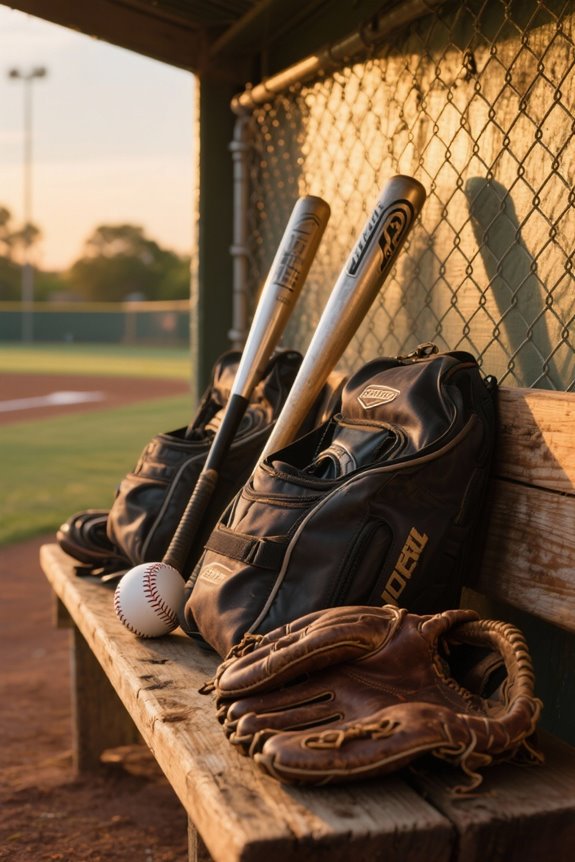
How can an athlete guarantee their baseball glove remains in prime condition during storage? First, thorough cleaning and glove conditioning are vital. A soft cloth or leather cleaner removes dirt, then a quality leather conditioner should be carefully applied to prevent drying. Next, focus on shape preservation. Store a baseball wrapped in a soft cloth inside the pocket to maintain its form. For added firmness, gently reshape the glove with a mallet before storing it flat, avoiding pressure points. Keep the glove completely dry, as moisture leads to mildew. Additionally, opt for a cool, dry storage space—ventilated closets work well—steering clear of basements or garages where temperature fluctuations occur. Regular checks guarantee peak condition for the next season’s performance. Using quality materials ensures the glove can withstand long-term storage without degrading.
Organization and Accessibility

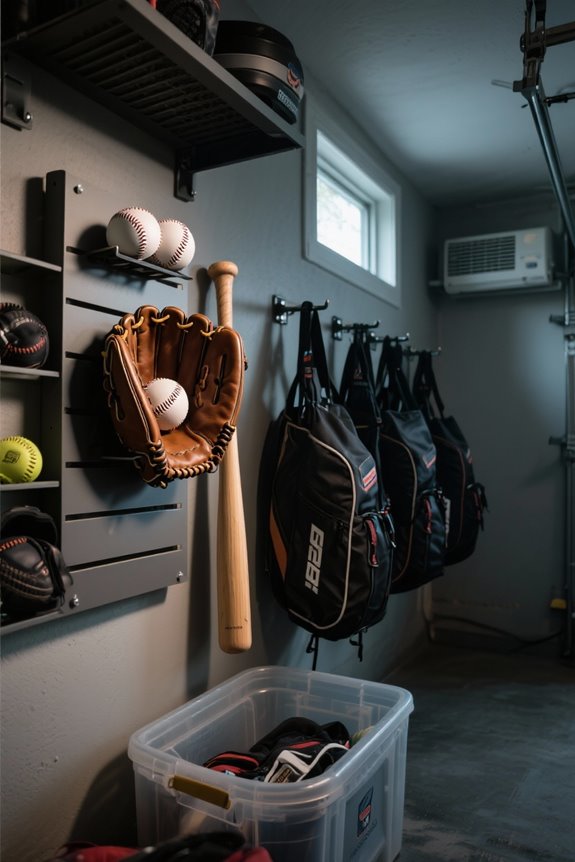
Effective organization and accessibility of baseball equipment can considerably enhance an athlete’s readiness for the upcoming season. To achieve this, designate specific zones for each equipment category, utilizing slatwall panels or pegboards for easy visibility. Grouping strategies are vital; keep bats, balls, and helmets together for efficient retrieval. Store frequently used items at waist to eye-level to minimize bending. Install wall hooks for vertical bat storage and mesh baskets for smaller items. Clear labeling—like color-coded tags—on bins aids quick identification. An inventory list simplifies locating gear during peak usage. By optimizing storage layout and ensuring everything has a designated home, athletes can gear up swiftly and comfortably, ensuring they’re always ready for practice or game day. Additionally, using durable storage options like the RAINSMORE Baseball Bag can help protect equipment from winter elements.
Protection Against Physical and Environmental Damage

Optimizing equipment organization leads naturally to taking protective measures against physical and environmental damage during winter storage. To maintain gear integrity, it’s essential to focus on moisture control and pest prevention. Begin by cleaning all equipment thoroughly and confirming it is completely dry to avert mold growth. Utilizing breathable storage materials, such as cloth bags, allows for proper ventilation that mitigates humidity risks. Items should be stored off the floor and kept in sturdy containers to shield them from rodents and other pests. Regular inspections can catch early signs of damage. Additionally, make sure that all outdoor equipment is secured with heavy-duty tarps to protect against winter elements, maintaining the equipment’s functionality for the upcoming season. Consider using heavy-duty materials like steel for your storage solutions to enhance durability and protect your gear from winter wear.
Space-Saving and Long-Term Storage Solutions
Finding the right space-saving solutions for baseball equipment can greatly enhance organization and extend the life of the gear. Utilizing vertical storage techniques, such as wall-mounted shelves and hooks, maximizes space without sacrificing accessibility. Bats, gloves, and helmets can be hung neatly, reducing clutter and preventing damage. Compact containers like mesh bags offer ventilation for balls and helmets while allowing for easy visibility. Heavy-duty nylon bags protect gear from moisture, making them ideal for long-term storage. Additionally, specialized storage bins not only keep smaller accessories dust-free but also guarantee all gear remains together. Dedicated carts and rolling cabinets provide flexible options for larger items, assuring everything is organized and easy to transport when baseball season returns. Investing in wheeled baseball bags can further streamline the storage process, allowing for effortless movement and protection of your equipment.
Storage for Protective Gear
Protective gear requires careful attention when being stored, especially during winter months when environmental conditions can damage materials. Begin by cleaning all gear thoroughly to remove dirt, sweat, and bacteria that may cause deterioration. Air dry the gear completely to prevent mold and mildew; avoid plastic bags that trap moisture. Use breathable storage materials such as cloth or mesh bags, which allow airflow. Store items on shelves rather than the floor, ensuring they maintain their shape. Label containers clearly and organize different types of gear separately to avoid abrasion. Regularly inspect stored items for damage, airing them out on warmer days to refresh. This meticulous approach will extend the lifespan of protective gear, keeping it ready for the next season. Additionally, ensure that gear is NOCSAE certified to maintain safety standards during use.
Bat Care and Maintenance
When it comes to maintaining baseball bats, proper care is fundamental to guarantee their performance and longevity. To guarantee bats remain in top condition, store them in a climate-controlled environment, maintaining a temperature above 60°F (16°C). Moisture control is equally important; keep bats dry to prevent mold and warping. Cleaning after each use is essential—simply use a soft cloth with mild soap and avoid harsh cleaners that could damage finishes. Implement bat rotation by turning the bat 1/4 turn with each swing to evenly distribute impact and minimize localized wear. Inspect for damage routinely; early detection of cracks or warps can extend a bat’s life, keeping it game-ready for the next season. Additionally, consider the bat’s durability and construction materials as these factors can significantly influence its longevity and performance.
Ensuring Proper Airflow and Ventilation
Maintaining proper airflow and ventilation is vital for keeping baseball equipment in excellent condition. The right airflow techniques will greatly enhance the longevity of gear like gloves and helmets. Avoid airtight containers that trap moisture, causing unpleasant odors and deterioration. Instead, store items in breathable bags or open shelving to promote air circulation. Keeping a dry, climate-controlled environment, ideally at room temperature (60-70°F), is essential. For effective ventilation tips, make sure items are spaced, allowing air to flow freely and dry quickly. Additionally, consider using boot dryers for moisture-prone footwear and hanging gloves rather than stacking them. Adopting these practices establishes a healthy storage environment and keeps equipment fresh and ready to go for the next season. Incorporating proper protective gear can further safeguard your equipment from damage during winter storage.
Regular Inspections and Upkeep
Regular inspections and upkeep of baseball equipment are crucial to ensure its longevity and performance. Conducting regular assessments confirms that all gear, from gloves to helmets, remains in peak condition. During these inspections, it is essential to check for cracks, loose parts, and worn areas. Minor issues should be addressed with timely repairs to prevent escalation and costly replacements. For gloves, a high-quality leather conditioner will preserve their suppleness, while helmets should be examined for structural integrity. It’s important to use a checklist to systematically cover cleaning, inspection, and repairs. Additionally, ensuring that gear complies with league regulations can prevent issues during games. Store equipment properly to avoid deformation and maintain its shape, fostering a sense of belonging within the community of players who cherish the game and their gear.
Frequently Asked Questions
Can I Store Baseball Equipment in My Car During Winter?
Storing baseball equipment in a car during winter poses risks. Instead, emphasize car storage tips and winter equipment maintenance by using climate-controlled spaces, ensuring cleanliness, and protecting gear with breathable covers to maintain its integrity and performance.
How Often Should I Check My Stored Equipment?
How often does one truly check on their cherished gear? Regular equipment inspection every one to two months maintains a reliable maintenance schedule, ensuring beloved items remain safe from deterioration and ready for the next season’s play.
What Materials Should I Avoid When Cleaning Gear?
When cleaning gear, one should avoid harsh cleaning solutions containing ammonia or bleach, as well as abrasive materials. Protecting gear materials guarantees longevity and performance, fostering a sense of belonging among passionate athletes in their sport.
Is It Okay to Stack Equipment During Storage?
Stacking equipment during storage is not advisable; effective equipment organization prioritizes airflow and proper shape maintenance. Utilizing appropriate stacking techniques, such as racks and shelves, preserves gear integrity and enhances longevity, fostering a sense of belonging within the sport.
How Can I Prevent My Bats From Becoming Too Dry?
To prevent bats from turning into brittle relics of forgotten glory, diligent moisture control and bat maintenance are essential. Embracing oil treatments and climate-controlled storage can transform an ordinary bat into an enduring symbol of friendship and spirit.