As an Amazon Associate, we earn from qualifying purchases. Some links on this site are affiliate links at no extra cost to you. Our recommendations are based on thorough research and editorial judgment.


What Metrics Should I Track To Measure Player Development?

To measure player development, track a variety of metrics. Focus on player efficiency ratings like Player Efficiency Rating (PER) and offensive efficiency. Include skill execution benchmarks such as passing accuracy and shooting technique. Monitor training progress through volume, intensity, and recovery metrics. Don’t forget physiological assessments like heart rate and oxygen consumption. Also, evaluate game performance and tactical impact. This thorough approach provides a clear picture of player growth and skill mastery. Further insights await you ahead.
Key Takeaways
- Track Player Efficiency Ratings (PER) to evaluate overall impact on games through positive and negative actions.
- Monitor Technical Execution Metrics like passing accuracy and shooting technique for skill progression.
- Use Physiological Metrics such as heart rate and VO2 to assess fitness levels and recovery.
- Implement Game Performance Metrics like possession percentage and pass completion rate for tactical effectiveness.
- Regularly assess Psychological factors, including adaptability and concentration, to support mental aspects of player development.
Player Efficiency and Performance Metrics
You may be interested



How can one effectively measure a basketball player’s contributions on the court? Player Efficiency Rating (PER) is a popular tool that aggregates positive actions—like points, rebounds, and assists—while subtracting negatives such as missed shots and turnovers. With a league average set at 15, this pace-adjusted metric allows for comparative analysis across different playing styles. Other effective statistics include Offensive Efficiency Rating (OER) and True Shooting Percentage (TS%), which both assess scoring efficiency in distinct ways. Additionally, Defensive Efficiency Rating (DER) evaluates a player’s defensive contributions. By utilizing these metrics, coaches and fans can better understand a player’s impact, fostering a deeper appreciation for individual contributions within the team dynamic. Moreover, understanding material quality in batting gloves can also play a crucial role in evaluating an athlete’s overall performance and comfort on the field.
Key Performance Indicators for Skill Development
Key Performance Indicators (KPIs) for skill development serve as essential benchmarks that help coaches and athletes track growth and proficiency on the basketball court. These metrics encompass technical execution, such as passing accuracy and shooting technique, which are fundamental for skill acquisition. Tactical understanding is evaluated through positioning effectiveness and decision-making speed, proving indispensable for performance improvement. Additionally, psychological factors like concentration duration and adaptability play a significant role in enhancing overall play. Athletes benefit from monitoring their skill progression and consistency at varying complexity levels. By aligning KPIs with team goals, players may effectively measure their development journey, ensuring a structured approach to mastering both foundational and advanced skills over time. Compression may alleviate symptoms of joint pain, enhancing recovery and performance during rigorous training sessions.
Monitoring Training Progress and Development
Monitoring training progress and development involves a systematic approach to evaluating various physical, technical, and psychological metrics. Coaches should track training load through training volume, which combines weight, reps, and sets to guarantee players avoid overtraining. Additionally, evaluating training stress scores offers insights into workout difficulty, aiding recovery assessment. Distinguishing total distance and intensity zones helps gauge endurance performance in team sports.
Heart rate responses, resting heart rate, and wellness questionnaires reveal fatigue levels and recovery needs. Utilizing repetition velocity and movement quality metrics provides immediate feedback for technique improvement. By integrating these diverse metrics, coaches create a holistic view of development, enabling tailored training plans that foster player growth and teamwork, contributing to a vibrant sporting community. Moreover, incorporating UV protection features into training gear can enhance players’ safety during outdoor workouts.
Biometric and Physiological Metrics
Biometric and physiological metrics play an essential role in understanding an athlete’s performance and well-being. Heart rate (HR) monitoring offers continuous insights into exertion and recovery, while heart rate variability (HRV) reflects stress levels and readiness for performance. Other key measurements include muscle activation patterns tracked by EMG, helping to uncover imbalances that could lead to injury. Oxygen consumption (VO2) gauges an athlete’s aerobic capacity, vital for conditioning strategies. Additionally, wearable technology tracks distance traveled and player load, allowing for tailored training regimens. These biometric data and physiological assessments provide valuable information, equipping athletes and coaches with the necessary tools for effective training and injury prevention, fostering an environment focused on growth and development. Understanding how athletic tape enhances performance can also play a significant role in an athlete’s overall development and injury management.
Game Performance Metrics
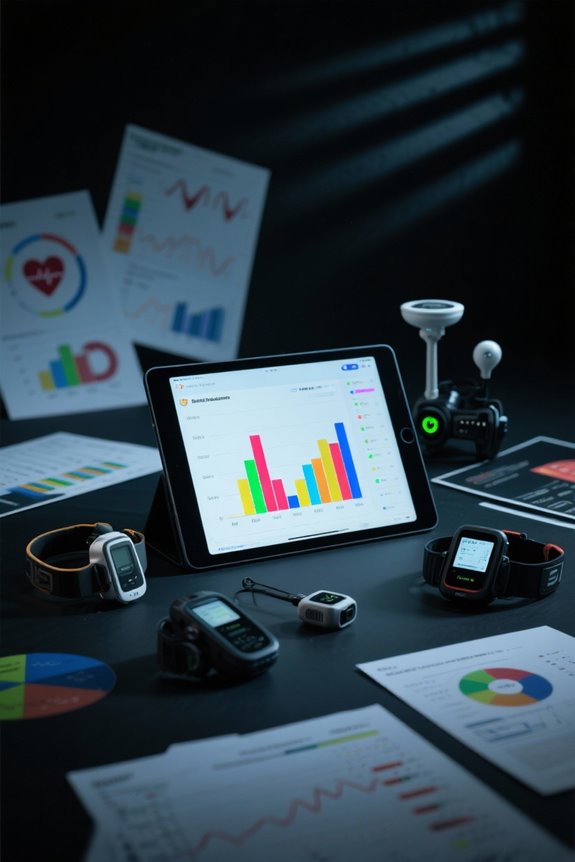
Game performance metrics provide a quantitative snapshot of how athletes execute their skills during competition. These metrics include possession percentage, pass completion rate, and shots on target, directly reflecting a player’s effectiveness in game strategy. For example, a high pass completion rate demonstrates a player’s reliability, while a significant number of shots on target reveals offensive threat levels. By establishing performance benchmarks, coaches can better assess individual contributions to team dynamics, such as tackles won and overall goals or assists. Evaluating these statistics allows teams to adapt strategies for improvement. Consistent tracking of these metrics fosters a deeper understanding of player development, guiding both training directions and performance goals for individual athletes within the team framework. Additionally, utilizing training tools like SWINGRAIL can enhance performance by providing feedback on swing mechanics.
Tactical Impact Metrics
Tactical impact metrics reveal how players influence the game beyond basic performance statistics. These metrics perform a tactical flexibility analysis, impacting team dynamics considerably. By evaluating a player’s role and positional effectiveness, teams can align strengths with tactics. Metrics assess involvement in key phases such as build-up and shifts, as well as the player’s adaptability to positional changes. Passing and distribution metrics highlight the effectiveness and rhythm of passes, while also tracking goal-scoring opportunities created. Defensive metrics reduce the opponent’s expected goals against (xGA), which enhances defensive organization. Finally, opponent evaluation metrics analyze collective behaviors to understand space control and tactical structure. Together, these metrics provide a holistic view of a player’s tactical influence within the game. Additionally, understanding swing mechanics can significantly enhance a player’s overall performance on the field.
Data Interpretation and Visualization Techniques
Analyzing player performance becomes more insightful when paired with effective data interpretation and visualization techniques. Line charts track progress over time, while bar graphs compare metrics between players. Heatmaps showcase positioning strengths, and scatterplots reveal correlations, enhancing understanding of performance dynamics. Radar charts illustrate multidimensional skills, presenting clear comparisons across attributes.
Dashboards consolidate various metrics, offering real-time insights in a user-friendly format. Interactivity allows coaches to explore data dynamically, providing immediate feedback and facilitating timely adjustments. Utilizing techniques like trend identification and comparative analysis helps clarify performance patterns. Effective data visualization should prioritize clarity, allowing insights to resonate with both coaching staff and players. Together, these tools foster a sense of community through shared goals in player development. Additionally, incorporating data from automatic pitching machines can further enhance batting practice sessions and player assessments.
Communicating Findings and Insights to Players
Effective communication is essential in player development, as it directly influences athletes’ understanding and performance. Establishing clear communication objectives enhances feedback effectiveness. Coaches should focus on clarity and brevity, ensuring players grasp development goals and their roles. Regular updates and action-oriented feedback deepen connections between daily efforts and long-term achievements. Tailoring language to match players’ experience improves communication clarity, allowing for quick decision-making during games. Incorporating technology for real-time messages keeps players engaged without overwhelming them. Engaging players in two-way conversations fosters trust and accountability, ensuring they feel valued in their development journey. By providing straightforward insights and involving families, the communication becomes a collective effort, further nurturing a sense of belonging within the team. Additionally, utilizing magnetic coaching tools can streamline communication of strategies and player roles during practices and games.
Frequently Asked Questions
How Can I Personalize Metrics for Individual Player Strengths?
In a symphony of potential, each player’s unique strengths emerge as notes waiting to harmonize. By weaving personalized metrics around these attributes, coaches can craft tailored pathways that elevate individual capabilities and foster collective progress.
What Are the Limitations of Using Advanced Metrics?
Advanced metrics face limitations in data interpretation, often suffering from sample size issues and contextual inaccuracies, affecting metric reliability. They overlook intangible qualities, complicating thorough player evaluations and fostering a disconnect with traditional assessment methods.
How Often Should I Review Performance Data?
Performance frequency and review intervals vary, with youth athletes benefiting from weekly check-ins, while professionals might require daily assessments. Consistent reviews enhance development, align goals, and foster a sense of belonging within the team structure.
Are There Specific Metrics for Different Player Positions?
Position-specific metrics include pass completion rates, shots on target, and goals for forwards; tackles and interceptions for defenders; and save percentages for goalkeepers. Each position has performance benchmarks that reflect unique contributions to the team’s success.
How Can I Integrate Mental Health Metrics Into Player Development?
To integrate mental health metrics into player development, one could utilize assessments of mental resilience and emotional stability, fostering a supportive environment that nurtures athletes’ psychological well-being and promotes a sense of belonging within the team.