As an Amazon Associate, we earn from qualifying purchases. Some links on this site are affiliate links at no extra cost to you. Our recommendations are based on thorough research and editorial judgment.

How Can I Improve My Throwing Arm Strength?

To improve throwing arm strength, focus on targeted strength training that enhances muscle coordination and power. Key exercises include dumbbell external rotations and band workouts for shoulder strength. Gradually increase intensity over at least six weeks, using weighted balls that are 4-6 ounces heavier than standard. Incorporate scapular stabilization techniques to build endurance. Regularly assess your progress with throw-specific metrics and adjust your training accordingly. For more insights and specific exercises, exploring deeper resources can offer great value.
Key Takeaways
- Incorporate targeted strength training exercises, such as Olympic lifts and med ball rotational throws, to enhance arm power and coordination.
- Utilize resistance bands and cable pulley exercises to effectively strengthen the rotator cuff and upper arm muscles.
- Commit to a regular dynamic warm-up routine to improve shoulder flexibility and joint mobility before throwing activities.
- Implement weighted ball drills, with gradual weight increases, to develop arm strength and throwing velocity while minimizing injury risk.
- Monitor your progress using tools like radar guns and portable dynamometers to ensure effective and safe training adaptations.
Understanding Throwing Arm Strength
You may be interested



Throwing arm strength is an essential component for athletes in sports that require throwing, such as baseball, football, and basketball. Understanding throwing mechanics is critical, as it involves six distinct phases: windup, stride, arm cocking, acceleration, deceleration, and follow-through. Each phase requires coordinated activity from various muscle groups to achieve ideal force and control. The kinetic chain plays a significant role, with energy generated from the ground up. Over 50% of the kinetic energy for a throw originates from the legs and core. Proper sequencing across all phases guarantees maximum velocity while minimizing injury risks. Any imbalance or weakness can hinder performance, underscoring the importance of maintaining strong, functional throwing mechanics for improved arm strength. Incorporating tools like GoSports Weighted Training Balls can effectively enhance muscle strength and improve overall pitching performance.
Importance of Specific Strength Training

Improving throwing arm strength through specific strength training is essential for athletes in various sports. This targeted training provides specific training benefits, enhancing muscle coordination and power directly related to throwing. Utilizing resistance band effectiveness can lead to increased throwing velocity, as studies suggest a 3.7% to 26% improvement in junior athletes when focusing on the forearm. Incorporating shoulder cable pulley exercises and weighted ball training further develops the rotator cuff and upper arm muscles, vital for throwing mechanics. By enhancing both concentric and eccentric actions, athletes can maximize their throwing abilities. Additionally, proper core stabilization training minimizes injury risks, making specific strength training a foundational element for aspiring athletes aiming for excellence in their performance. Furthermore, utilizing bat speed enhancement tools can complement strength training by improving overall throwing mechanics and power output.
Recommended Products
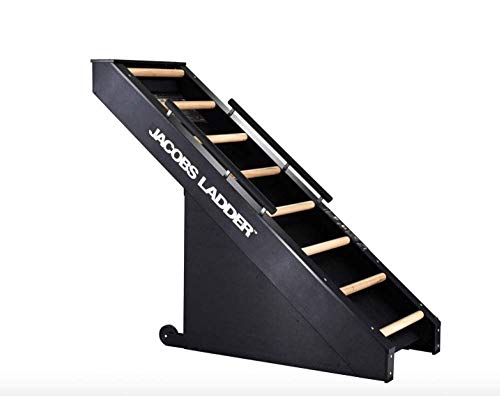
BUILT TOUGH - Jacobs Ladder Is A Versatile Workout Machine, Expertly Designed Strong To Exercise Both Arms & Legs, Giving You A Superb Full Body Cardio Workout. Ideal For High Intensity Interval Training.

Full Body Workout - Jacobs Ladder offers the option to exercise both your arms and legs so you get a superb cardiovascular workout, burning more calories in a relatively short amount of time.
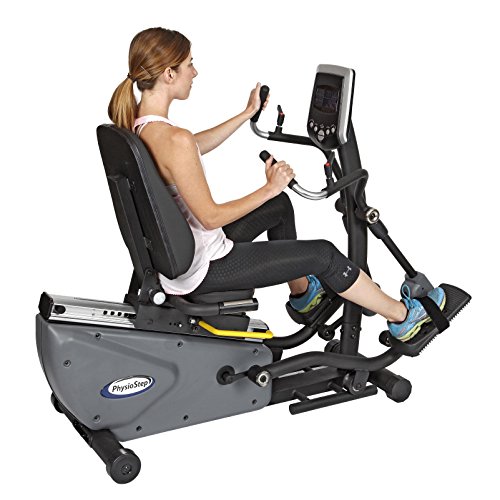
Standard stationary comfort seat with contact heart rate
Optimal Weight and Repetition Guidelines

Developing ideal weight and repetition guidelines is essential for anyone serious about enhancing their throwing arm strength. Suitable weighted ball selection should involve balls slightly heavier than standard game balls, typically 4-6 ounces more. Start with light resistance training, like 2 sets of 10-15 repetitions, to promote endurance while ensuring proper technique. This approach minimizes injury risks during repetitions. Gradually progress the intensity, allowing time for neural adaptations—aim for at least six weeks of consistent training. Mixing weighted balls with underweighted options is beneficial; however, remain cautious to prevent disruption of throwing mechanics. Incorporating weighted training baseballs can further enhance your routine by providing immediate feedback on your performance. With controlled repetition schemes and strategic recovery days, athletes can improve strength and performance effectively, building confidence on the field and fostering a sense of community.
Recommended Products

The information below is per-pack only

Training Design: Specially engineered offset weighted baseball designed for pitch development and command training, featuring a unique 7oz weight distribution

Country Of Origin: China
Key Muscle Groups for Throwing

Arm strength in sports heavily relies on the coordination and function of key muscle groups. Understanding muscle anatomy is fundamental for effective throwing mechanics. The deltoid muscle initiates arm movement, while the rotator cuff stabilizes the shoulder joint, facilitating precise motions. The pectoralis major and latissimus dorsi deliver power during acceleration, vital for a strong throw. Meanwhile, the biceps and triceps play important roles in elbow movement, allowing control during release. Flexor and extensor muscles in the wrist guarantee that angled spins and accuracy are achieved. Each group contributes to the phases of throwing—from acceleration to follow-through. By training these muscle groups, athletes can greatly enhance their throwing performance and strength. Additionally, incorporating field marking paints in training can help athletes visualize their throwing mechanics and improve precision in practice.
Scapular Stabilization Techniques

Scapular stabilization techniques play a pivotal role in enhancing throwing performance. These methods focus on improving scapular mobility and ensuring dynamic stabilization during high-speed arm movements. To effectively activate scapular muscles, athletes should start with a sequence of retraction, external rotation, and posterior tilt, often referred to as “setting your scaps.” This approach greatly reduces the risk of shoulder impingement. Daily warm-up routines can incorporate scapular activation exercises, which can produce results comparable to manual stabilization. Heavier resistance training targets key scapular stabilizers, like the lower trapezius and serratus anterior, promoting ideal positioning and control. Integrated exercises challenge athletes to maintain scapular stability against manual disruptions, facilitating smoother energy transfer through the kinetic chain during throwing. Additionally, understanding the importance of launch angle can further enhance overall athletic performance by optimizing movement mechanics.
Essential Arm Care Exercises
Essential arm care exercises are crucial for athletes aiming to enhance their throwing performance while minimizing injury risk. Incorporating dynamic warm-ups, such as Half Kneeling Shoulder Controlled Articular Rotations, supports shoulder flexibility and improves joint mobility. Dumbbell external rotations and Band No Money exercises are effective for strengthening the arm’s deceleration and acceleration muscles, respectively. Meanwhile, exercises like Rolling Arm Bar enhance shoulder flexibility without strain. Additionally, Blackburns build endurance in mid-back muscles, important for stability during throws. These exercises guarantee balanced development, prevent injuries, and promote peak throwing mechanics. Integrating these routines into training not only improves strength but also fosters a sense of community among athletes dedicated to enhancing their skills and performance. Incorporating compression arm sleeves can further support muscle function and aid in recovery during training sessions.
Enhancing Forearm Strength
Strong forearms are essential for effective throwing, as they enhance grip strength and control. Forearm fitness is fundamental for maintaining a strong grip during throws. Key exercises include wrist extensions and flexions using dumbbells or resistance bands. These movements target both forearm flexors and extensors. For grip enhancement, incorporating plate pinches and isometric grip squeezes can noticeably improve endurance and strength over time. Consistency is key; practicing these exercises several times a week can yield noticeable improvements. Resistance bands are particularly beneficial due to their versatility; they can easily be used at home or in the gym. Additionally, using tools like grip strength trainers can support your rehabilitation and strength goals effectively. With dedication to these techniques, individuals can elevate their overall throwing performance, leading to greater success in their athletic pursuits.
Recommended Products

Aluminium Cadillac Reformer - FAITTD is the brand that provides professional Pilates equipment. The "Mentor Reformer" series is aluminum construction and white color palette give this trainer very clean lines in the style of a classic trainer that blends in with the environment and fits perfectly into any type of setting. It is a robust and compact machine.

Full Orbit Pilates Reformer With Tower - FAITTD is a brand that offers professional Pilates equipment.The "Master Reformer" is a state-of-the-art professional rehab machine, whose careful design, modern lines and high-quality finish make it extremely attractive and recommended for professional use in private homes and commercial studios.

Classic Pilates Reformer - FAITTD is the brand that provides professional Pilates equipment. The "Classic Reformer" series is the best value for money Pilates equipment and is a recommended machine for both private home use and professional use in commercial studios.
The Role of Spin Efficiency in Throwing
Improving throwing performance involves not just physical conditioning but also understanding the mechanics behind effective spins. Spin efficiency is essential; it measures how well a baseball’s spin creates movement. It is calculated by comparing transverse spin, which causes movement, to overall spin rate. High spin efficiency means more effective pitches that confuse batters. This requires proper spin mechanics, relying on the kinetic chain from the legs to the arm. If the mechanics falter, gyrospin increases, wasting potential. A focus on forearm strength enhances control, leading to improved spin optimization. Therefore, when pitchers refine their mechanics and strengthen relevant muscles, they can maximize spin efficiency, creating tighter, more unpredictable pitches. Effective training guarantees every throw counts. Additionally, using compression shirts can further support muscle stabilization and enhance blood circulation during physical activity.
Measuring Strength and Performance Metrics
How can effective measurement enhance an athlete’s throwing capability? Arm strength assessments, such as the Arm Score, provide an essential understanding of throwing potential relative to body weight. A score of 70 or higher indicates a well-conditioned arm, while scores above 100 reflect exceptional strength and endurance. Utilizing portable dynamometers, athletes can accurately measure their arm strength before pitching sessions. These devices, like ActivForce®, offer strength data visualization through smartphone apps, making it easy to track progress. Key metrics, including fatigue and recovery, help athletes maintain peak performance and prevent injuries. Ongoing assessments can guide training decisions and enhance overall durability. By embracing these measurement tools, athletes foster community and improvement in their throwing capabilities. Additionally, portable pitching mounds can simulate real-game conditions, allowing for improved strength training and pitching practice.
Recommended Thrower-Specific Exercises
A well-rounded exercise routine tailored for throwers is vital to maximize arm strength and throwing proficiency. Key exercises include Olympic lifts, such as Clean and Snatch, which develop explosive movements. Incorporating band exercises targets shoulder strengthening while enhancing core stability. Rotational power can be developed through med ball rotational throws and chops, improving biomechanical efficiency. Speed training circuits, featuring bodyweight drills, maintain cardiovascular fitness while building strength. Proprioceptive drills, such as single-leg Romanian deadlifts, improve balance and reduce injury risk. The Thrower’s Ten program focuses on targeted shoulder exercises, ensuring gradual, controlled strength development. Integrated core work fosters trunk control, important for effective throwing. Additionally, selecting gloves made from full grain leather can enhance grip and performance, which is crucial for throwers. Together, these exercises create a thorough training regimen for throwers aiming for excellence.
Recommended Products

DESIGNED FOR INFIELD PLAYERS, this Pro Preferred 12. 25 inch Pro H Web baseball glove allows you to catch grounders hit your way and quickly transfer the ball to your throwing hand
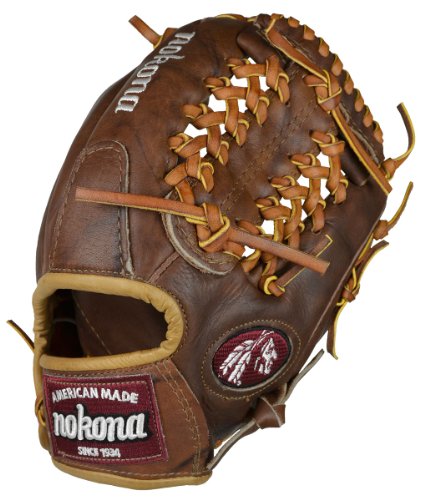
Made in the USA: Handcrafted in Nokona, Texas with legendary American craftsmanship since 1934.
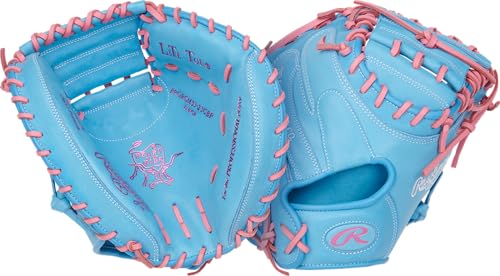
LEGENDARY HERITAGE, MODERN PERFORMANCE | The Rawlings Heart of the Hide series has defined premium glove performance for generations, trusted by the game’s best at every level.
Integration of Weighted Ball Drills
Weighted ball drills serve as a powerful tool for enhancing throwing arm strength and increasing pitching velocity. These weighted drills are designed to improve muscle coordination and throwing mechanics while offering varied weight options for overload and underload training. They help challenge the neuromuscular system, promoting efficient movement patterns essential for a strong throw. By incorporating both lighter and heavier balls, the training adapts arm speed and strength effectively. Injury prevention is vital; thus, supervision and gradual integration of these drills are recommended. To reduce joint stress, throwing from flat ground is advisable, focusing on mechanics. Athletes should combine these drills with a thorough arm care program to support overall strength and minimize risks.
Recommended Products

Feels like a leather ball when hit—the perfect ball for pitching machines

DESIGNED FOR YOUTH PLAYERS, this 6 Gallon Youth Raised Seam Ball/Bucket Combo is designed to have a game-like feel, but last through hit after hit after hit during training no matter the field conditions

COMPLETE ARM CARE TRAINING KIT: The PowerNet Arm Care Bundle includes everything you need to build arm strength and prevent injuries. With PowerBands, Plyometric Training Balls, Weighted Baseballs, and an Arm Care Guide, this set is ideal for baseball and softball players looking to strengthen and condition their arms effectively
Monitoring Progress and Adjusting Training
Monitoring progress and adjusting training is essential for athletes aiming to strengthen their throwing arms effectively. Progress tracking can involve tools like radar guns to measure ball velocity and maximum throwing distances, providing valuable feedback on strength improvements. Additionally, recording weekly volumes and intensities helps athletes identify plateaus and adjust their training loads accordingly. For safety, monitoring the Acute:Chronic Workload Ratio (ACWR) guarantees training stays within a recommended range of 0.7 to 1.3, minimizing injury risks. Structured training adjustments include increasing intensity gradually, enhancing muscular endurance through specific strength assessments, and using video analysis for technique consistency. Making these adjustments fosters a supportive training environment where athletes can see their hard work translate into tangible results.
Frequently Asked Questions
How Long Does It Take to See Strength Improvements?
Strength improvements can be as gradual as a blooming flower, typically noticeable within 3-4 weeks. Individual differences and training consistency play essential roles, with longer timelines for those recovering from injuries or starting from a lower baseline.
Can Flexibility Affect My Throwing Arm Strength?
Flexibility training can positively influence throwing arm strength by enhancing muscle elasticity. Improved flexibility enables a greater range of motion, which may aid in effective force transfer, thereby supporting overall throwing performance and reducing injury risk.
What Role Does Nutrition Play in Muscle Strength?
Nutrition plays an essential role in muscle strength through macronutrient balance and hydration importance. Proper intake of proteins, carbohydrates, and fats, combined with adequate hydration, fosters ideal muscle performance, fostering a supportive community focused on health and strength.
Should I Rest Between Throwing Sessions?
Just as flowers bloom more vibrantly with proper care, athletes flourish with adequate rest duration between throwing sessions. Balancing throwing frequency with recovery enhances performance, ensuring deep-rooted strength and resilience, fostering a supportive community among peers.
Are There Specific Recovery Techniques for Arm Strength?
Active recovery techniques, such as light exercise and stretching, promote muscle recovery by improving circulation and reducing soreness. Incorporating these methods fosters a sense of community, offering individuals shared strategies for enhancing arm strength and overall well-being.