As an Amazon Associate, we earn from qualifying purchases. Some links on this site are affiliate links at no extra cost to you. Our recommendations are based on thorough research and editorial judgment.

How Do I Adjust My Swing For Inside Vs Outside Pitches?

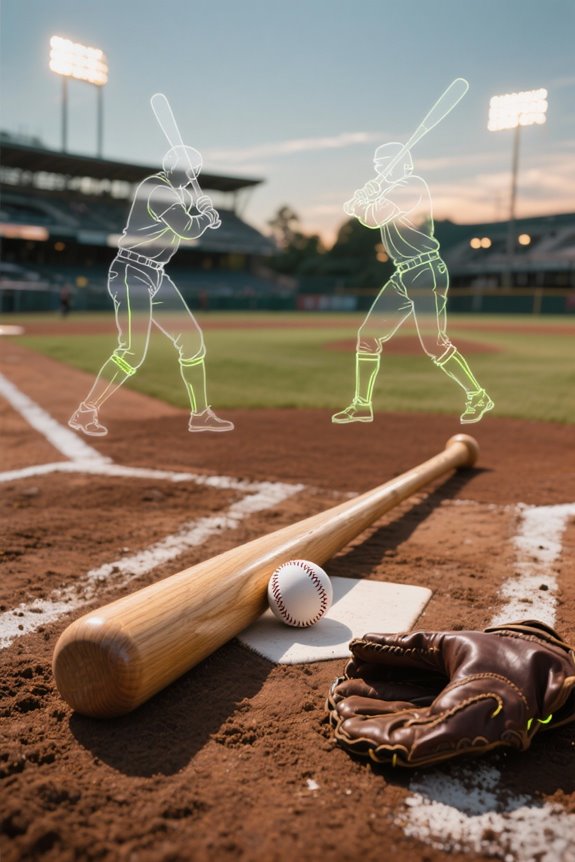
To adjust a swing for inside and outside pitches, focus on timing and swing paths. For inside pitches, recognize the pitch early and initiate your swing within 150 milliseconds. Use a compact swing with a straight-up bat path. For outside pitches, delay your swing slightly and adopt an outward, upward path. Maintain proper stance and align your body for each pitch. Practicing specific drills enhances these adjustments and boosts performance. Explore more strategies to refine your approach.
Key Takeaways
- For inside pitches, initiate weight transfer and hip rotation early for maximum power and employ a compact swing path to enhance contact quality.
- Delayed swing initiation for outside pitches allows better pitch recognition, helping you maintain effective timing and consistency.
- Use an in-to-out swing path for inside pitches, while an outward, slightly upward path is ideal for outside pitches to improve contact.
- Position feet slightly wider than shoulder-width for inside pitches; for outside pitches, ensure a closed stance to align hips toward the opposite field.
- Practice mental resilience and focus through visualization and breathing techniques to enhance decision-making at the plate and avoid swinging at bad pitches.
Understanding Pitch Location
You may be interested

10 Best Baseball Swing Trainers to Perfect Your Hit (Expert Reviews)
September 15, 2025
How Can I Improve My Swing Mechanics With A Batting Tee?
September 15, 2025

How Do I Grip A Baseball For Different Pitch Types?
September 15, 2025
Pitch location plays an essential role in the success of both pitchers and batters in baseball. Accurate pitch recognition allows batters to adapt their swing mechanics effectively. Pitches are categorized into specific zones, with numbers indicating their position within the strike zone. Pitches thrown over the middle often result in higher batting averages, while those located outside frequently lead to weaknesses. Fastballs benefit from placement in the outer zone, especially for pitchers throwing at 95+ mph. Inside pitches can jam same-handed batters, while outside pitches encourage awkward swings. Understanding these dynamics informs a batter’s approach, enhancing their ability to make contact. Mastering pitch location not only boosts performance but also fosters a stronger sense of confidence at the plate. Utilizing adjustability features in training aids can further improve a player’s swing mechanics against varying pitch types.
Timing Adjustments for Inside Pitches

For batters facing inside pitches, timing adjustments are essential for making solid contact. Inside pitches arrive faster, requiring quick visual recognition. Batters need to process visual cues within about 150 milliseconds after the ball leaves the pitcher’s hand to adjust their timing effectively. This early identification allows for better anticipation and swing initiation. It’s vital to start the swing slightly earlier than for outside pitches. Aiming for a ±10 ms timing error is key, and batters can enhance timing precision by quickening their bat acceleration. A compact swing path helps avoid being jammed, optimizing contact quality. Additionally, initiating weight transfer and hip rotation sooner guarantees power generation, balancing response and accuracy under tighter timing windows. Incorporating premium materials like high-quality leather in batting gloves can also enhance grip, allowing for better control during these rapid adjustments.
Recommended Products

REDUCE STING: These baseball batting gloves are constructed with the unique padded Shok-Sorb palm which gives your hands an extra layer of protection against bat sting on cold days!

PREMIUM LEATHER | Constructed with premium Oiltac leather to provide an elite feel and maximum control with every swing.

Leather Palm: Provides quality feel and durability.
Timing Adjustments for Outside Pitches

Timing adjustments for outside pitches present unique challenges that require careful attention. Hitters must initiate their swing later, allowing more time for pitch recognition and decision-making. This prevents early commitment to pitches that could lead to weak contact. Timing drills focusing on outside pitch trajectories are essential, enhancing muscle memory for these adjustments. Additionally, maintaining a consistent timing pattern is key, as small cadence changes help focus on pitch location. Effective swing mechanics involve an outward and slightly upward path, maximizing contact quality. Awareness of strike zone boundaries fosters better timing, reducing the likelihood of chasing pitches outside the zone. With dedicated practice and the right conditioning, hitters can elevate their performance against outside pitches considerably. Incorporating training features like adjustable tees can also help refine swing adjustments and improve overall hitting skills.
Recommended Products

⚾【Height Adjustable from 25" to 37"】Easy adjusts the height to 25 inches (for kids) or 37 inches (for teens, adults) to meet players of different heights and training needs. As hitters progress from learning to hit in Little League baseball, they should begin moving the batting tee to various heights and locations to simulate at-bats in a real game.

【ADJUSTABLE HEIGHT】Baseball tee can be adjustable height from 25-37 inch, It accommodates teens and adults of various skill levels. This versatility ensures they can continue to use the baseball batting tee as they grow and progress in their baseball journey

1.【STURDY TRIPOD STAND】batting tee for kids, Sturdy tripod configuration provides stability.
Swing Path for Inside Pitches

Swinging effectively at inside pitches demands precise adjustments to the bat path. For ideal bat control, hitters should aim for a straight-up bat path, allowing the front elbow to lead upward. This helps maintain barrel lag, keeping the bat behind the hands to enhance swing mechanics. Utilizing an in-to-out motion enables quicker contact with the ball, vital for driving it to the pull side gap. To achieve this, a compact swing is essential; getting the barrel out in front reduces the chance of weak contact. Staying connected—where hands, arms, and torso move in sync—ensures better control throughout the swing, promoting efficient hits. Overall, focusing on these adjustments empowers hitters to maximize their performance with inside pitches. Additionally, incorporating tools like the Hikeen Swing Trainer can help develop timing and hand-eye coordination, further enhancing your swing technique.
Swing Path for Outside Pitches

Hitting outside pitches effectively requires a distinct swing path that allows batters to connect powerfully with balls located on the outer half of the plate. The ideal swing mechanics involve a longer, more extended swing arc, enabling the bat to travel from an “in-to-out” route. Bat angles should remain level or slightly upward at contact to drive the ball towards the opposite field. Timing is essential; supporting patience enables hitters to let the ball travel deeper before swinging. Hands must stay in front, with a relaxed but firm grip promoting quick adjustments. Controlled hip and shoulder rotation must align to avoid over-rotating, enhancing balance and ensuring a strong connection with outside pitches. Incorporating a batting tee into practice can help refine these swing mechanics for better performance.
Body Position for Inside Pitches
To maximize effectiveness against inside pitches, a batter’s body position is crucial. A proper stance adjustment starts with feet positioned slightly wider than shoulder-width for balance. The front foot should turn slightly toward the pitcher, facilitating weight distribution and mobility. Keeping weight on the back leg during the pitch prepares for a forward shift when swinging. Hands should rest close to the chest to guarantee a compact swing. The body aligns slightly open for a quicker reaction. Pelvis rotation toward home plate optimizes power while hips lead the swing early. Maintaining a compact upper body secures control, while a smooth weight transfer allows for aggressive, solid contact. This confident setup is essential for hitting those challenging inside pitches effectively. Additionally, utilizing tools like weighted bats can significantly enhance swing speed and strength, further improving performance against inside pitches.
Body Position for Outside Pitches
Adjustments made to the body position for outside pitches are key for effective batting. Start with a slightly closed stance; positioning the front foot helps align the hips toward the opposite field. Foot placement should maintain a balanced posture, approximately armpit-width apart, which supports stable rotation and weight transfer. Delay full stride extension to manage shoulder rotation effectively. Emphasize keeping the spine over the plate for reach and balance. Adjust the belt buckle orientation to point toward the pitch location for improved body alignment. In swing mechanics, control grip pressure and guarantee the lead arm extends fully, promoting a wider swing arc. Focus on rotation timing and bat angle, applying top-hand torque for speed and precision in your swing. Additionally, consider the barrel size of your bat, as it can impact your ability to connect with outside pitches effectively.
Visual Recognition for Pitch Types
How can players enhance their ability to recognize pitch types? Players can markedly improve their pitch recognition through seam identification and visual cues. Observing seam orientation and patterns allows athletes to identify pitch types early, with accuracy over 90% at distances up to 45 feet. Spin direction and rate provide further clues, as different pitches exhibit unique rotation patterns. Early gaze shifts from the release point to the ball’s predicted path sharpening anticipation. Occlusion training helps by blocking visual input, forcing players to predict trajectory based on initial cues. Focusing on color and shade differences on the ball can also aid recognition. Consistent practice with these techniques enhances overall pitch recognition, improving swing adjustments for inside and outside pitches. Additionally, incorporating techniques from adjustable batting tees can significantly enhance practice sessions by allowing players to target specific swing flaws based on pitch types.
Mental Approach to Hitting
Mental strength plays a pivotal role in a hitter’s success at the plate. A confident and relaxed state fosters focus, enhancing the ability to handle inside and outside pitches. Hitters must cultivate mental resilience to combat negative thoughts like fear of striking out, especially when behind in the count. Maintaining emotional control helps players stay composed amid distractions, such as crowd noise and game pressure. Concentrating on simple cues—like breathing and pitch selection—sharpens decision-making. A committed approach to predetermined strategies allows hitters to react instinctively. Additionally, positive visualization primes responses, making them ready for various pitches. By trusting their routine and staying focused, players can navigate high-pressure situations while maintaining clarity and composure throughout the game. Developing a proper grip comfort and control is also essential for maximizing performance when facing challenging pitches.
Drills for Inside Pitch Practice
Practicing drills for inside pitch hitting greatly enhances a batter’s performance at the plate. The Two-Tee Inside-Out Drill utilizes two tees to help with inside pitch adjustments, focusing on keeping hands close to the body to boost control. The Keep It Fair Drill teaches rotational mechanics, helping players load into their back hip for better balance and power. Additionally, the Front Toss and Barrel Control Drill uses an obstacle to promote barrel control by forcing a proper hand path. For dynamic practice, the Progressive Tee and Side Toss Approach begins with a tee near the front knee and progresses to side toss hits. Finally, the Rhythm and Load Timing Drill emphasizes timing and controlled swings, vital for handling inside pitches effectively. Incorporating proper fit checks ensures that players can comfortably handle their bats during these drills.
Recommended Products

Official size home plate
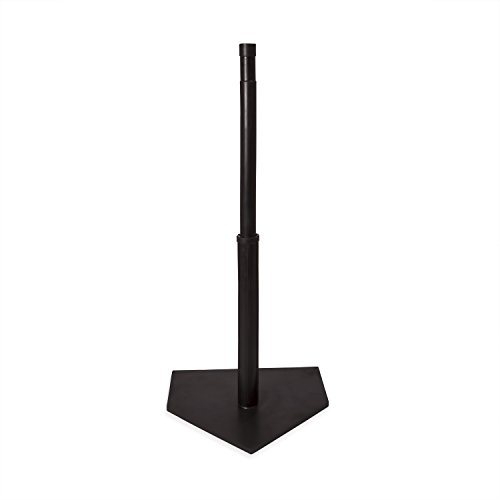
IMPROVE BATTING ACCURACY: Ideal for all players, the Champion Sports deluxe batting tee helps players train to improve their swing style, power, and accuracy for all levels of competition

Drills for Outside Pitch Practice
Developing skills for hitting outside pitches is just as important as mastering inside pitch techniques. One effective method is using tee variations. Set up a batting tee on the outside corner of the plate, positioning the ball to encourage opposite-field hitting. Practicing with the outside seams facing the hitter helps mimic actual pitch trajectory. Complement this with front toss drills, where a coach tosses balls outside the strike zone. Hitters should focus on timing, maintaining a balanced stance, and keeping hands relaxed yet ready. Another useful exercise involves opposite field target drills, which reinforce swing direction. By incorporating these practices, players can improve their technique and boost confidence in hitting outside pitches.
Recommended Products

The Original pro-style Tanner batting tee that started it all. Trusted by more travel ball, youth, college and professional players than any other baseball tee, softball tee or t ball tee.

ALL IN ONE: This set comes with absolutely everything you need to get the game started. With EVA Foam, throw down bases, batting tee, and pitch back net, you will be all set to hit the field.
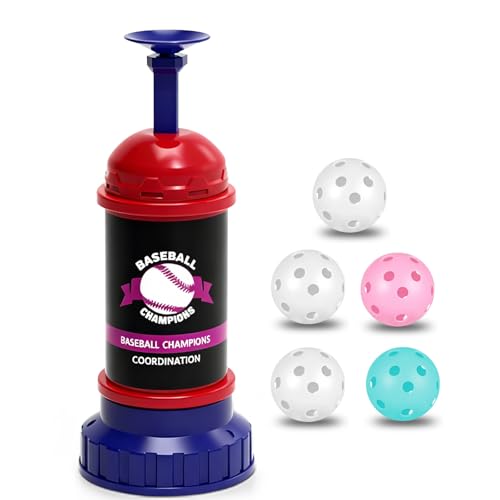
Solo Training Made Simple: Acting as a hands-free pop up baseball trainer, it launches lightweight balls into the strike zone for consistent baseball hitting. Players can train without relying on a personal pitcher or partner, turning any space into a solo hitting station for improved rhythm and confidence
Common Mistakes to Avoid
When it comes to adjusting swings for pitches, avoiding common mistakes is essential for enhancing a player’s overall performance. Many players struggle with early strides, losing timing on fastballs and inside pitches. Over-rotation of the hips and shoulders can disrupt swing control, leading to poor contact. Additionally, an inadequate load hinders power, affecting the ability to drive pitches effectively. Pitch awareness is fundamental; poor pitch selection can result in swings at bad pitches, reducing success rates. Players must also focus on their swing mechanics, ensuring consistent timing and rhythm. Remaining grounded and adaptable can greatly improve a player’s game. By addressing these common issues, players can elevate their performance and enhance their on-field confidence.
Recommended Products

WEIGHTED TRAINING BALLS: Set includes a 6 pack of 16oz training balls measuring 2.8 inches for baseball and softball training

SWINGRAIL IS A SCIENCE- BACKED PATENTED WAY TO IMPROVE YOUR SWING MECHANICS & BECOME BETTER HITTER!

Promotes proper grip, hand placement, hip rotation and swing path during and after contact is made. Provides instant feedback, allowing players to make proper adjustments to their hitting technique
Statistical Insights on Hitting Success
Statistical insights reveal that hitters can profoundly improve their success rates by understanding pitch specifics and swing dynamics. Batting averages are typically higher on outside pitches, as inside pitches often present challenges like quicker swing initiation and precise barrel positioning. This complexity explains why many batters struggle with inside fastballs, leading to lower averages. Furthermore, left-handed hitters generally excel on outside pitches, achieving about a 15-point advantage over righties. Discipline in pitch selection is essential; hitters do better when they focus on strikes, avoiding swings at pitches outside the zone. Research shows that controlling swing decisions correlates with enhanced batting averages and overall performance, creating a road map for improved hitting strategies.
Frequently Asked Questions
How Do I Maintain Balance While Swinging at Different Pitch Locations?
To maintain balance while swinging at different pitch locations, one should incorporate balance drills and focus on swing mechanics. This approach enhances stability, allowing smooth shifts and effective contact, fostering a sense of belonging in the sport.
What Exercises Improve My Hand-Eye Coordination for Hitting?
Desperate to hit like a pro? Integrate hand drills and eye tracking exercises into training routines. Transforming flailing swings into graceful connections, these drills can elevate anyone’s game—if only they’d quit staring at their phones.
How Can I Build Confidence Hitting Outside Pitches?
To build confidence hitting outside pitches, one should engage in practice drills focused on mechanics while utilizing positive affirmations. This combination nurtures resilience and fosters a sense of belonging among teammates and fellow players.
Should I Adjust My Stance for Different Pitch Types?
Yes, stance adjustments enhance pitch recognition. A closed stance benefits outside pitches, while an open stance aids inside contact. Adapting stance promotes belonging among hitters, fostering shared experiences in effectively tackling diverse pitching challenges.
How Can I Mentally Prepare for Facing Tough Pitchers?
To mentally prepare for tough pitchers, players utilize visualization techniques and focus exercises. These practices build confidence, familiarity, and mental resilience, fostering a supportive environment that encourages collective growth and shared strategies among teammates.