As an Amazon Associate, we earn from qualifying purchases. Some links on this site are affiliate links at no extra cost to you. Our recommendations are based on thorough research and editorial judgment.

How Do I Grip A Baseball For Different Pitch Types?

To grip a baseball for different pitches, start by placing your index and middle fingers on the seams for a four-seam fastball, ensuring a smooth wrist snap. For a two-seam grip, keep fingers close for movement. A curveball requires the middle finger along the seam for spin, while the slider involves a tighter grip near a seam. For a changeup, hold with three fingers on top. Each grip affects pitch control, and optimizing it can enhance performance. More techniques await!
Key Takeaways
- For a 4-seam fastball, position your index and middle fingers along the seams with a supporting thumb to create backspin.
- Use a 2-seam fastball grip by bringing your index and middle fingers close together on the seams for enhanced velocity.
- For a curveball, place your middle finger on the bottom seam and adjust the index finger beside it to maximize spin.
- In the slider grip, position your middle finger on a seam while keeping the index finger close for effective sideways movement.
- Hold the changeup with middle and ring fingers aligned on top of the ball, maintaining similar arm speed to a fastball.
4-Seam Fastball Grip
You may be interested
How Can I Improve My Swing Mechanics With A Batting Tee?
January 5, 2026
How Do I Adjust My Swing For Inside Vs Outside Pitches?
January 5, 2026
How Do I Improve My Bat Speed Through Mechanics?
January 5, 2026
When a player learns to grip a seam fastball, the technique is fundamental for delivering speed and precision. This grip involves placing the index and middle fingers along the seams while the thumb supports the ball underneath. Seam orientation is vital; correct finger placement minimizes drag and maximizes velocity. Players should apply consistent pressure to maintain control, without gripping too tightly, which can hinder natural arm movement. To achieve ideal results, a smooth release is necessary, as a well-timed wrist snap enhances accuracy. By mastering this grip, players can develop their fastball, reinforcing their ability to throw consistent strikes. Selecting compliant helmets is crucial for ensuring player safety on the field. With practice, this technique promotes a sense of belonging within the team, uniting players in their pursuit of success on the field.
Recommended Products

Training baseball with finger placement markers for four different pitches: 4-seam fastball, 2-seam fastball, curveball and slider

Instant feedback: Get a better analysis of your players engagement with the ball as you get instant feedback on their reaction time. This six-sided high-bounce rubber ball leaps and pops randomly, keeping players on their toes.

TRACK EVERY PITCH: The Play 9 Spinner (4 Seam) is a pitching trainer featuring a built-in stripe to track spin and provide instant feedback, enabling players to diagnose errors on the fly. Designed for all skill levels, this pitching training baseball helps players develop proper mechanics, improve accuracy, and enhance spin efficiency. A must-have among baseball training balls, it stands out as one of the most effective training baseballs for pitchers aiming to sharpen their 4 seam fastball.
2-Seam Fastball Grip

Gripping the baseball correctly is essential for any pitcher needing control and speed. For the seam fastball grip, the index and middle fingers should be placed close together along the seams for ideal spin and control. The thumb sits underneath the ball, providing necessary support. To achieve different fastball variations, adjustments in finger placement can create sink or lateral movement. A firm yet relaxed grip is important; it helps maintain velocity while allowing for feel. Pitchers must master release techniques that involve synchronized wrist action and grip pressure, ensuring the ball spins effectively. Regular practice reinforces muscle memory, leading to improved pitch consistency and effectiveness on the mound. This simple grip can greatly enhance a pitcher’s performance, especially when combined with adjustable features that cater to various skill levels.
Recommended Products

Product Includes: 2 PCS Pitch Practice,one soft ball,and one hard ball.The circumference of each training baseball is approximately 9in/22.9cm,and the diameter is approximately 2.8in/7.2cm that can help beginners in baseball learn various baseball grips.

Package Content: You will receive three training baseball with fingers, which can help baseball beginners learn the essential equipment for multiple baseball grips.
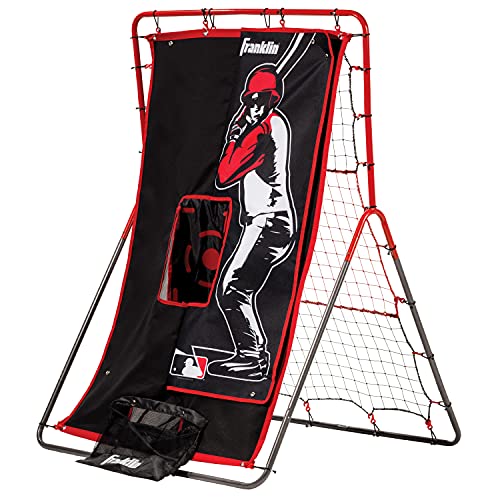
ALL-IN-ONE TRAINER: This rebounder and pitching target has everything youth baseball and softball players need to hone all their skills at once!
Curveball Grip
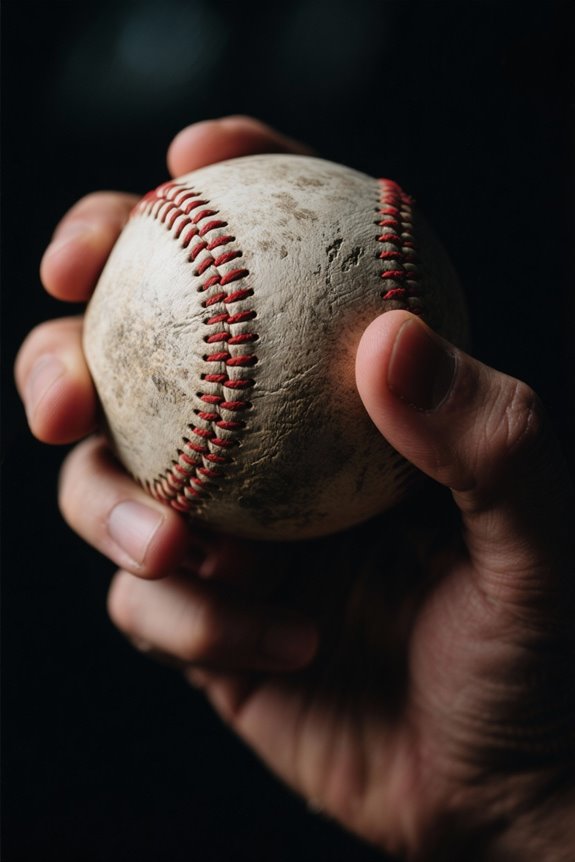
Mastering the curveball grip is essential for any pitcher aiming to add a dynamic pitch to their arsenal. The standard grip involves placing the middle finger along the bottom seam, maximizing spin. The index finger rests beside it, while the thumb stabilizes the ball underneath. Pitchers often experiment with finger placement to create various curveball variations, such as a knuckle curve, where the index finger’s knuckle presses against the ball. Applying the most pressure through the middle finger enhances spin rate. Additionally, tucking the ball closely in the palm helps maintain control. Understanding these techniques and tailoring finger pressure allows pitchers to achieve sharper breaks and more effective pitches, making the curveball a powerful addition to any pitcher’s skill set. Weighted training balls can also help improve finger strength, contributing to a more effective grip on pitches.
Recommended Products

EASY TO LEARN: Throw a curveball to your batter instantly. Throw the EZ curve like a normal fastball and watch it dive and curve like a pro’s off speed. Anyone can safely and consistently throw the EZ curve.

WEIGHTED TRAINING BALLS: Set includes a 6 pack of 16oz training balls measuring 2.8 inches for baseball and softball training

MINI FOAM BASEBALLS: Great for precision training and batting practice; Each ball measures 4 cm in diameter to encourage advanced players to improve accuracy
Slider Grip

The slider grip presents a unique opportunity for pitchers to diversify their pitch repertoire, offering a distinct break and movement that can confuse batters. To achieve effective slider variations, pitchers must position the middle finger on a seam for leverage, while the index rests close alongside. This grip should resemble a fastball but shift finger placement toward one side, maximizing spin. The thumb securely supports the ball underneath. Incorporating grip exercises is essential for refining this technique. By adjusting finger pressure and experimenting with arm angles, pitchers can find an ideal grip for enhanced control and movement. Continuous practice on finger alignment and wrist action guarantees a sharper breaking pitch, crucial for outsmarting opposing hitters. Using lightweight baseballs during practice can help young pitchers develop their grip without the risk of injury.
Recommended Products

Softball has color-added markings for finger placement of specific style pitches

Pitching trainer baseball for BOTH left-handed, and right-handed pitchers

【Satisfied Baseball Trainer Set】-- You will get 9 items, including 4 resistance bands, 2 durable handles, 1 baseball grip, ,1 door anchor and 1 carry bag. And you will train as a Pro with this complete set, which meets your baseball pitching training needs, whether in your home, outdoors or at the gym
Changeup Grip

A changeup grip is essential for pitchers looking to disrupt a batter’s timing and add variety to their pitching arsenal. To grip the ball, place the middle and ring fingers together along the seams while the thumb supports underneath. The pinky and index fingers should rest lightly on the sides, ensuring a loose but firm hold. This setup enhances the changeup release, allowing for a smooth roll off the fingers. Pitchers can explore changeup variations like the three-finger changeup or the C-change for different effects. Maintaining consistent arm speed mimics a fastball, while proper thumb pressure helps control the pitch. With practice, these grips can effectively reduce velocity and trick hitters into swinging early. Additionally, using premium materials in your glove can further enhance your grip and control when executing pitches.
Recommended Products


TRAIN INDEPENDENTLY: Practice throwing, pitching, and fielding with or without a coach; The pitchback rebounder can return baseballs & softballs to simulate ground balls and line drives; Great for pitchers & fielders

Knuckleball Grip
Understanding the knuckleball grip can markedly enhance a pitcher’s ability to deliver this tricky pitch effectively. The most common grips include the four-knuckle, two-knuckle, and three-knuckle styles, each requiring careful grip experimentation. For a four-knuckle grip, all four fingertips rest on the seams, while the two-knuckle grip has just the index and middle fingers in contact, with the ball deep in the palm. Emphasizing less spin is key, achieved by maintaining a loose grip. Additional finger stabilization can assist; thumb support under the ball helps control. Pitchers should remember that individual grip preferences will vary, influenced by factors such as hand size and finger strength, making practice essential to mastering knuckleball fundamentals. Additionally, using adjustable wrist straps can help ensure a secure fit for better control during the pitch.
Importance of Grip in Pitching
Effective grip is essential in pitching, as it directly influences pitch accuracy, velocity, and spin. Grip strength is not merely about raw power; it enhances baseball effectiveness through greater pitch command and the ability to control velocity variations. This skill plays an important role in optimizing performance metrics and achieving successful breaking pitches. Proper muscle engagement during the grip allows for better pitching mechanics and supports the kinetic chain, promoting injury prevention. Although studies show no direct correlation between grip strength and injury risk, maintaining grip strength is crucial as part of broader training techniques. Recognizing grip’s impact can considerably improve a pitcher’s performance and advance their career in the competitive landscape of baseball. Additionally, using specialized trainers like the Hikeen Swing Trainer can help in developing a more effective grip through enhanced practice routines.
Common Mistakes in Grip Technique
While mastering a baseball grip is essential for best performance, many players overlook common mistakes that can undermine their technique. Excessive grip pressure can stifle wrist and finger movement, reducing pitch velocity and dampening spin on breaking pitches. Incorrect thumb placement, whether too far under or off the seam, destabilizes the ball, affecting release consistency. Improper ball depth can hinder velocity and control, as either too deep or too shallow grips lead to mechanical errors. Additionally, finger positioning on seams is vital; misalignment can lessen spin rate and lead to erratic trajectories. Players must understand these grip nuances and adjust for specific pitch types to enhance control, command, and overall effectiveness on the mound. Regular maintenance of high-quality materials is crucial for ensuring gear performance and comfort during pitching.
Adjusting Grip for Different Conditions
When pitchers step onto the mound, adapting their grip to different conditions can greatly influence performance. Weather conditions play a vital role in grip adjustments. In humid weather, grip oils and rosin bags can enhance fingertip contact, providing better control during release. Conversely, cold weather requires a grip that maintains finger dexterity, often necessitating drying techniques before pitching. Pitchers may also adjust ball positioning in their hand to optimize grip, ensuring accurate throws even under challenging conditions. Additionally, variations in fingertip pressure are essential; softer pressure helps with off-speed pitches, while firmer grips contribute to breaking pitches. Tailoring these adjustments effectively can markedly impact pitch accuracy, helping pitchers navigate various environmental factors with confidence. Understanding the importance of protection levels can help pitchers make informed choices about their gear, ultimately enhancing their performance on the field.
Grip Pressure and Pitch Control
Grip pressure plays a significant role in a pitcher’s ability to control their throws. Achieving ideal grip requires balancing firmness without over-tightening, which is vital for maintaining pitch precision. Excessive grip can slow pitch velocity and lead to unnecessary fatigue, while under-gripping increases variability and wild pitches. Elite pitchers often adjust grip pressure to fine-tune their throws, enhancing command and spin without altering pitch type. For instance, fastballs require a firmer hold, while changeups benefit from a lighter touch. By employing effective grip techniques, pitchers can establish a consistent release, improving accuracy even under pressure. Monitoring grip throughout the game is essential, as stable pressure correlates with successful targeting and reduced injury risk. Additionally, understanding material quality and durability in pitching equipment can significantly impact a pitcher’s performance.
How to Practice Your Grip
Practicing proper grip is essential for any pitcher aiming to improve their performance. Grip practice begins with focusing on individual finger placement on the seams, building muscle memory for the right pressure. Repeatedly throwing basic pitches, like the 4-seam fastball, helps solidify proper orientation. Pitchers should explore grip variations by adjusting finger spacing and thumb positioning to find personal comfort. Incorporating feedback techniques such as video analysis can enhance understanding of grip effects on pitch movement. Strength exercises, such as squeezing grippers and dynamic stability drills, develop grip endurance. Utilizing training aids like weighted balls and grip trainers further supports control and finger strength, essential for consistent performance in games.
Expert Tips for Mastering Grip Techniques
Mastering grip techniques is essential for any baseball player who wants to elevate their pitching game. Proper finger positioning is crucial for achieving the desired pitch outcome. For a four-seam fastball, place your index and middle fingers across the narrow seams perpendicularly for maximum backspin. A two-seam grip requires aligning the fingers parallel to the seams for movement. The curveball’s grip demands the middle finger along a seam and a focused wrist snap for sharp drops. For a slider, keep fingers close on a seam, angling the wrist for a sliding motion. Finally, the changeup involves three fingers on top of the ball, held deeper to reduce velocity. Perfecting these grips enhances performance and control in every pitch.
Frequently Asked Questions
How Does Grip Affect Pitching Velocity and Accuracy?
Grip considerably impacts pitching velocity and accuracy. Proper grip mechanics ascertain an ideal release point, promoting consistent pitch execution while balancing control and speed. Consequently, it fosters a sense of belonging among pitchers attempting for excellence.
Can Grip Style Influence Arm Health Over Time?
Grip techniques undeniably influence arm health over time. The right grip can enhance injury prevention, reducing stress on joints and muscles, while improper styles may lead to chronic issues, altering a pitcher’s longevity within the sport.
What Materials Are Best for Baseball Gloves to Enhance Grip?
High-quality leather, such as cowhide and Japanese kip, enhances grip through durability. Regular glove maintenance with conditioners preserves flexibility and tackiness, fostering a sense of belonging among players who appreciate reliable performance in their equipment.
How Does Weather Impact Grip Techniques and Performance?
Weather considerably influences grip techniques and performance. Temperature variations and humidity effects alter grip stability and ball handling, requiring pitchers to adapt their strategies to maintain control and precision in varying environmental conditions.
Are There Specific Grips for Different Baseball Sizes?
Different baseball sizes necessitate grip variations to optimize control and spin. For smaller balls, pitchers adjust finger spacing and seam contact, while larger ones require a firmer grip to maintain consistent release and effectiveness in pitching.