As an Amazon Associate, we earn from qualifying purchases. Some links on this site are affiliate links at no extra cost to you. Our recommendations are based on thorough research and editorial judgment.

How Do I Practice Fielding Ground Balls Alone?

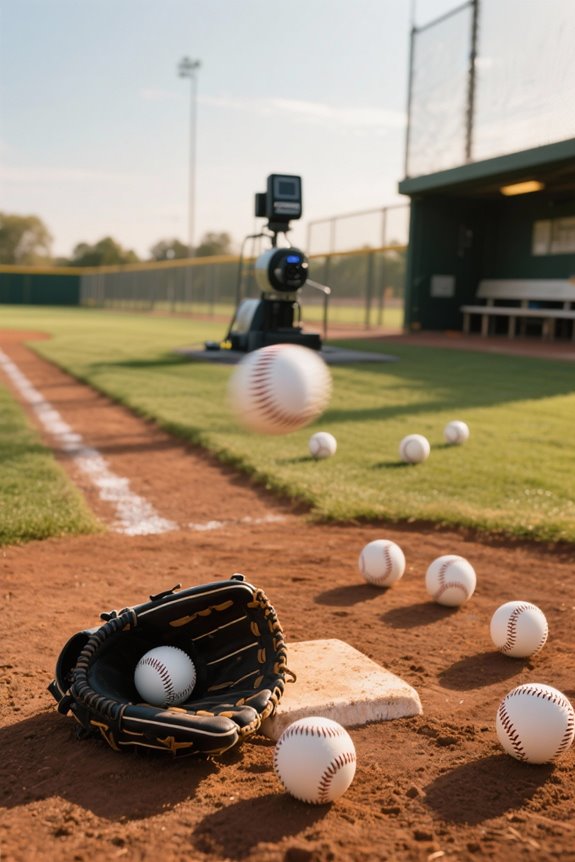
To practice fielding ground balls alone, utilize a smooth wall to bounce a ball for varied grounders. Focus on scoop skills by maintaining a low glove position and adopting a wide stance. Use cones to simulate backhand catches, leading with the left foot for ideal balance. Enhance hand-eye coordination with mini wiffle balls or tennis balls. Consistent practice of 1-4 hours, 2-3 times a week, sharpens skills and builds muscle memory. Discover a variety of essential drills to boost your performance further.
Key Takeaways
- Set up a training area with a wall and durable rebound nets to practice ground balls effectively.
- Utilize different drills, such as wall tosses and cone placements, to simulate realistic fielding scenarios.
- Incorporate various ball types, like tennis balls, to enhance your scoop skills and develop muscle memory.
- Focus on foot positioning and maintain a low stance to improve agility and glove work during fielding.
- Regularly engage in solo drills 2-3 times a week to build consistency and enhance overall fielding skills.
Understanding the Importance of Solo Fielding Practice
You may be interested
How Can I Improve My Swing Mechanics With A Batting Tee?
December 25, 2025
How Do I Adjust My Swing For Inside Vs Outside Pitches?
December 25, 2025
How Do I Grip A Baseball For Different Pitch Types?
December 25, 2025
Understanding the importance of solo fielding practice is essential for any player looking to enhance their defensive skills. Solo fielding practice fosters solo motivation, allowing players to focus solely on their technique. Regular sessions, ideally two to three times a week, should last between one to four hours, promoting practice consistency. These focused sessions improve hand-eye coordination and footwork agility, markedly enhancing reaction time. In turn, better fielding skills lead to stronger team defense, reducing game errors and increasing successful double plays. Solo practice also builds muscle memory, empowering players to execute instinctive plays during games. With structured drills targeting specific weaknesses, players can maximize their efficiency and elevate their performance on the field while enjoying the benefits of self-directed improvement. Additionally, utilizing tools like ground ball trainers can significantly enhance the quality of solo practice sessions.
Essential Drills for Improving Scoop Skills

Improving scoop skills is essential for any player serious about enhancing their defensive game. One effective drill involves using a wall, a ball, and a glove. Players toss the ball against the wall, aiming for a short hop to simulate difficult grounders. Emphasizing scoop timing, they should focus on their glove mechanics, positioning their glove close to the ground for a controlled scoop. Practicing a wide stance with a lifted heel enhances footwork and allows for quick changes. Using pitch-back rebounders can also simulate varied ground balls, boosting hand-eye coordination. Incorporate different ball types, including tennis balls, to improve soft hands. Repetitions create muscle memory and prepare players for real-game scenarios. Additionally, using a hitting net can provide target practice capabilities that enhance overall skill development. With dedication, skills will sharpen considerably.
Recommended Products

Weather-Resistant, Built for Durability: Featuring a heavy-duty, UV-resistant PE rebounding net and a robust powder-coated steel frame, this 4 x 4.5 ft baseball rebounder net is built to endure intense practice sessions in all weather conditions. Durability tested for 80,000 hits, tear-resistant
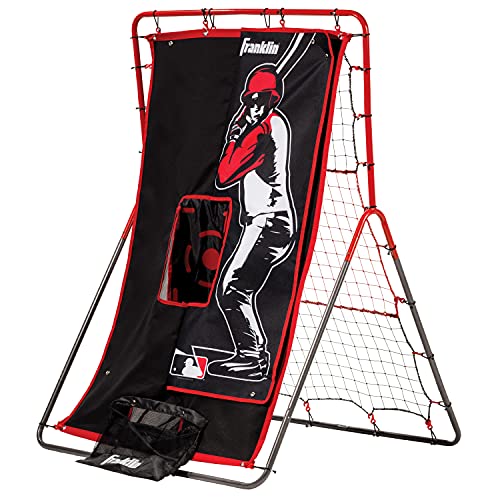
ALL-IN-ONE TRAINER: This rebounder and pitching target has everything youth baseball and softball players need to hone all their skills at once!
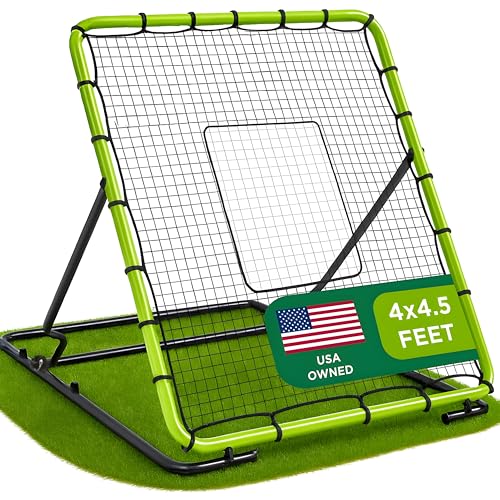
LARGE PRACTICE AREA, 4 x 4.5 feet patent pending baseball rebounder net! For both baseball and softball. Convenient for solo practice.
Mastering Backhanded Catches Through Wall Drills

Mastering backhanded catches is essential for any defensive player, especially when practicing alone. By positioning cones angled toward the backhand side, players can simulate realistic ball paths for effective practice. Tossing the ball off the wall targets behind the cones helps enhance lateral footwork and agility. Players should focus on glove positioning, ensuring they lead with their left foot (for right-handed players) to set up efficiently. Maintaining a low fielding stance while absorbing the ball with soft hands prevents undesirable rebounds. Continuous drills with varied ball heights improve glove adaptability. Ultimately, integrating quick glove-to-hand exchanges enhances ball handling skills, providing a well-rounded training experience to refine backhand angles in preparation for game scenarios. Additionally, utilizing a durable practice net can help improve your overall fielding skills by allowing for consistent ball rebounds during practice.
Recommended Products

TRAIN INDEPENDENTLY: Practice throwing, pitching, and fielding with or without a coach; The pitchback rebounder can return baseballs & softballs to simulate ground balls and line drives; Great for pitchers & fielders

LIMITED EDITION: New exclusive black version of our top selling baseball/softball hitting net for players who want a modern, professional looking piece of training equipment; Makes a great addition to training facilities and at-home practice spaces
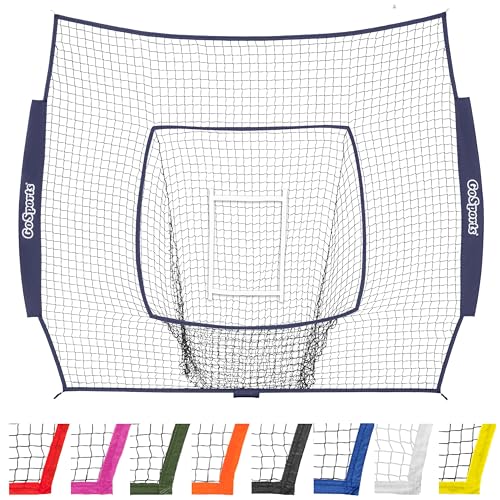
FRAME NOT INCLUDED: This listing is for the replacement net only, bow type frame is NOT included; Net is perfect for players of all abilities, spend less time chasing balls and more time honing skills
Enhancing Hand-Eye Coordination With Mini Wiffle Balls

Fielding ground balls requires sharp hand-eye coordination, and practicing with mini wiffle balls can dramatically enhance this skill. Mini wiffle balls are smaller than standard baseballs, demanding heightened focus and precision for contact. This practice improves visual tracking by forcing players to closely monitor the ball’s flight. The unpredictable nature of mini wiffle balls challenges reaction times, making drills both engaging and beneficial. Specific drills like top hand and bottom hand hitting further develop control over hand placement, enhancing visual-motor integration. As players repeat these exercises, they can expect an increase in contact rate and overall accuracy. Embracing mini wiffle balls means building strong neural pathways essential for quick decision-making in fielding situations, ultimately transforming performance. Additionally, utilizing premium materials in your gear can further enhance your overall performance and comfort during practice.
Recommended Products
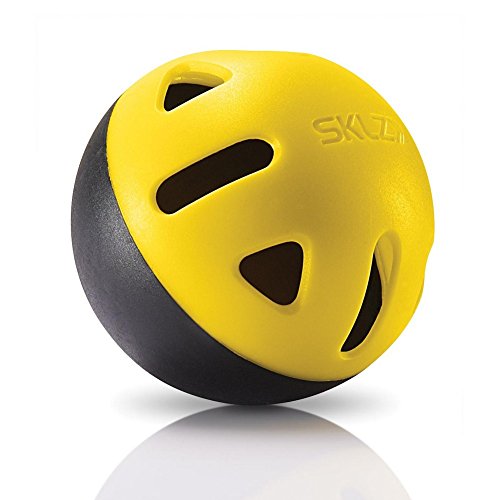
INSTANT FEEDBACK: Get a better analysis of your player’s engagement with the ball as you get instant feedback when the bat and ball connect; Give hitters the tools to fine-tune their swing and control their power

MINI FOAM BASEBALLS: Great for precision training and batting practice; Each ball measures 4 cm in diameter to encourage advanced players to improve accuracy

Package Includes: 100 white plastic practice golf balls and 1 mesh drawstring storage bag. Diameter Approx. 41mm. The weight is around 4g.
Utilizing Wall Toss for Ground Ball Simulation

How can a player effectively practice fielding ground balls alone? Utilizing wall toss techniques is an excellent method. A player can start close to a wall, tossing a ball against it to simulate ground ball bounces. Using advanced wall techniques and varying the angle and force can enhance footwork and glove positioning. Practicing both forehand and backhand grounders allows for developing agility. Incorporating cones for directional cues further improves momentum after fielding. Progressively increasing distance challenges reaction time and quickness when fielding low ground balls. Alternating between wall bounce variations, including different ball types, adds unpredictability. This consistent practice builds muscle memory and enhances overall fielding consistency. With dedication, players can greatly improve their skills. Additionally, using a pitching machine can provide consistent practice opportunities and simulate different pitch types.
Focusing on Proper Glove Work Techniques
To elevate fielding skills, proper glove work techniques are essential. Good glove control starts with wrist positioning; players should maintain relaxed wrists to help absorb ground balls smoothly. Using a flat glove encourages two-handed fielding, which minimizes bounce-offs and promotes confidence. Position the glove in front of the body, ensuring it hovers over the knees for ideal control. Bend the knees slightly to stay balanced, allowing for quick lateral movement. Practice drills with a focus on quick glove closing enhance reaction times and muscle memory for faster transfers. Keeping the glove open at the ideal angle directs balls into the pocket. Consistent practice solidifies these techniques, transforming fielding into a seamless, confident skill when it counts. Additionally, choosing position-specific gloves tailored for your needs can significantly improve your fielding performance.
Leveraging Pitch Back Rebounders for Game-Like Conditions
A dependable pitch back rebounder can transform solo fielding practice, bringing realistic game-like conditions to any athlete’s training routine. These versatile devices offer various rebounder configurations that simulate unpredictable ball trajectories, promoting essential skills such as hand-eye coordination and lateral movement. They are suitable for all skill levels, allowing for practice adaptability in both intensity and complexity. With durable steel frames and UV-resistant nets, these rebounders are built for outdoor use, ensuring longevity. Players can leverage them for double-play feeds or quick reaction drills, reinforcing muscle memory through consistent repetition. Their portability makes them easy to set up at home or on the field, enabling athletes to hone their game without needing a partner. Additionally, most rebounders support weights up to 250 pounds, ensuring stability during rigorous training sessions.
Recommended Products

5-WAY PRO ADJUSTABLE ANGLE SYSTEM: CRUSH competitors' 3-angle limits with our 5 angle baseball rebounder net the ONLY baseball rebounder replicating inside sliders and diving catches! Whether you're pop-fly (45-65), ground ball (75-90), or lefty sliders ball (120), Full coverage of training modes. Adjust the Angles simply and smoothly with latches. Adapts from beginner to pro for solo reps or team Hitting and Fielding practices
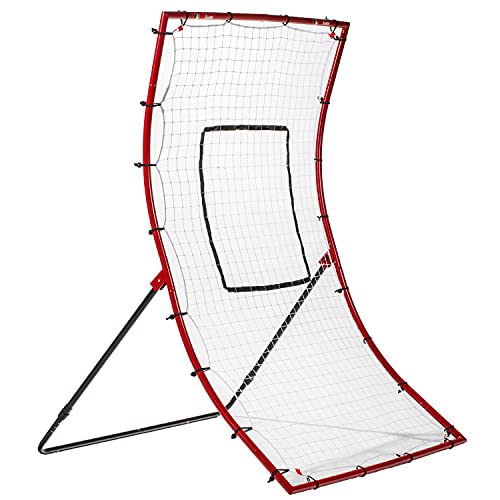
ALL-WEATHER NET: Neither spring rains nor summer heat will shred or tear the durable all-weather netting of this baseball trainer. Practice return baseball skills with ease and greater accuracy with a pitchback net that lasts
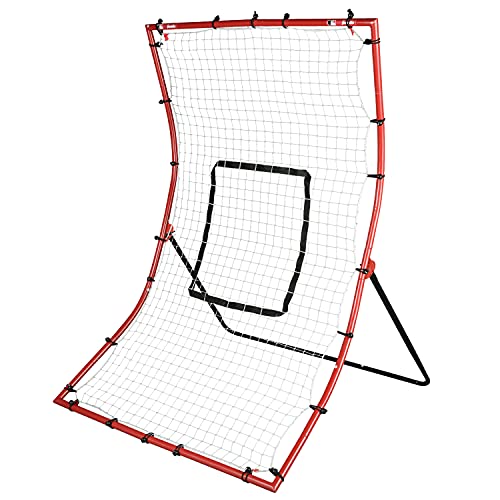
ALL-WEATHER NET: Neither spring rains nor summer heat will shred or tear the durable all-weather netting of this baseball trainer. Practice return baseball skills with ease and greater accuracy with a pitchback net that lasts
Setting Up an Effective Training Environment
Creating an effective training environment is vital for mastering fielding ground balls alone. Start with field selection by choosing a flat, even surface, like a well-maintained baseball field or open grassy area. This guarantees consistent ball behavior and minimizes injury risk. Adequate space is important to allow safe movement during drills. For equipment setup, utilize durable 7×7 feet rebound nets for efficient ground ball returns. Select adjustable nets to simulate various angles and speeds. A reliable pitching machine with variable speed control helps deliver accurate ground balls, enhancing practice rhythm. Organize your training area with portable cones to define drill zones, boosting spatial awareness and fielding skills. Additionally, incorporating batting stance mats can enhance your overall training experience by providing guidance for proper positioning. Prioritize safety and efficiency for a focused practice experience.
Recommended Products
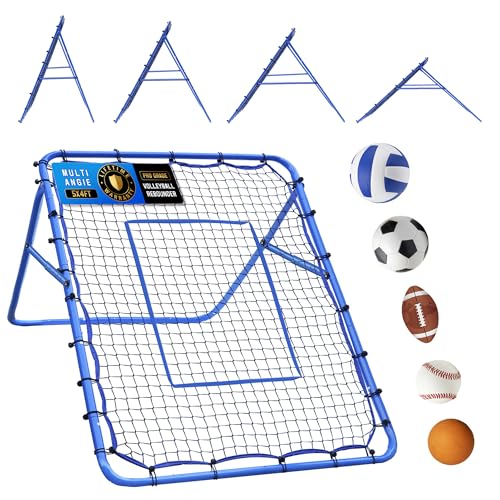
Versatile Design & Features: The Winthai Rebound Net boasts a 5x4FT area with a sturdy steel frame. Its high-elasticity net ensures consistent rebound, while adjustable targets offer versatile multi-angle training.

4x4FT MULTI-SPORT REBOUNDER NET: Winthai rebounder training for volleyball, soccer, and baseball & softball, offers unmatched versatility and functionality, designed to customize your training sessions and maximize practice efficiency. With ample space and easy setup, it ensures you make the most of every practice moment.
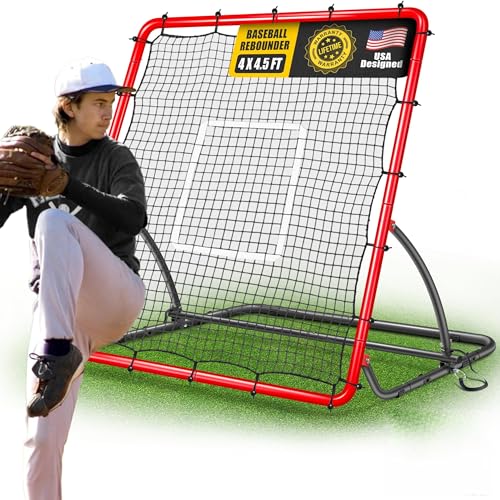
Weather-Resistant, Built for Durability: Featuring a heavy-duty, UV-resistant PE rebounding net and a robust powder-coated steel frame, this pitchback net is built to endure intense practice sessions in all weather conditions. Rain or shine, it’s designed for long-lasting performance
Understanding the Role of Footwork in Fielding
Footwork serves as the foundation for effective fielding when handling ground balls. Proper foot positioning is vital; fielders should maintain a low stance with their knees bent and feet shoulder-width apart. This setup maximizes both stability and mobility. Maintaining feet beneath the body promotes quick lateral movement, making glove placement more effective. The “triangle position”—with feet under the body and balanced on the balls of the feet—facilitates smooth movement efficiency. Continuous foot movement is essential, preventing dead stops that can slow reaction times. Drills like the In-and-Out or Hexagon help instill the rhythm needed to shift seamlessly from fielding to throwing. Additionally, using tools like the Tanner Tee Adjustable Pro Hitting Tee can complement your training by focusing on swing mechanics. Mastering these elements can notably reduce the chance of misfielding ground balls, enhancing overall performance.
Developing Quick Reaction Times Through Consistent Practice
Consistent practice markedly enhances quick reaction times when fielding ground balls. Engaging in reaction drills, such as utilizing a reaction ball or performing rapid successive ground ball drills, forces players to make quick decisions. Maintaining proper posture positions—like staying low on the balls of the feet—optimizes readiness for diverse movements. Incorporate agility exercises, which may include shuttle runs and lateral shuffles, to boost multi-directional speed. Solo techniques like barehand drills foster precise hand movements and touch without glove dependence. Additionally, integrating coordination training into drills guarantees that every aspect of movement strategy is refined. Gradually increase drill complexity for faster recognition and response, ultimately creating a thorough reaction training system that develops efficient fielding skills. Using a quality batting tee can complement practice by allowing players to focus on swing mechanics and hand-eye coordination.
Common Fielding Mistakes and How to Correct Them
Though fielding ground balls may seem straightforward, the reality is that many players develop habits that lead to common mistakes. Improper fielding positioning, such as standing too upright, can hinder quick reactions. Keeping feet too close or too far apart compromises balance, while misaligning the body increases error risks. Inefficient glove work techniques, like relying only on fingertips, can reduce control. Players may also struggle with footwork, crossing feet or failing to position themselves effectively. Inadequate throwing preparation, such as not setting the feet correctly, can lead to inaccurate throws. Finally, misjudgment of ball speed or spin contributes greatly to fielding mistakes. Implementing correction strategies, such as consistent practice and focused drills, can effectively address these issues.
The Importance of Muscle Memory in Fielding
Fielding ground balls effectively requires more than just basic skills; it heavily relies on the development of muscle memory. Muscle memory is achieved through consistent practice, allowing players to perform movements automatically without conscious thought. This process includes three stages: learning mechanics, refining timing, and executing movements effortlessly. Regular repetition is essential, as it transforms deliberate actions into quick responses, reducing cognitive load during games. Without focused practice, muscle memory weakens, leading to unreliable fielding. Importantly, correct technique must be emphasized; poor habits can become ingrained, making future corrections challenging. Players who prioritize building strong neural pathways strengthen their fielding efficiency, ultimately enhancing confidence and performance in high-pressure situations. By committing to this practice, athletes can achieve greater success on the field.
Creating a Flexible Training Routine for Solo Practice
Effective training requires a well-structured routine, especially for those practicing solo. A flexible scheduling approach emphasizes short, frequent practice sessions to enhance skill retention. By allocating time for various drills, individuals can seamlessly integrate scoop and backhand drills into their routine. Adjusting practice intensity based on personal fatigue helps prevent injuries while maintaining high performance. Using available spaces like backyards or garages makes training accessible. Incorporating different ball types, such as mini wiffle balls, aids in developing hand-eye coordination. Progressing from stationary drills to dynamic movements mimics game situations effectively. Monitoring improvement through successful fielding attempts and utilizing video analysis fosters a sense of achievement, ultimately bringing solo practitioners closer to their goals on the field.
Frequently Asked Questions
How Often Should I Practice Fielding Ground Balls Alone?
For ideal skill development, it is advised to practice fielding ground balls 2-3 times per week. This practice frequency helps reinforce muscle memory while maintaining a balance that reduces injury risk and fosters consistent improvement.
What Are the Best Surfaces for Practicing Fielding?
Grass fields offer realistic conditions and cushioning, while turf surfaces provide uniformity and year-round utility. Players seeking belonging should prioritize surfaces that enhance skill development, ensuring engaging practice experiences create a connection with the game and teammates.
Can I Field Ground Balls Indoors Effectively?
Yes, effective indoor drills can be conducted on surfaces like hallways or basements. Using soft balls, players can enhance skills through varied exercises, fostering a sense of community and growth within aspiring athletes.
How Do I Track My Improvement Over Time?
To track improvement over time, one can utilize self-assessment techniques and improvement metrics by logging performance data, analyzing video footage, and setting specific goals, fostering a sense of belonging through shared progress and feedback within practice groups.
What Is the Ideal Duration for Solo Practice Sessions?
To hit the ground running, solo practice sessions should last 10-15 minutes, balancing practice intensity and session frequency. Frequent, shorter drills enhance skill retention while avoiding fatigue, fostering a supportive environment for improvement.