As an Amazon Associate, we earn from qualifying purchases. Some links on this site are affiliate links at no extra cost to you. Our recommendations are based on thorough research and editorial judgment.

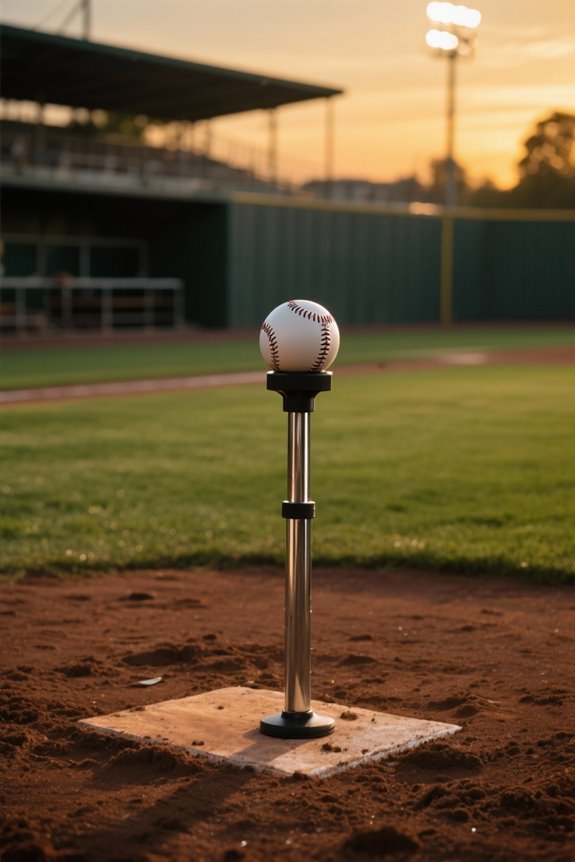
How Can I Improve My Swing Mechanics With A Batting Tee?

To improve swing mechanics with a batting tee, focus on controlled swing path development and proper balance. Position the tee aligned with your strike zone—1 to 2 inches in front of your forward knee. Maintain a stable, shoulder-width stance for better weight transfer. Incorporate game-like intensity in your practice to enhance power and intent. Use video analysis for feedback on your mechanics. Continually track your performance to identify trends and refine your skills. More tips await to elevate your game.
Key Takeaways
- Focus on Tee Placement: Position the tee 1-2 inches in front of your forward knee to enhance strike zone awareness.
- Use Stance Variations: Adjust your stance based on pitch type; open for inside pitches, closed for outside, and square for balanced power.
- Emphasize Balance and Rhythm: Practice maintaining a balanced stance and consistent swing rhythm to improve weight transfer and timing during swings.
- Incorporate Progressive Skill Drills: Start with half-speed swings to establish mechanics before progressing to full-speed swings, gradually increasing intensity.
- Leverage Video Analysis: Record your swings for frame-by-frame review, helping identify areas for improvement in mechanics and technique.
The Importance of Controlled Swing Path Development
You may be interested

3 Best Swing Analysis Software for Serious Golfers in 2026
October 15, 2025
How Do I Adjust My Swing For Inside Vs Outside Pitches?
October 15, 2025
How Do I Choose Batting Gloves That Improve Grip?
October 15, 2025
Swing path development is vital for maximizing a hitter’s performance at the plate. The swing trajectory directly affects how effectively a bat travels through the hitting zone. Metrics like Attack Angle and Swing Path Tilt are essential for path optimization. A flatter swing promotes line drives and ground balls, while a steeper angle can generate home runs. With the MLB average tilt around 32°, understanding individual variations is key. Advanced tracking technologies provide insights into swing mechanics by measuring paths through significant milliseconds before contact. Hitting with a controlled swing path helps players align with league benchmarks, enhancing their potential for squared-up contact and improved exit velocity. Regular feedback and adjustments lead to tangible improvements in performance metrics, fostering growth in every hitter’s journey. Utilizing batting tees can significantly aid in developing these mechanics by allowing for consistent practice and targeted drills.
Essential Balance and Timing Fundamentals

Effective balance and timing are critical elements in a hitter’s performance, contributing to successful contact and power generation. A balanced stance starts with feet shoulder-width apart, allowing for bat control and stability. Athletes should slightly bend their knees and center weight on the balls of their feet for quick movements. Developing a consistent rhythm considerably enhances timing; initiate the load with a repeatable rhythm to synchronize phases of the swing. Balance drills help reinforce these fundamentals, focusing on proper weight transfer and controlled hip rotation. Maintaining eye discipline by keeping the head still improves focus on the ball, which is crucial for effective swings. By practicing these principles consistently, hitters can elevate their performance and achieve remarkable results. Incorporating a batting tee can enhance timing fundamentals by allowing players to focus on swing mechanics without the distraction of a moving pitch.
Recommended Products

⚾【Height Adjustable from 25" to 37"】Easy adjusts the height to 25 inches (for kids) or 37 inches (for teens, adults) to meet players of different heights and training needs. As hitters progress from learning to hit in Little League baseball, they should begin moving the batting tee to various heights and locations to simulate at-bats in a real game.
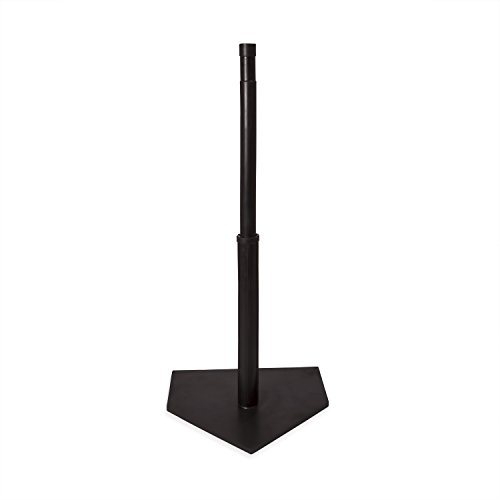
IMPROVE BATTING ACCURACY: Ideal for all players, the Champion Sports deluxe batting tee helps players train to improve their swing style, power, and accuracy for all levels of competition
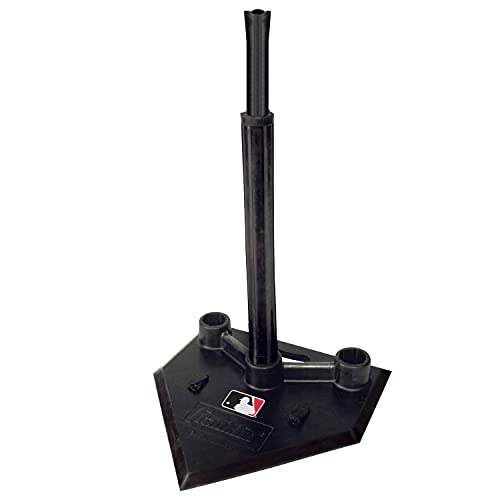
ULTRA DURABLE: Our rubber construction design is high quality and snap-resistant
Precise Tee Placement for Strike Zone Awareness

Precise tee placement greatly enhances a hitter’s strike zone awareness. Each player’s unique stance and swing mechanics dictate ideal tee positioning, typically placing the ball 1 to 2 inches in front of the forward knee. For inside pitches, the tee should sit in front and slightly inside the front foot, while outside pitches require deeper alignment with the hip. For middle pitches, position the tee in line with the plate and front foot. Moving the tee to simulate various pitch locations allows hitters to build adaptability and barrel awareness across the strike zone. This practice reinforces timing and helps avoid developing poor habits associated with improper stance adjustments. By mastering these placements, players can improve their hitting efficiency and overall performance. Additionally, utilizing a durable batting tee ensures stable usage during practice, further supporting proper swing mechanics.
Recommended Products

TRAINING EQUIPMENT: The Tee Popper Mini gives you both the movement of a ball and the ability to train anytime you’d like without a partner. (USE MINI POPPER BALLS ONLY) Check out our Tee Popper Mini bundle on Amazon to get a 6 pack of balls included.

IMPROVE BATTING: Must have tool for players looking to improve their batting mechanics, ball contact and accuracy, both on the field or at home with a hitting net

HEAVY DUTY: This tee is constructed with heavy-duty industrial grade rubber for premium durability and performance that will last season after season for teeball, baseball, and softball players
Focusing on Swing Intent, Power, and Precision

Intent shapes a hitter’s journey toward mastering swing mechanics. Each swing on the batting tee should focus on purpose—improving swing tension, bat angle, or contact can lead to greater power. Hitters are encouraged to mimic game-like intensity, ensuring each movement translates to live pitching situations. Explosive hip rotation and controlled weight transfer are essential for maximizing bat speed, making it crucial to engage the lower body during swings. Practicing with one-handed drills reinforces the role of the elbow in leading the bat through the zone. Precision also matters; adjusting tee height and location helps hitters develop accuracy, allowing them to drive the ball effectively in all fields. With dedicated practice, these key elements come together to enhance overall performance. Additionally, incorporating a sturdy materials batting tee can significantly improve stability during practice sessions.
Reinforcing Body Positioning and Mechanics

Reinforcing body positioning and mechanics is essential for any hitter looking to elevate their performance. Proper body alignment begins with a stable stance: feet shoulder-width apart and weight distributed evenly. The tee should be positioned 1 to 2 inches in front of the forward knee, tailored for the hitter’s height and arm length. This consistency enhances swing mechanics, leading to better contact. It’s important to maintain the same stance during practice to build muscle memory. Additionally, leverage stance variations for different pitch locations—move the tee for inside, outside, or middle pitches while keeping the body stance constant. These practices cultivate reliability, enabling hitters to understand their strike zone better and improve overall swing effectiveness. Incorporating a batting tee into your drills can significantly enhance practice effectiveness by focusing on individual skills.
Recommended Products

【ADJUSTABLE HEIGHT】Baseball tee can be adjustable height from 25-37 inch, It accommodates teens and adults of various skill levels. This versatility ensures they can continue to use the baseball batting tee as they grow and progress in their baseball journey

1.【STURDY TRIPOD STAND】batting tee for kids, Sturdy tripod configuration provides stability.

【Baseball Practice Sets】This EASTGOING Baseball Batting Set includes 1 Black baseball tee for hitting+ 2 tee topper replacement+1 tee storage bag.Spray Paint steel frame Pipe can resist bending, twisting and rusting,this allows you quick, happy and quality at bats! The baseball equipment is perfect for team or individual training.
Progressive Training for Effective Skill Development
Developing a hitter’s skills requires structured training that builds upon solid mechanics. A progressive approach to batting tee drills guarantees effective skill development. Hitting begins with rhythm and balance at half-speed swings. Next, hitters advance to continuous swings, enhancing technique refinement and fluidity. Incorporating one-handed swings and variations in stance fosters strength and adaptability. Each drill emphasizes specific aspects, like swing plane and barrel control adjustments, allowing for thorough skill assessment. For instance, drills that simulate hitting deep pitches refine timing and spatial awareness. Gradual height changes to the tee target distinct swing adjustments, guaranteeing continuous improvement. This methodical training blueprint sets a foundation for consistent performance while cultivating confidence and belonging in the hitting community. Additionally, using bat speed enhancement tools can further support the development of a powerful swing.
Recommended Products

Official size home plate


The Original pro-style Tanner batting tee that started it all. Trusted by more travel ball, youth, college and professional players than any other baseball tee, softball tee or t ball tee.
Utilizing Visualization Techniques During Tee Practice
While mastering swing mechanics is essential for improved performance, utilizing visualization techniques during tee practice can greatly enhance a hitter’s overall training effectiveness. By engaging in mental rehearsals, players can visualize future scenarios where they face various pitch types and locations. This mental imagery not only sharpens pitch recognition but also synchronizes timing and body movement. Practicing from both first-person and third-person perspectives reinforces muscle memory and builds confidence. Setting up a quiet environment enables focused visualization, where hitters simulate ideal swings from stance to follow-through. Incorporating different pitch scenarios boosts decision-making skills while reducing reaction times. Embracing these visualization practices complements physical training and fosters a deeper mind-body connection for budding athletes. Additionally, using a batting stance mat during practice can help players develop consistent positioning and improve their overall swing mechanics.
Monitoring Contact Quality for Immediate Feedback
Monitoring contact quality is essential for any athlete working to enhance their baseball batting skills. By utilizing advanced pitch tracking systems in batting cages, players receive immediate metrics, such as swing speed and launch angle, offering precise evaluations. Engaging in structured contact drills allows athletes to explore contact quality and adapt their swing mechanics during practice. These feedback loops highlight specific swing flaws, enabling targeted adjustments. Players can evaluate hit outcomes through ball flight and placement, refining contact with every swing. Consistency in tee practice leads to smoother swings and improved performance, making these practices invaluable. Ultimately, focused self-assessment combined with real-time data cultivates a deep understanding of one’s batting mechanics and potential for growth within the game. Many players find that incorporating practice nets into their training routine can significantly enhance their swing accuracy and consistency.
Incorporating Video and Partner Feedback
Incorporating video and partner feedback into swing practice greatly enhances a player’s ability to refine their batting mechanics. Video analysis allows players to review their swings frame-by-frame, spotting issues like early bat drops and over-rotation. This objective feedback promotes self-awareness, helping hitters understand discrepancies between what they feel and what actually happens. Partner collaboration further enriches this process; observers can offer immediate feedback on stance and swing plane, maintaining rhythm and timing during drills. Combining these two methods creates a powerful feedback loop. Partners can assist with camera positioning for ideal angle, ensuring thorough coverage of the swing. This structured approach enables players to correct flaws effectively, leading to consistent improvement in their mechanics. Utilizing tools like the adjustable batting tee can also enhance practice sessions by accommodating various player sizes and skill levels.
Recommended Products

【Durabel Tripod Stand Heavy Duty】Baseball batting tee features weighted steel give the hitting extra stability, sturdy tripod to ensure that the baseball tee don't move or fall down when you hit it, with rubber legs provide grip on any surface indoor or out, serve your long lasting batting training

【Strong and Long-lasting】The batting tee is made of 1 rubber top, aluminum stem and metal base.The rubber top provides excellent grip and holds the ball firmly and steadily; the aluminum stem can withstand the impact of batting; and the heavy-duty base helps prevent the tee from constantly falling over due to slight mishits.

【Durabel Tripod Stand Heavy Duty】Baseball batting tee features weighted steel give the hitting extra stability, sturdy tripod to ensure that the baseball tee don't move or fall down when you hit it, with rubber legs provide grip on any surface indoor or out, serve your long lasting batting training
Adapting to Different Pitch Locations With Stance Variations
Effective swing mechanics rely heavily on a player’s ability to adapt their stance based on the pitch location. Stance variations are essential for ideal pitch adaptation. A square stance is perfect for balancing power and contact across the strike zone, as it simplifies the swing path. In contrast, an open stance enhances visibility for inside pitches but may compromise reach on outside ones. A closed stance improves coverage on outside pitches, though it can limit inside shots. Additionally, adjusting stance width—wider for stability and power, or narrower for mobility—can enhance performance. Ensuring proper depth and weight distribution allows players to effectively manage pitch trajectories. Embracing these stance variations can lead to significant improvements in batting consistency and effectiveness. Incorporating tools like GoSports Weighted Training Balls can further strengthen swing mechanics by enhancing muscle memory and feedback during practice sessions.
Tracking Outcomes for Continuous Improvement
Consistently tracking outcomes during batting practice is essential for any player aiming to improve their swing mechanics. Utilizing tools like mobile apps and video analysis makes it easy to log performance analytics. This detailed tracking enables players to identify trends in metrics such as bat speed and contact point precision. By establishing a feedback loop, swing adjustments become more targeted and effective. Regular comparison of these metrics helps players set specific goals, like increasing bat speed by 3 mph. Utilizing high-speed cameras and wearable sensors offers real-time insights into swing mechanics. Ultimately, structured, data-driven practice leads to meaningful skill improvements, fostering a sense of accomplishment and belonging within the team dynamic.
Building Muscle Memory Through Repetitive Practice
Building muscle memory through repetitive practice is essential for developing a reliable swing. Batting tees allow players to focus solely on swing mechanics, removing factors like pitch speed. By executing drills such as precise foot alignment and full swings with intentional pauses, hitters enhance muscle engagement and build a consistent swing rhythm. Recommended practice involves at least 10 repeats per session to achieve neural adaptation. Tee work also helps refine specific elements like bat speed and weight transfer, allowing for immediate feedback on swing flaws. This controlled environment supports habitual muscle memory, making it easier to replicate accurate swings under game pressure. Ultimately, consistent tee practice forms a robust foundation for lasting hitting performance across all skill levels.
Frequently Asked Questions
How Often Should I Practice With a Batting Tee?
For ideal improvement, players should incorporate batting tee practice into their daily routine, aiming for 15-30 minutes most days. This practice frequency solidifies swing mechanics while maintaining balance with other training aspects essential for overall development.
What Type of Bat Is Best for Tee Work?
Selecting the right bat opens a world of possibilities. For effective tee work, consider heavier wood bats for strength, and slightly shorter lengths for control—these bat selection tips enhance performance while fostering camaraderie among fellow enthusiasts.
Can I Use a Batting Tee Indoors?
Yes, a batting tee can be used indoors, considering space considerations and indoor safety. Ensuring enough ceiling height, clear areas, and protective gear promotes an engaging practice environment while minimizing risks to surroundings.
How Can I Stay Motivated During Tee Practice?
Studies reveal that consistent goal setting boosts motivation by 30%. By incorporating positive reinforcement through achievable milestones in tee practice, individuals foster a supportive environment, enhancing their enjoyment and connection with fellow enthusiasts during their training sessions.
Should I Wear My Batting Gloves While Using the Tee?
Wearing batting gloves during tee practice enhances grip improvement, providing comfort and reducing slippage. The gloves also mitigate hand fatigue, allowing players to focus on mechanics, ultimately fostering a sense of belonging within the batting community.