As an Amazon Associate, we earn from qualifying purchases. Some links on this site are affiliate links at no extra cost to you. Our recommendations are based on thorough research and editorial judgment.

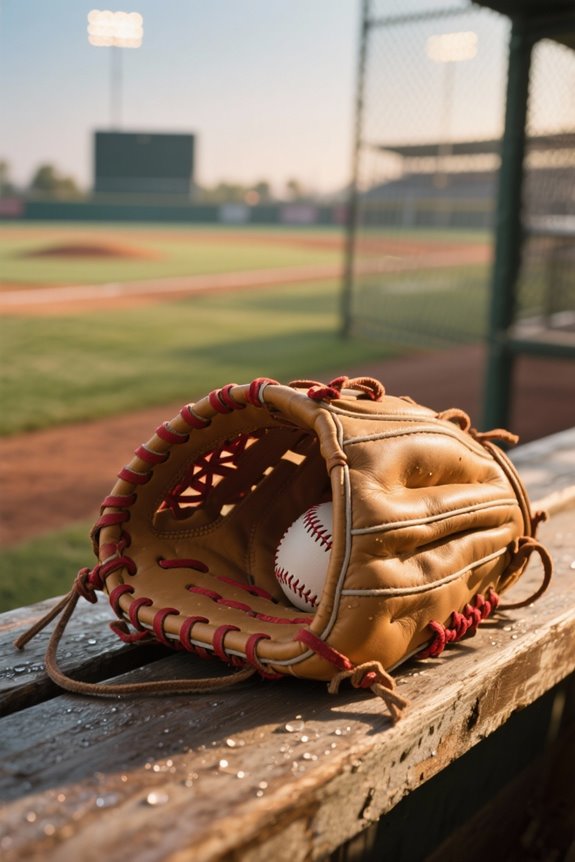
How Do I Break In A New Baseball Glove Properly?

To break in a new baseball glove properly, start by selecting the right size and inspecting for stiffness, especially in the pocket and fingers. Use a quality oil, like Wilson Premium Glove Oil, to soften the leather, applying it in moderation. Gently flex the glove and strike the stiff areas with a mallet. Regularly clean it with a soft cloth and store it with a ball inside to maintain shape. There’s more to perfecting your technique ahead.
Key Takeaways
- Choose a glove that requires minimal break-in time to enhance performance and comfort quickly.
- Apply appropriate oil or conditioner to soften stiff areas, focusing on the palm and laces.
- Flex the glove by repeatedly opening and closing it, targeting the fingers and thumb for relaxation.
- Practice regularly with the glove to help integrate it into your gameplay and speed up the break-in process.
- Mold the glove’s pocket around a baseball and secure it with rubber bands for 24 hours for optimal shaping.
Choosing the Right Glove
You may be interested


Choosing the right baseball glove is essential for any player aiming to enhance their performance on the field. Different glove types serve specific positions; for instance, infielder gloves range from 9” to 11.75” for quick ball transfers, while outfield gloves are larger than 12” to manage fly balls. Web designs vary; H-Webs offer flexibility and visibility, while Trap-Eze gloves create deep pockets ideal for outfielders. Leather quality matters too, with premium steerhide providing durability but needing a longer break-in. Comfort hinges on fit considerations, ensuring the glove feels snug but not restrictive. Ultimately, selecting the right combination of glove type, web design, and leather quality influences a player’s overall effectiveness and ease on the diamond. Additionally, understanding the break-in period is crucial for maximizing glove performance and comfort during play.
Inspecting for Stiff Areas

After selecting the right baseball glove, the next important step is inspecting it for stiff areas. A thorough leather inspection should identify any dry or cracked surfaces that indicate stiffness. Pay close attention to the laces; brittle or taut lacing can diminish flexibility, affecting performance. Focus on critical glove sections like the heel, pocket, and fingers during the stiffness evaluation. Examine for palm bubbles or rigid spots and note any dirt that may have hardened the leather. Gently squeeze the glove to feel for resistance and use a mallet on stiff areas to measure pliability. Evaluating these factors guarantees proper preparation for the glove’s break-in process, promoting adaptability and enhancing overall functionality. Additionally, consider that the ease of break-in affects immediate play readiness, so addressing stiffness early is crucial.
Selecting the Correct Oil or Conditioner

Selecting the right oil or conditioner for a baseball glove is essential for ideal performance and longevity. Conditioners contain blends of natural oils, lanolin, and beeswax, offering hydration and leather preservation. Popular oil types include Wilson Premium Glove Oil for quick softening, while conditioners like Sarna focus on long-term care. When testing conditioners, always apply a small amount to a discreet area first to avoid unwanted discoloration. Avoid harsh, petroleum-based oils, as these can damage leather fibers over time. For best results, use conditioners twice a year—after the fall season and in spring. Remember, the right product choice not only rejuvenates the leather but also supports a natural break-in process, ensuring the glove remains performant for seasons to come. Additionally, consider the glove’s break-in time, as some models are designed for immediate use and require less conditioning.
Moistening the Leather

Moistening the leather of a baseball glove is an important step in the break-in process, ensuring that the fibers are flexible and ready for shaping. To achieve ideal moisture control, dampen a clean cloth and gently wipe the leather, avoiding soaking it to prevent damage. Over-hydration risks include misshapen pockets and compromised lacing. After moistening, immediately pat the glove dry with clean towels, stuffing them into the pocket and finger stalls to maintain shape. Use air drying at room temperature, steering clear of heat sources to avoid brittleness. Regular checks for over-saturation, such as darkened spots, are vital. Proper techniques enhance the glove’s lifespan while promoting pliability, setting the stage for successful performance on the field. Additionally, using durable materials like full-grain leather can further improve the glove’s longevity and performance during play.
Softening Stiff Sections

Softening stiff sections of a baseball glove is an essential part of the break-in process. To achieve this, players should use flexing techniques that focus on the fingers and thumb. Individual flexing and repeated opening and closing will help relax the leather fibers. Special attention should be given to the thumb, often the stiffest area. Additionally, gentle mallet strikes can aid in softening critical flex points, such as the top of the web. Massage methods, like kneading and rolling the stiff sections, promote flexibility without damaging the leather. Regular use during practice builds on this softening, allowing the glove to mold naturally to the player’s hand. Emphasizing care through gradual techniques guarantees the glove maintains its integrity as it breaks in. Choosing a glove made from full grain leather ensures superior longevity and performance during the break-in process.
Shaping the Glove With Tools
After addressing the softening of stiff sections in a baseball glove, the next step involves shaping the glove to achieve a perfect fit and function. Tools like Glove Wrap can be invaluable, allowing players to form the ideal pocket while breaking in their gloves evenly. This reusable product is endorsed by players across all levels, guaranteeing optimal glove contact. Combining Glove Wrap with specific shaping techniques, such as manually creating creases using hot water, enhances flexibility and allows for better finger placement. Keeping lacing tight with sturdy steel or brass needles guarantees a snug fit. Proper storage with tools like Lizard Skins Glove Wrap is essential to maintain the glove’s shape and functionality for many seasons to come. Additionally, using techniques suited for high-performance gloves can further expedite the break-in process and improve overall feel.
Natural Break-In Through Use
Using a baseball glove regularly is the most effective way to achieve a natural break-in. By practicing catching techniques, players can gradually soften the leather through repeated flexing and impact. As the glove is used, it molds to fit the user’s hand and catching style, improving glove control and comfort. This method is safe and avoids potential damage from extreme treatments. It requires patience, with break-in times varying from days to weeks based on the leather quality and frequency of use. Daily manual manipulation, such as bending the glove and pressing the pocket, enhances flexibility. This consistent engagement not only accelerates the break-in process but guarantees that the glove remains in ideal condition throughout its use. Additionally, using gloves made from high-quality materials can further enhance the overall break-in experience and longevity of the glove.
Drills for Breaking In the Glove
Drills for breaking in a baseball glove are essential for achieving peak performance and comfort. Flexibility drills play a pivotal role in softening the leather. Players should use a baseball mallet to strike the pocket and fingers, promoting pliability. Rolling the glove back and forth helps break in stiff areas effectively. Incorporating pocket shaping can enhance the glove’s natural catching ability. To mold the glove, place a baseball inside and securely wrap it with a rubber band overnight. Regularly playing catch with varied throws also aids in breaking in the glove. Such active use, combined with stretching and mallet drills, fosters flexibility and guarantees the glove feels like an extension of the player’s hand. Additionally, using a glove with minimal break-in time can significantly speed up the process and enhance performance on the field.
Maintaining the Glove’s Condition
Maintaining the condition of a baseball glove is essential for its longevity and performance. Proper storage plays a crucial role; gloves should be kept in a cool, dry place away from direct sunlight to prevent leather from cracking. A glove wrap or a ball can help maintain its shape during storage. Regularly applying a thin layer of glove-specific conditioner once or twice per season helps with leather longevity. Focus on drying areas like the palm and laces, allowing the conditioner to absorb overnight. Avoid over-conditioning, as it can lead to a loss of structure. Regularly inspect laces for wear and replace them promptly to maintain the glove’s integrity. Following these steps will keep the glove in peak form throughout the season. Additionally, using proper glove materials is key to ensuring durability and performance over time.
Proper Cleaning Techniques
After taking the time to maintain the condition of a baseball glove, it’s important to focus on proper cleaning techniques to guarantee it remains in excellent shape. Begin with a soft-bristle brush or damp cloth to gently remove dirt. For deeper cleaning, select an appropriate leather cleaner suitable for your glove type and apply it with a clean cloth in small sections using circular motions. Mild soap diluted in water can tackle stubborn stains, but be sure the cloth is only damp, not wet. After cleaning, thoroughly remove residue with a dry cloth. Always air dry the glove at room temperature, avoiding heat sources that can crack the leather. Regular surface care keeps the glove performing well, ensuring it stays game-ready. Additionally, using high-performance genuine leather can enhance the glove’s durability and maintain its shape over time.
Final Shaping Methods
Final shaping methods are vital for achieving the perfect fit and functionality of a new baseball glove. First, using the correct ball type—baseball or softball—molds the glove’s pocket effectively. Secure the glove around the ball with rubber bands, allowing it to rest for at least 24 hours to enhance the pocket’s shape. Manual flexing and finger bending are fundamental; bend fingers outward to avoid deformation. Using a wooden mallet to pound the pocket compresses padding and defines the glove’s shape. After these techniques, apply glove oil to keep the leather supple. Finally, secure the glove again to finalize shaping. These steps promote a comfortable fit and guarantee readiness for the upcoming season.
Storing Your Glove
Proper storage of a baseball glove is essential for maintaining its shape and extending its lifespan. Store the glove in a cool, dry place, away from extreme temperatures, direct sunlight, or damp spaces. Room temperature is ideal for effective glove storage. To preserve its natural form, position the glove flat on its palm or upright on its fingers. Use a baseball in the pocket during long-term storage to maintain a well-formed pocket. For effective moisture management, gently dry the glove with an absorbent cloth if it gets wet and avoid artificial heat sources. Opt for a dedicated glove bag or cover to protect against dust and moisture, ensuring your glove remains in top shape for every game.
Tips for Long-Term Maintenance
Maintaining a baseball glove for the long haul involves several simple yet essential steps. To guarantee glove longevity, clean it after each game using a soft cloth to wipe off dirt. For a deeper clean, dampen a cloth with mild soap, never soak the glove. Conditioning the leather is crucial; apply a glove-specific conditioner once or twice a season. Focus on areas like the palm and laces, allowing the conditioner to absorb for 24 hours. Keep the glove’s shape by storing a ball in the pocket and avoiding extreme heat or sunlight. Regularly check the laces for wear and replace them when necessary. Finally, be cautious with weather—always air dry the glove to enhance leather preservation.
Frequently Asked Questions
How Long Does It Typically Take to Completely Break in a Glove?
Typically, breaking in a glove takes one to two weeks through consistent use. Duration comparisons reveal that various break-in techniques may expedite this process, yet patience remains essential for achieving the desired fit and comfort.
Can I Use My Glove in Wet Conditions After Oiling?
Using an oiled glove in wet conditions is acceptable with proper glove maintenance beforehand. However, care is essential to prevent damage—excessive moisture exposure could compromise the glove’s structure and longevity, affecting performance.
Should I Avoid Using My Glove During Cold Weather?
To maintain ideal glove performance, one should limit use during cold weather. Cold temperatures can stiffen the leather, impacting flexibility and handling, potentially leading to long-term damage if proper glove maintenance is ignored.
What Signs Indicate My Glove Is Fully Broken In?
A fully broken-in glove showcases remarkable flexibility, gripping the ball effortlessly within its ideal pocket. Signs include soft leather, seamless closure with light pressure, and a comfortable fit that enhances the player’s connection to their game.
Is It Necessary to Break in a Catcher’s Mitt Differently?
Yes, breaking in a catcher’s mitt requires specific techniques distinct from regular gloves. Employ proper glove care tips to soften leather while preserving padding integrity, ensuring the mitt molds comfortably for ideal performance and safety during play.