As an Amazon Associate, we earn from qualifying purchases. Some links on this site are affiliate links at no extra cost to you. Our recommendations are based on thorough research and editorial judgment.

How Can I Practice Pitching Without A Catcher?

Practicing pitching without a catcher is manageable and effective. Use towel drills to enhance arm speed and reinforce mechanics. Wall drills will help with balance and alignment after the pitch. Incorporate dynamic balance exercises to strengthen hip muscles. Regularly focus on leg drive to improve power. Set up at-home practice areas with portable nets and weighted balls. Measure your pitch accuracy for self-improvement. There’s more to learn about structuring your routine for best results.
Key Takeaways
- Utilize towel drills to enhance arm speed and refine mechanics without a ball, simulating the throwing motion effectively.
- Conduct wall drills to reinforce follow-through and body alignment, aiding in muscle memory during pitching.
- Set up a home practice area with portable pitching nets and weighted balls to mimic realistic pitching conditions.
- Engage in balance and stability drills like the Dynamic Cone Drill to improve overall pitching stability and strength.
- Track your progress through video recordings and mirror self-assessment to identify and correct mechanical issues.
Importance of Practicing Without a Catcher
You may be interested



How can pitchers truly refine their skills without the presence of a catcher? Practicing without a catcher allows pitchers to hone their balance and mechanics, which is essential for achieving strong pitching accuracy. By focusing on specific elements of their delivery, such as leg drive and body alignment, pitchers build muscle memory vital to consistent performances. This unpressured environment encourages mental resilience as pitchers visualize their targets and execute their motions. Exercises promoting stability and controlled velocity can be done using tools like pitching mats or targets. Ultimately, such practice sessions create a solid foundation for when they do face a catcher, enhancing their confidence and ensuring they can deliver precise pitches in game situations. Using a portable pitching mound can further enhance these practice sessions by simulating real-game conditions.
Towel Drills for Arm Speed and Mechanics

Towel drills serve as an effective method for enhancing a pitcher’s arm speed and refining their mechanics. This towel technique allows pitchers to practice full arm extension without the stress of throwing a baseball. By gripping the towel near its end, they can simulate the throwing motion, creating a snapping sound when released correctly. This audible cue reinforces proper mechanics, ensuring smooth and controlled motions. Practicing in front of a mirror or recording the session aids in self-correction. Regular execution of these drills improves timing, rhythm, and body coordination. They not only build muscle memory but also enhance kinetic chain awareness, helping pitchers connect lower body actions with their arm movement for greater efficiency and power. Incorporating resistance bands into your training can further promote muscle memory and shoulder strength for improved pitching performance.
Utilizing Wall Drills for Balance and Alignment
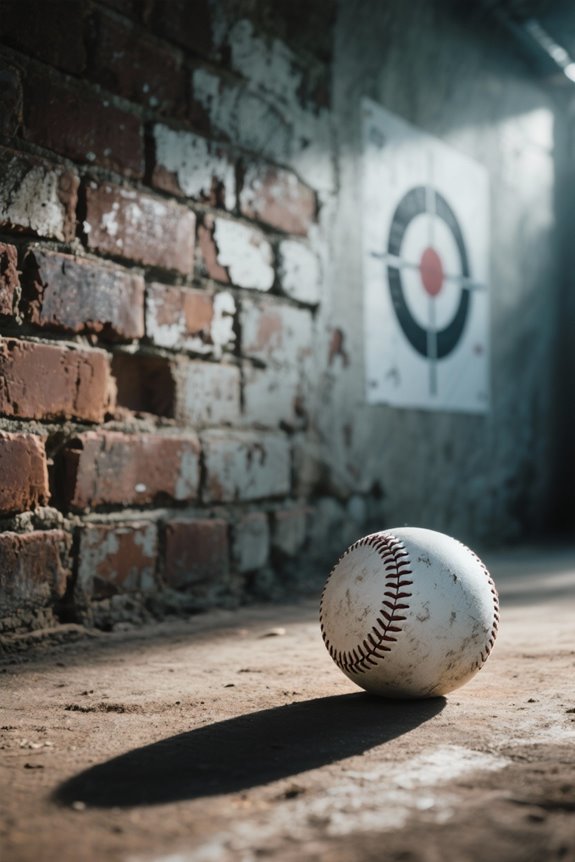
Balance and alignment are essential components of a successful pitching delivery, and utilizing wall drills can greatly enhance these aspects. One effective drill involves standing approximately 6 to 8 feet from a wall, practicing follow-through and finishing mechanics. This not only reinforces correct foot placement but also promotes balanced and controlled movements after ball release. Additionally, alignment exercises like creating a straight reference line to a target help improve muscle memory for proper foot placement and stride direction. Integrating balance techniques, such as single-leg holds near a wall, encourages stability and body control during the pitching motion. All of these drills cater to various skill levels, making them an ideal choice for pitchers seeking improvement. Furthermore, incorporating multiple target areas into your practice can provide crucial visual feedback and enhance precision during these drills.
Exploring Balance Drills for Stability

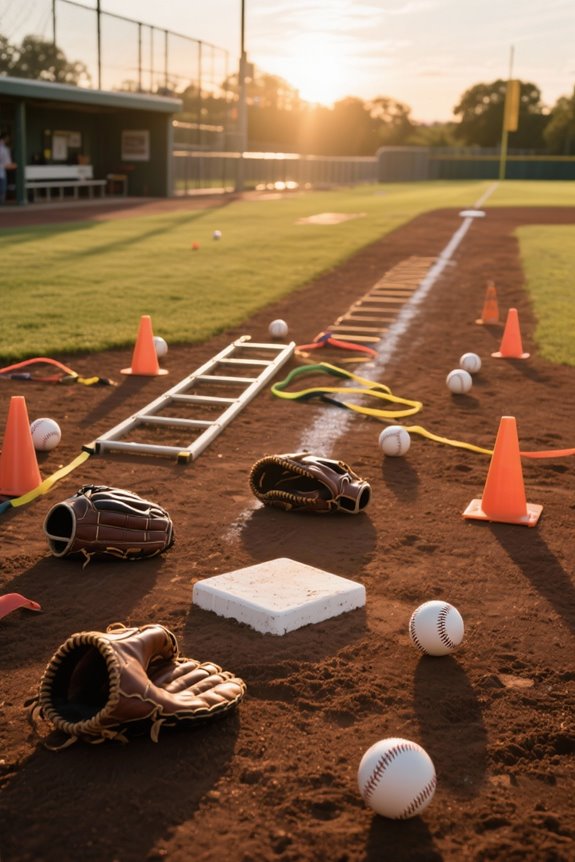
When pitchers seek to improve their stability, exploring various balance drills becomes essential to their training regimen. The Dynamic Cone Drill helps build hip strength and dynamic balance by placing three cones in paths that simulate pitching motion. Participants load at each cone, sharpening their control and timing. The Banded Toe Tap Drill enhances hip stabilizer muscles through resistance bands while promoting single-leg balance. Similarly, the Foam Roller Leg Lift focuses on proprioception and centered balance. A simple yet effective Basic Pitching Balance Drill involves lifting the lead leg to develop static stability. Each of these drills not only strengthens vital muscles but also fosters a sense of community as pitchers enthusiastically engage in shared practice. Incorporating techniques from premium materials can further enhance grip and control during these drills.
Leg Drive Training Without a Catcher
Practicing leg drive without a catcher presents an ideal opportunity for pitchers to refine their mechanics and build strength. The focus should be on leg drive mechanics, ensuring the back leg engages properly. Position the back leg in a stable, loaded stance, with the knee aligned with the toes. Use drills like step-back rolls and rocker shifts to emphasize weight transfer, promoting back leg engagement. Incorporate strength exercises such as banded lateral walks to enhance hip movement. Timing is vital; sync hand movement with leg loading to optimize energy transfer. By practicing these techniques consistently, pitchers can develop powerful leg drive fundamental for improved pitching performance, all while cultivating a sense of community with fellow athletes who share similar goals. Additionally, utilizing baseball training aids can greatly enhance your practice sessions and overall development.
Benefits of Flat-Ground Bullpen Work
Engaging in flat-ground bullpen work offers significant advantages for pitchers at all levels. One of the notable flat ground benefits is the reduced stress on the arm. When effort is controlled, throwing on flat ground helps maintain throwing volume without overloading the shoulder and elbow. This practice also facilitates focus on pitching mechanics, emphasizing pitch location and consistency. Another benefit includes easier access, as flat-ground sessions eliminate mound scheduling conflicts and are more convenient for quick warm-ups. However, pitchers should be cautious, as adapting solely to flat ground can alter their timing and mechanics. Balancing flat-ground sessions with mound work guarantees successful shifts back to game situations, preserving a pitcher’s effectiveness and overall skill development. Additionally, using sliding mats can enhance training by providing a safe surface for practicing related movements.
Visual Aids for Solo Pitching Practice
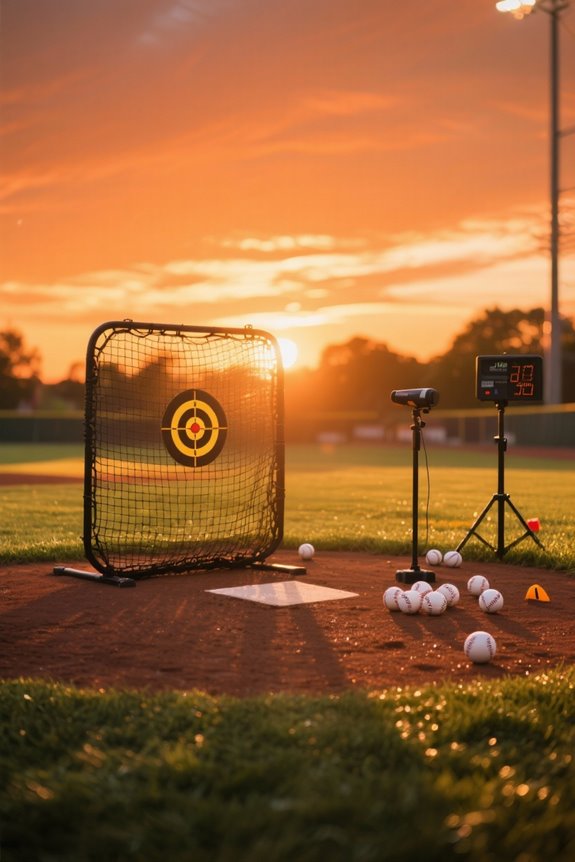
Visual aids play an essential role in solo pitching practice, enhancing a pitcher’s ability to aim and improve accuracy. Using strike zone targets, pitchers can practice hitting specific aims—these can be made from cardboard or tarps. Cones placed at various distances simulate hitters’ positions, encouraging adjustments. For targeting different pitch types, colored or numbered zones can be effective. Additionally, portable nets with target holes focus pitch placement. Incorporating mental visualization techniques further supports training by allowing pitchers to picture their targets, creating mental anchors for accuracy. Digital tools like pitch recognition apps enhance timing, while vision training apps improve recognition skills. Together, these methods provide an all-encompassing approach to sharpening pitching abilities, cultivating a sense of belonging among dedicated practitioners. Moreover, similar to how elbow compression sleeves assist athletes in providing support during physical activities, pitchers can greatly benefit from utilizing these techniques for improved performance and comfort.
Spatial Markers for Pitch Location Training
Spatial markers greatly enhance pitch location training by providing clear, defined targets within the strike zone. Devices like The Pitching Pad® feature quartered zones with brightly colored targets. This setup boosts a pitcher’s spatial awareness and helps identify precise aiming points. Arranging markers in clock-like patterns accelerates location adjustments. These targets reduce the dependency on a catcher by simulating strike zones, enriching visual feedback during practice. Durable materials guarantee safety and longevity, making them ideal for repeated use. Tools like the Lokator Target enhance muscle memory through identifiable segments. By offering a way to visualize pitch placement, these products effectively support pitchers in honing their command, even while training solo. Additionally, integrating practice with adjustable strike zones can further improve accuracy and focus during drills.
Creating a Home Setup for Efficiency
Creating an efficient home setup for pitching practice allows players to maximize their training without the need for a catcher. Utilizing portable pitching nets can simulate a strike zone, with adjustable targets marking specific pitch locations for accuracy. Solo pitching accessories like weighted baseballs enhance arm strength, while resistance bands target key muscle groups to prevent injury. Installing a portable bullpen mound can recreate realistic pitching mechanics, providing stability during practice. Incorporating self-analysis methods through radar guns and video recording enables players to track performance metrics and refine techniques independently. This home setup supports consistent practice, encouraging players to stay engaged and committed to their development, fostering a sense of belonging within their pitching community. Additionally, high-quality materials used in portable pitching nets ensure durability and resilience against wear and tear.
Focus Areas for Independent Practice
Pitchers aiming for success during independent practice should focus on several key areas to enhance their skills effectively. Strategic training can take the form of balance drills, improving stability during pitching motions. A solid leg lift is vital for power, while wall drills maintain body alignment and prevent over-rotation. Towel drills can build arm speed, reinforcing a full follow-through essential for pitch accuracy. Additionally, using precise targets strengthens command, while visualization techniques enhance mental acuity. Engaging in exercises that strengthen leg drive guarantees a powerful push-off, increasing pitch velocity. Finally, closing eyes during drills supports muscle memory, allowing pitchers to fine-tune their technique. This blend of technical refinement fosters both confidence and consistency in solo practice. Incorporating ergonomically padded shoulder straps from gear like the Easton GAME READY Backpack can also enhance comfort during practice sessions, allowing for a more focused training experience.
Essential Equipment for Solo Pitching Drills
Practicing pitching solo requires the right equipment to maximize training effectiveness. Weighted balls are essential for enhancing arm speed and mechanics. They come in various weights, allowing pitchers to focus on speed and strength during drills without a catcher. Additionally, practice nets are important; they safely catch balls, allowing for repeated pitching without the hassle of retrieval. Portable options with 9 pockets offer ideal target zones for accuracy. Resistance bands and medicine balls can further enhance strength and power, reinforcing proper mechanics. Safety gear, like helmets, is critical to protect against stray pitches. By utilizing these tools, pitchers can develop their skills efficiently and confidently, fostering a sense of belonging within their training community.
Psychological Advantages of Solo Practice
How can solo practice provide psychological advantages for pitchers? Engaging in solo sessions promotes mental resilience and builds confidence through focused repetition. Pitchers can utilize metaphors like “crushing the mound” to shift their mindset from fear to aggressive execution. This focus on the present pitch enhances mindfulness, reducing the tendency to dwell on past errors. Independent practice allows for mental resets without external pressure, fostering emotional control. By concentrating on mechanics, pitchers develop self-discipline and strengthen their ability to manage distractions. Visualization techniques during solo drills cultivate a growth mindset, transforming errors into learning opportunities. As pitchers embrace challenges, they reinforce positive self-talk and readiness, contributing to their overall mental toughness and confidence on the mound.
Effective Tips for Setting Up Solo Sessions
Setting up effective solo practice sessions requires careful planning and the right environment. A designated space, such as a backyard or basement, can be optimized for drills. Incorporating balance and alignment exercises will enhance performance, while no-ball drills using towels can build muscle memory without the pressure of a ball. To practice creativity, use household items, like buckets, to simulate pitching elements and minimize costs. Leg drive trainers, such as the King of the Hill, provide valuable feedback. It’s essential to clear the area for safety, ensuring a secure practice zone. By focusing on these techniques, pitchers can enhance resourcefulness and develop their skills effectively, preparing for more advanced training with a catcher when the time comes.
Structuring a Comprehensive Practice Routine
To develop an extensive practice routine, pitchers must outline specific goals and establish a balanced schedule that incorporates various skill sets. They should focus on pitching fundamentals by integrating target-based drills to enhance accuracy. Using simple targets like hula hoops can improve competitive spirit through repetitive practices. Solo strategies should include balance drills, emphasizing stability during the pitching motion for ideal power transfer. Additionally, practicing leg drive and arm speed with props, such as towels, can help build muscle memory without the stress of actual throwing. Finally, incorporating situational drills allows pitchers to simulate game scenarios, fostering decision-making skills. This structured approach equips pitchers with the necessary tools to advance their skills independently.
Tracking Progress and Self-Correction Techniques
What methods can a pitcher use to effectively track progress and make necessary self-corrections? A pitcher can employ data analysis through marked strike zone targets on nets to measure accuracy consistently. Recording pitches with video or apps provides valuable feedback loops for tracking performance over time. Self-observation techniques, such as using mirrors for real-time form checks, enhance understanding of body mechanics. Regular self-review sessions with a checklist identify and correct repeating mistakes. By incrementally increasing speed after mastering control at lower velocities, pitchers can refine technique efficiently. Collecting data on pitch accuracy and velocity enables measurable improvements, combining objective tracking with personal insights for a thorough self-coaching approach that fosters long-term development and belonging within their pitching community.
Frequently Asked Questions
Can I Practice Pitching Indoors or Only Outdoors?
Practicing indoors is possible and beneficial, allowing for focused pitching drills in a controlled environment. Indoor facilities offer unique advantages, enabling pitchers to enhance mechanics, even in limited spaces, while fostering a supportive community atmosphere.
What Are the Best Surfaces for Solo Pitching Practice?
Grass fields offer natural shock absorption, promoting safety and balance, while concrete surfaces provide stability and energy transfer for mechanics. Both options foster a sense of community, enabling shared experiences in honing pitching skills.
How Often Should I Practice Pitching Alone?
The recommended frequency guidelines suggest scheduling practices 3-5 times weekly. Short daily sessions of 15-20 minutes, along with a weekly longer bullpen, can enhance skill retention and arm health, fostering a sense of belonging to the pitching community.
Can Solo Practice Replace Team Practice Sessions?
Solo training cannot fully replace team practice sessions, as it limits real-time feedback and situational experience. However, it considerably aids skill development, offering valuable mechanics practice that supports overall growth alongside essential team interactions.
What Age Is Appropriate to Start Solo Pitching Drills?
At eight years old, players can commence solo pitching drills, unfastening the treasure chest of youth pitching techniques. This age allows for solo training benefits, fostering confidence while ensuring proper mechanics and preventing injury.