As an Amazon Associate, we earn from qualifying purchases. Some links on this site are affiliate links at no extra cost to you. Our recommendations are based on thorough research and editorial judgment.

How Long Does A Baseball Glove Typically Last?

A baseball glove typically lasts between one to several seasons. High-quality gloves, made from durable leather like full-grain, can endure multiple seasons if properly maintained. Others made from lower-quality materials might only last a single season. Regular use in high-level play often leads to a glove needing replacement every 1.5 to 2 years. Factors like weather, maintenance, and storage greatly influence longevity. Want to learn effective care tips and see what affects durability?
Key Takeaways
- High-quality baseball gloves can last multiple seasons with proper care, while lower-quality gloves may only last a single season.
- Gloves used in high-level play typically have a lifespan of 1.5 to 2 years.
- College players generally replace gloves more frequently compared to high school players due to increased usage.
- Signs like visible tears, flattened padding, or dry leather indicate that a glove needs replacement.
- Using multiple gloves can help distribute wear and extend the lifespan of each glove.
Factors Affecting Glove Lifespan
You may be interested


When considering the lifespan of a baseball glove, several factors play crucial roles in determining durability and performance. The type of leather greatly impacts flexibility and longevity. Full-grain leather offers remarkable durability but can be stiff initially. Kip leather, however, is softer and easier to break in. Weather conditions also influence a glove’s lifespan. Extreme humidity or heat can degrade the leather fibers, leading to cracks or stiffening. Moisture, if not managed, may result in mold growth and deterioration. Regular maintenance is essential; conditioning prevents brittleness, while proper storage keeps the glove’s shape. Treating leather with weather-resistant materials enhances its resilience against environmental factors. Awareness of these aspects can help players invest in gloves that will endure the game’s demands. Additionally, selecting a glove made from full-grain leather can significantly extend its lifespan and performance.
Typical Lifespan Based on Quality and Usage

Quality and usage greatly influence the lifespan of a baseball glove. High-quality gloves can last multiple seasons with proper maintenance, while lower-quality options may only endure for a single season. The type of leather used plays a considerable role; superior leather typically boosts durability and glove performance. Usage patterns also matter; gloves used extensively in high-level play might last 1.5 to 2 years. College players often require more frequent replacements than high school players, whose gloves can last up to three years. Additionally, using multiple gloves can distribute wear and extend each glove’s life. Regular care, including oiling and careful storage, can greatly enhance longevity, ensuring a glove remains a reliable companion throughout the season. Investing in position-specific gloves can also improve performance and increase the glove’s lifespan.
Signs That Indicate a Glove Needs Replacement

Understanding when to replace a baseball glove is essential for peak performance on the field. Signs of glove degradation are clear when a glove shows ripping, cracking, or a floppy shape. Any visible tears compromise integrity and can lead to injury. Padding that is flattened or missing reduces shock absorption, while difficulties in catching indicate performance issues. If the leather appears dry or cracked and fails to respond to conditioning, it’s time for a new glove. Excessive weight from grime build-up can also hinder performance. Pay attention to excessive errors during play; if the glove is the culprit, replacement becomes necessary. Evaluating these indicators guarantees safety and ideal functionality for every game. Regular maintenance and cleaning of a glove can prolong its lifespan, but once it shows significant wear, it’s best to invest in a new one.
Maintenance Tips to Prolong Glove Life

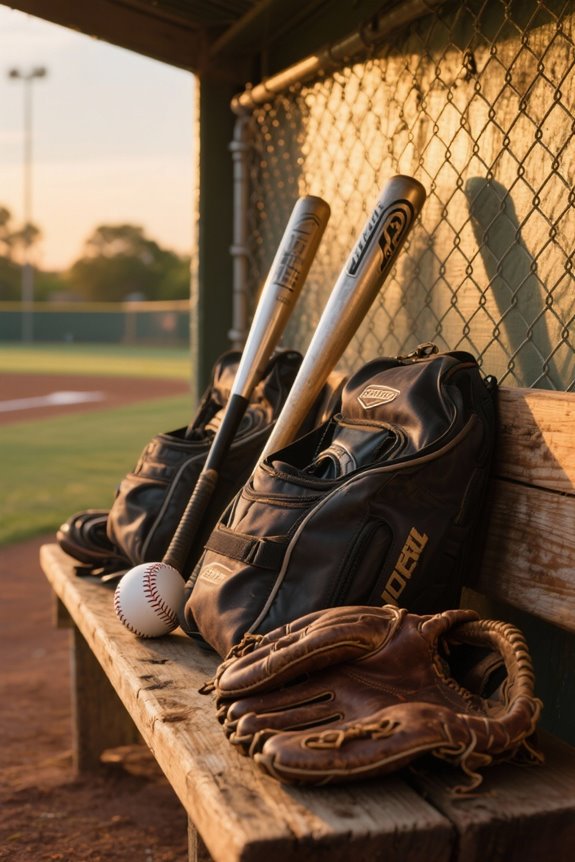
Maintaining a baseball glove is vital for longevity and ideal performance on the field. Players should implement effective cleaning techniques like using a damp cloth to remove dirt after each game. Stubborn stains may require a mild leather cleaner, followed by conditioner applied once or twice a season. Proper glove storage is equally important. A wet glove must be dried naturally with a rag—artificial heat leads to cracks. Store the glove in a cool, dry place away from sunlight, and keep a ball inside to maintain shape. During off-seasons, wrapping the glove with a ball and binder prevents deformation. Regular care, including inspecting laces for wear, guarantees that the glove remains game-ready for many seasons. Additionally, using high-quality materials like full-grain leather can significantly enhance the glove’s durability and performance over time.
Evolution of Materials and Their Impact on Durability

The evolution of baseball glove materials has dramatically transformed their durability and performance on the field. Early gloves, made from crude buckskin, offered limited lifespan due to untreated leather’s vulnerability to moisture. Bill Doak’s 1919 innovation of webbing created stronger catching pockets, improving glove longevity. As the mid-20th century approached, material advancements in leather tanning enhanced moisture resistance, extending average glove lifespans to several seasons. Synthetic materials emerged in the late 20th century, providing lighter, water-resistant options; however, they often sacrifice durability under rigorous use. Today’s premium gloves often combine these innovations, blending synthetic reinforcements with high-grade leather. These glove innovations guarantee players have reliable equipment that supports their passion for the game while enhancing overall performance. The addition of adjustable wrist straps further customizes fit and comfort, ensuring optimal performance during gameplay.
Frequently Asked Questions
How Can I Tell if a Glove Is the Right Size for Me?
To determine the right glove size, individuals should prioritize glove fitting based on accurate size measurement. A snug yet comfortable fit enhances control and performance, aligning with personal preferences and playing position needs for ideal usability.
What Is the Best Way to Break in a New Glove?
Effective breaking techniques involve bending the glove, using a mallet, and shaping the pocket with a ball. Regular glove maintenance guarantees durability, preserving its form and enhancing performance, ultimately creating a lasting connection between player and equipment.
Are There Specific Gloves for Different Age Groups?
Yes, there are specific gloves designed for different age groups. Youth gloves cater to smaller hands with lighter materials, while adult gloves provide sturdier construction and durability suitable for the demands of competitive play.
Can I Wash My Glove in a Washing Machine?
Washing a glove in a machine is discouraged due to potential damage. Proper glove care recommends gentle cleaning with soft brushes and leather-safe products, emphasizing effective washing methods that preserve the glove’s integrity and performance.
What Should I Look for in a Glove for Recreational Play?
When searching for a glove for recreational play, he should prioritize quality glove material and guarantee a fit that provides comfort. This combination enhances performance, enabling players to catch every opportunity without feeling out of place.