As an Amazon Associate, we earn from qualifying purchases. Some links on this site are affiliate links at no extra cost to you. Our recommendations are based on thorough research and editorial judgment.

How Do I Position Myself As A Catcher For Different Pitches?

A catcher should adjust their stance based on pitch types for effective play. For fastballs, use a low, wide squat to absorb the speed. Change the stance for breaking balls, lowering the mitt to anticipate. For changeups, relax the position. Always keep feet wider than shoulder-width for stability and strategically place the mitt within the strike zone. Proper adjustments enhance performance, especially with runners on base. Explore further techniques for ideal pitch reception and blocking strategies.
Key Takeaways
- For fastballs, adopt a low, wide squat to effectively absorb speed and prepare for quick throws.
- Lower your mitt for breaking balls and anticipate their trajectory to improve framing.
- Use a relaxed stance for changeups to adjust to the slower pitch speed efficiently.
- Position yourself slightly to the right of home plate to enhance framing capabilities and block low pitches.
- Adjust your stance width based on pitch location, with a wider base for outside pitches and closer for inside ones.
Understanding the Primary Catching Stance
You may be interested



To master the art of catching, understanding the primary catching stance is essential. There are two main primary stances: both feet up or one knee down. In the feet-up stance, the chest stays upright while the legs sink to create a large target for the pitcher. Conversely, the knee-down stance features the left knee down and the right knee up, enhancing reception of low pitches. Both stances prioritize target presentation, allowing catchers to frame pitches effectively. Positioning the feet wider than shoulder-width promotes stability, and a relaxed torso maintains mobility. The mitt should be held low at knee height, providing a clear view of incoming pitches and a consistent target that keeps pitchers focused on their game plan. Additionally, wearing high-quality catcher leg guards ensures optimal protection and comfort during play.
Adjustments for Runners on Base and Two-Strikes Situations

Effective adjustments for catchers become increasingly important when runners are on base or during high-pressure two-strike situations. Anticipating steal attempts requires catchers to develop a quick pop time, ideally under 2 seconds, to deter runners. Communication and game awareness are essential; vocal signals to infielders help align defenses. In two-strike counts, catchers must frame pitches tightly and lower their stance to manage breaking balls effectively. Quick release and accurate throws to second base become priorities. Catchers should focus on precise blocking techniques, preventing advancements while tracking runner distances. Awareness of bases and outs aids in making calculated decisions, ensuring each move supports the team’s defensive strategy in these critical moments. Additionally, gear that meets NOCSAE standards enhances safety and performance while executing these techniques.
Variations in Stance Based on Pitch Types

Variations in stance play an essential role for catchers, directly influencing their effectiveness behind the plate. Catchers make precise stance adjustments based on the type of pitch. For fastballs, a low, wide squat helps absorb the high speed and guarantees swift glove reactions. When facing breaking balls, flexibility is key, prompting catchers to lower their mitt for pitch anticipation. Changeups call for a relaxed stance to adapt to slower speeds. For inside pitches, catchers position themselves closer to the batter, while outside pitches require a wider base to frame effectively. The knee-down stance has gained popularity for its benefits in low framing and reduced fatigue. Each adjustment optimizes the catcher’s performance, enhancing both pitch reception and game strategy. Additionally, gear replacement is crucial to ensure safety and maintain optimal performance behind the plate.
Recommended Products
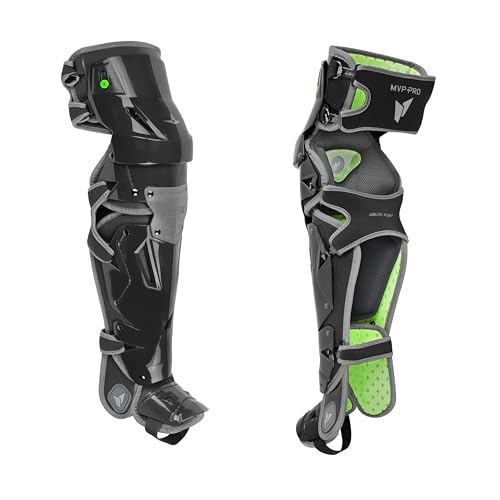
Developed with and trusted by the best catchers in the world
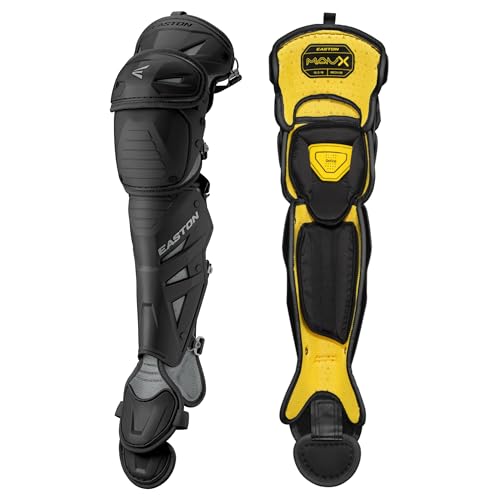
MULTI-HINGE PRO DESIGN | Mirrors the knee joint for maximum flexibility and natural range of motion during every play
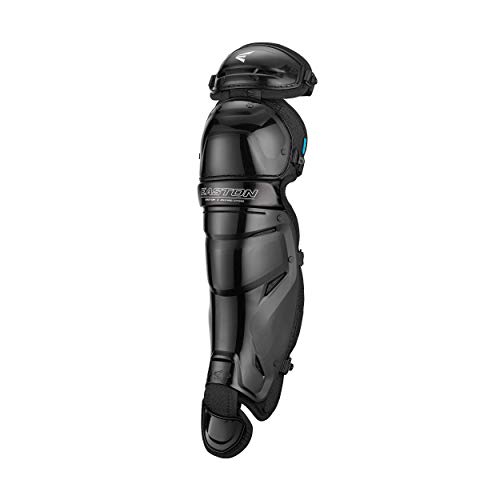
Improved shell design for a better wrap around shins and knee shape for improved performance when blocking and throwing from knees
Strategic Positioning Relative to the Plate

Strategic positioning as a catcher is essential for effective pitch reception and game management. To improve pitch framing, the catcher should set up a couple of inches to the right of home plate. This stance allows glove positioning that can touch the batter’s back knee while maintaining proximity to the strike zone. Catching the ball as close to this zone enhances the umpire’s perspective. Positioning closer to the plate boosts the chances of blocking low pitches and facilitates quicker throws to bases. Foot placement should be shoulder-width apart with toes slightly outward. Adapting to the batter’s handedness guarantees ideal target presentation, aiding both pitcher and umpire. Consistency in setup builds confidence and control for impactful game situations. Additionally, wearing a reliable chest protector is significant for safety and game performance.
Recommended Products

Revolutionary MVP-PRO Catchers Helmet features Deflexion shock hammocks to help disperse impacts and I-BAR BSP Cage with extended back swing protection for coverage against wild swings
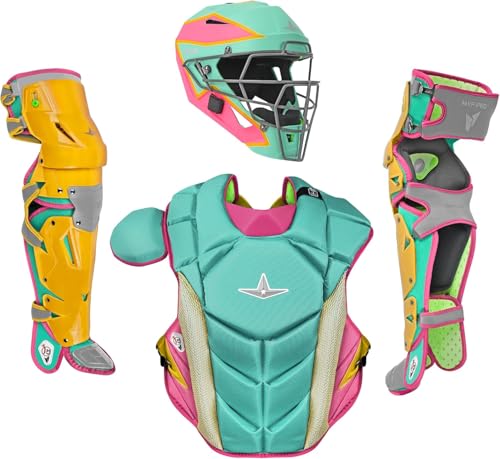
Revolutionary MVP-PRO Catchers Helmet features Deflexion shock hammocks to help disperse impacts and I-BAR BSP Cage with extended back swing protection for coverage against wild swings

Revolutionary MVP-PRO Catchers Helmet features Deflexion shock hammocks to help disperse impacts and I-BAR BSP Cage with extended back swing protection for coverage against wild swings
Effective Blocking Techniques for Different Pitch Locations

Positioning and technique are key when it comes to blocking pitches as a catcher. To effectively handle various pitch angles and ball trajectories, a catcher should adopt a knee-down, wide base stance with toes up. This setup guarantees a low center of gravity and quick recovery. When the pitch approaches, maintain the mitt between the legs to seal the “five hole.” For balls in front, use the chest to smother, while for outside pitches, extend the glove and drop quickly. Inside dirt pitches require closing the body side and using the forearm for an extra barrier. Remember to react quickly, particularly to low dirt pitches that need immediate blocking to control the bounce, reinforcing trust with the pitcher. Additionally, using high-strength materials in catcher gear can enhance protection during blocking techniques.
Recommended Products

Virtually unbreakable 4 mm twin-wall polycarbonate roof panels block up to 99.9% of UV rays and diffuse sun light eliminating the risk of plant burn and shade areas

【Rainfly & Black-Out Canopy Equipped】Size: 118" x 157". The black-coated canopy effectively blocks the vast majority of UV rays and heat, keeping you noticeably cooler, just like standing in the cool shade of a large tree. Whether adults rest or kids play, it provides a consistently comfortable area, greatly expanding your living space outside the tent. The rainfly also fits the stove jack, blocking moisture/rain while locking in interior temperature. Just enjoy a clean and cozy "mobile home."

☀【Multi-Function Rainfly】With high waterproof-rated Silver-coated fabric, the rainfly provides full protection to effectively block heavy rain and prevent moisture inside the tent, featuring stain-repellent properties for easy cleaning and maintenance. The silver coating helps reflect most UV rays, effectively reducing the interior temperature/ stuffiness of the Air tent, particularly suitable for summer use or in areas with intense sunlight, such as beach camping.
Frequently Asked Questions
What Should I Do if a Pitch Is Wild or Goes High?
When encountering wild pitches or high throws, catchers should swiftly shift from their crouch to a solid blocking position, using their body to keep the ball playable, ensuring effective retrieval and minimizing scoring opportunities for runners.
How Can I Communicate Effectively With the Pitcher During a Game?
To communicate effectively, he establishes clear pitch signals and delivers consistent pitch feedback. By fostering trust and open dialogue, he creates a supportive atmosphere, enabling both players to stay focused, engaged, and confident throughout the game.
What Are the Best Drills to Improve My Catching Stance?
To improve catching stance, focus on fundamental drills emphasizing proper posture and stance adjustments. Incorporate movement integration drills to enhance fluidity, ensuring readiness for different pitch types while maintaining consistency in glove positioning and overall stability.
How Do I Handle Situations With Very Aggressive Baserunners?
To handle aggressive baserunners, one might embrace blocking techniques like a master tactician, anticipating wild pitches while employing aggressive tactics. After all, what could be more reassuring than a catcher ready to thwart daring attempts?
What Should I Do to Stay Safe When Taking Foul Balls?
To guarantee foul ball safety, the catcher must wear complete catching gear, including a mask and chest protector. Maintaining focus and awareness enhances readiness while reducing injury risks from unexpected foul balls during play.