As an Amazon Associate, we earn from qualifying purchases. Some links on this site are affiliate links at no extra cost to you. Our recommendations are based on thorough research and editorial judgment.


How Do Pitch Count Rules Protect Young Pitchers?

Pitch count rules protect young pitchers by setting maximum limits based on age, such as 50 pitches for ages 7-8 and 95 for ages 13-16. These rules promote mandatory rest periods that allow for muscle recovery, helping to prevent injuries linked to overuse. By enforcing guidelines on pitch limits and seasonal breaks, players can enjoy the game while safeguarding their arms. Understanding these measures is key to fostering a culture of safety in youth sports. More insights follow.
Key Takeaways
- Pitch count limits prevent overuse injuries by ensuring young pitchers do not exceed safe throwing thresholds based on their age group.
- Mandatory rest periods allow sufficient recovery time for young pitchers’ muscles and ligaments, reducing the risk of injury.
- Education on recognizing arm pain and the importance of rest empowers players, coaches, and parents to prioritize health over performance.
- Monitoring and tracking pitch counts, whether manually or through technology, provide accurate oversight of throwing workload to prevent fatigue.
- Seasonal and annual pitching guidelines encourage breaks and limit overall innings, promoting long-term arm health and reducing injury risks.
Understanding Pitch Count Limits by Age Group
You may be interested


Pitch count limits play a crucial role in safeguarding the health of young pitchers. For ages 7-8, the maximum pitch count is set at 50 pitches per game, focusing on fundamental mechanics while avoiding stress-inducing pitches like curveballs. As athletes grow, the pitch count increases; ages 9-10 have a limit of 75 pitches, encouraging skill development while mandating rest periods depending on pitch volume. For ages 11-12, the maximum climbs to 85 pitches, maintaining safety measures against cumulative fatigue. By the time pitchers reach ages 13-16, the limit rises to 95 pitches, with strict guidelines preventing consecutive pitching days. Each age group showcases a strong emphasis on the age impact, balancing performance aspirations with enduring arm health and safety. Additionally, pitching machine type can be an essential factor in training, as different machines cater to various skill levels.
Importance of Mandatory Rest Periods

Mandatory rest periods are vital for protecting the health of young pitchers during their development. Research shows that rest is important for recovery strategies, helping to heal developing muscles and ligaments. Youth pitchers without adequate rest face higher rates of arm injuries, exacerbated by cumulative stress. For instance, players pitching 66 or more times require up to four days of rest. This graduated approach guarantees players recover based on their workload and avoids back-to-back appearances. Complying with mandatory rest limits enhances injury prevention across all ages, as the skeletal structures of young athletes are still maturing. By enforcing rest rules, leagues promote player safety, allowing all young pitchers to thrive within their teams and enjoy the game for years to come. Additionally, the importance of protective gear cannot be understated, as it significantly reduces the risk of injuries during play.
Monitoring and Tracking Pitch Counts Effectively

Effective monitoring and tracking of pitch counts are essential for young pitchers’ health and performance. Manual tracking can be accomplished by designating a scorekeeper to record each pitch in real-time, using simple methods like tally marks or clicker counters. This low-tech approach is especially useful in environments with limited technology access. However, technology integration with specialized apps like GameChanger provides real-time tracking and detailed metrics, improving accuracy and reducing human error. These apps also enable remote access to pitch data for coaches and parents, promoting transparency. Wearable sensors further enhance monitoring by tracking overall throwing workload. Combining both methods guarantees thorough pitch count management and encourages smarter decision-making for player safety and development. Additionally, using acid-free materials in sports equipment can help prevent damage and deterioration over time.
Preventing Injuries Through Awareness

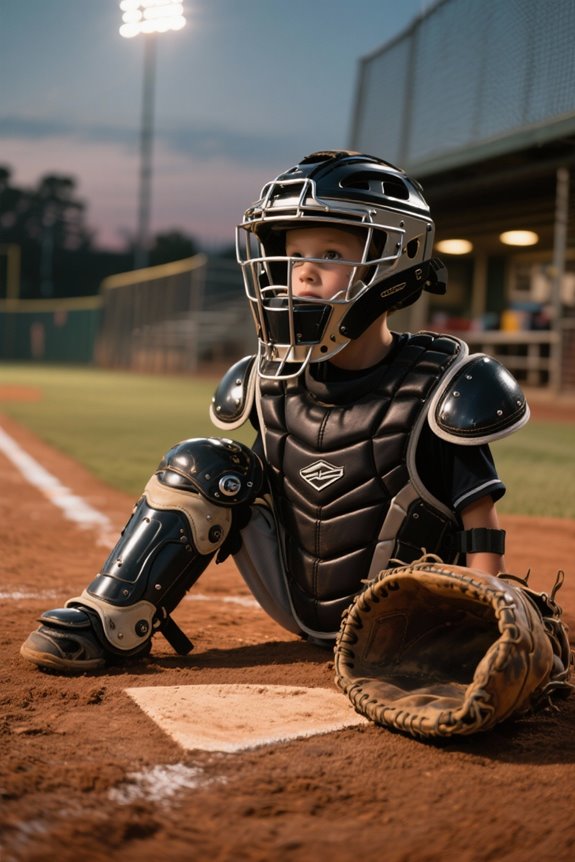
Awareness of injury risks is a fundamental aspect of protecting young pitchers’ health. Overuse injuries remain widespread, suggesting a pressing need for improved player education among athletes, coaches, and parents. Surveys reveal that 63% of youth players dismiss the link between increased throwing and injury, continuing to pitch despite pain. This highlights an essential knowledge gap regarding safe pitching practices. Parents often lack awareness of guidelines, hampering protective measures. Education on recognizing arm pain and the necessity of rest can substantially enhance injury prevention efforts. Youth catcher gear plays a crucial role in ensuring that young players are protected during games and practices. Multidisciplinary outreach programs play a vital role in improving compliance and promoting best practices. By fostering a supportive community, stakeholders can collaborate to prioritize safety and health for young pitchers, ultimately preventing injuries.
Seasonal and Annual Pitching Guidelines

Establishing seasonal and annual pitching guidelines is crucial for safeguarding young athletes’ health and performance. Leagues set annual caps, suggesting a maximum of 80 combined innings for ages 9-12. To promote recovery, players should take seasonal breaks of at least 2-3 consecutive months off from pitching each year. This downtime is essential in avoiding cumulative injuries linked to overuse. It’s also recommended that young athletes refrain from pitching for multiple teams, ensuring they can manage their overall workload effectively. By monitoring fatigue and enforcing these seasonal and annual guidelines, leagues provide a structured approach to protect young arms. Engaging in other sports further supports arm health, promoting a well-rounded athletic experience for these budding pitchers. Additionally, incorporating high-quality training aids can help young athletes develop their skills while minimizing the risk of injury.
Implementing and Enforcing League Policies
When leagues implement and enforce pitch count policies, they play an essential role in protecting young pitchers from injuries. Policy enforcement hinges on clearly defined rules, often modeled after MLB Pitch Smart guidelines. Many leagues require real-time pitch count tracking, with scorekeepers noting each pitch during games. Violations lead to strict penalties, like ineligibility for further pitching. To enhance rule standardization, leagues educate officials about the importance of these guidelines, ensuring uniformity across competitions. Technology also aids enforcement; pitch count apps and wearable devices reduce human error. By standardizing rules and enhancing compliance, leagues foster a safer environment for young athletes, minimizing the risk of dangerous overuse and related injuries. Additionally, incorporating NOCSAE safety standards into pitching gear further safeguards young players from potential harm.
Educating Coaches, Parents, and Players on Pitch Count Rules
Effective education on pitch count rules plays an essential role in safeguarding young pitchers. Coach training initiatives focus on the significance of pitch limits to prevent injuries. These programs provide clarity on allowable pitch counts and necessary rest for each age group. Parents benefit from advocacy programs that educate them about injury risks linked with excessive pitching. They are encouraged to monitor pitch counts and discuss rest policies with coaches. Additionally, young players learn to recognize fatigue signs and the importance of recovery. Digital tools, such as pitch count calculators and instructional videos, support understanding and compliance. This collaboration among coaches, parents, and players fosters a culture that prioritizes youth safety and well-being in sports. Moreover, the use of training equipment for skill development can enhance a young pitcher’s performance while emphasizing proper mechanics and reducing the risk of injury.
Frequently Asked Questions
What Are the Signs of Overuse in Young Pitchers?
Signs of overuse in young pitchers include fatigue symptoms, persistent pain, and difficulty with arm mechanics. These indicators play vital roles in injury prevention, helping coaches and parents to recognize potential risks before serious injuries occur.
Can Players Pitch in Multiple Leagues Simultaneously?
Players can participate in multiple leagues simultaneously in youth baseball; however, this practice often leads to unchecked pitch counts. Without coordinated tracking, young arms risk fatigue, mirroring storms brewing unseen, threatening their long-term health and futures.
How Are Pitch Counts Tracked During Tournaments?
During tournaments, pitch counts are tracked through designated scorekeepers and advanced tracking technology, ensuring accurate data management. Tournament regulations mandate communication between coaches and umpires to maintain transparency and uphold players’ well-being throughout competitive play.
What Happens if a Pitcher Exceeds Their Limit?
If a pitcher exceeds their limit, they risk catastrophic injury, necessitating stringent monitoring techniques for injury prevention. Failure to comply can lead to severe arm damage, ultimately jeopardizing not only their career but also team dynamics.
Are There Exceptions to Pitch Count Rules?
Yes, there are exceptions to pitch count rules. These include an exceptions list detailing rule variations for pitch continuation, position changes, and pitching limits across leagues, ensuring young players’ safety while maintaining competitive integrity within the games.